MAM
Advertisers should focus on kids genre for better monization of animation industry, says experts

MUMBAI: The animation industry is growing at 30 to 35 per cent but there are many challenges that this sector is facing from upgradation of hardware or software on time to time bases to revenue generation. According to experts the industry has many opportunities on kids channels, OTT platform and YouTube and to explore that it needs more successful studios, young talent and more attention of advertisers in kids genre.
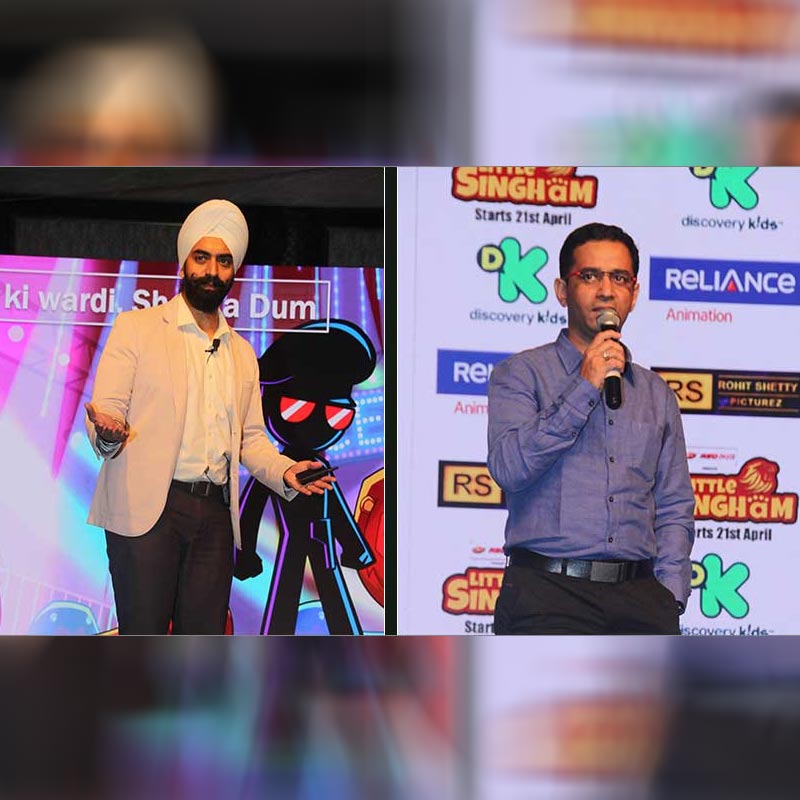
In a panel discussion 'Animation 2020' at KAM Summit organised by Animation Xpress on August 30, 2019 discussed on what does this industry holds in 2020. The panel discussion was moderated by FICCI chairman animation and gaming Ashish Kulkarni and panelists were Green Gold Animation founder and CEO Rajiv Chilaka; Sony Yay! programming head Ronojay Chakraborty; DQ Entertainment COO Manoj Mishra; Viacom 18 programming head Anu Sikka; Big Animation COO Tejonidhi Bhandare and Cosmos Maya AVP revenue and corporate strategy Devdatta Potnis.
Chakraborty said, "Animation as an industry is growing at a healthy pace. 35 per cent of the growth has come from the industry's producers and domestic broadcasters. As a channel we started with 100 hours of content. In 2020 more hours of content will be added. The producer depends on the broadcasters for financing, broadcasters look at the advertisers for finance, so the monitization aspect needs to be looked into. Advertisers have to take notice of this category very much. We are one fourth the size of entire GEC category but in terms of revenue we are one tenth. So, there is a need that the advertisers pay attention to this category as well because the category is appealing to the citizens. Once the monitory aspect improves more and different varieties of programmes will be commission and that will help the industry.
Mishra shared his view on monitization of content in the international market. He said, "In terms of animation USA market is evolving and creating great shows.The animation industry in Europe is not growing at the rate on which it should have grown. From studio perspective in 2020 we see that demand is there and it is a stable market at this moment. IP monitization and creating IP for global market play an important role from our studio perspective."
Chilaka wants to see more successful studios and young talent coming in in this industry in 2020. He said,"As a studio we have been here for last 18 years and we realise the challenges faced by animation studios like upgradation of hardware and software from time to time bases. But for the growth of the industry, it's very important to have more successful studios. We have so many advantages as well, there are so many kids channels and OTT platform in India. We also have the opportunity to reach Indian diaspora who are not just in India but across the world."
Potnis said, "India is growing on all front especially on digital and there is a opportunity or area for us to be there. We finalised nine new shows in the domestic market and few months before we signed three European co-production. We also have a YouTube platform called Wow Kids which has 27 million subscribers. May be by 2022 we may also create a original for that platform in addition to working with broadcasters and OTT players."
Bhandare said, "Animation 2020 is not a vision but a start for animation industry as there are lots of things that are opening up for the industry. We need to focus more on talent and ways to how do we build up talents. We need to create awareness regards to what animation is, it not only caters to kids like in west it caters to all age group. we are not creating that kind of content yet. Our focus should be on creating a great content. Platform is set for us to grow and there is lot of opportunities coming up."
Kulkarni also asked the panelist- will that situation come in 2020 where we have very good story board artist? To which Mishra replied, "This is the area where we are looking in very strongly as far as our curriculum is concern. We are trying to get story board artist who are helping us from international market to provide training to the artist in India. At the same time some kind of exposure in creating the curriculum is important and giving them the opportunity, we have to trust our artist. We as an organisation also have got our interest and trust more on the talent outside India and then we move to talent in India, that's something which we need to change."
"There is a need for language training to fill the gap between the script writer and story board artist for better transforming from the script to animation," commented Bhandare.
Kulkarni also touched upon the topic of co-production in animation industry. He commented, "We are in a process of re- defining and including changing the definition of audio visual co-production treaty but India was never a very active partner in co-production. We would really like to see India on the map of co-production."
Potnis shared his view on the same, "There is a feature project that we are working on. Couple of days ago I had conversation with studios in Ireland, Canada and Australia to compile the sort of support they get in term of subsidiaries amount or tune of the volume they get is 30 to 40 per cent of their budget and we stand no where in that sense. That is the big area and now government is also interested in this sector little bit more. One thing that co-production has helps do is to scale up on the quality front."
On revenue perspective Sikka said, "Unfortunately the advertising revenue is not growing at the pace of which industry is growing. The kind of ratings that we get for both of our channels in kids genre unfortunately the ad revenue is not growing at that pace. Animation will continue to progress and we will continue to cater to the audience of 7 to 14 years. We will do something in pre-school segment when the advertisers start recognising the potential of pre-school content in the audience. Today a generation has grown on animation for whom animation is no longer a taboo. The scope for family animation should also be explored."