AD Agencies
Adman Diwan Arun Nanda gave India a marketing conscience

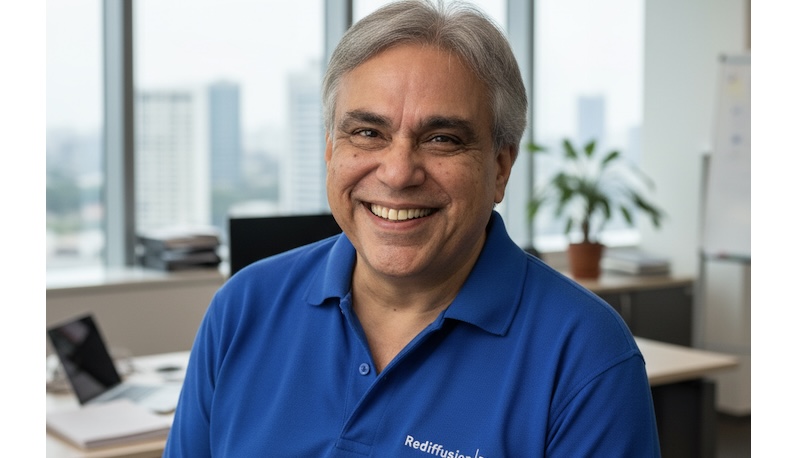
MUMBAI: Diwan Arun Nanda who passed away this week was one of the founding fathers of independent Indian advertising and co-founder of the agency Rdiffusion. Over half a century, Nanda transformed the way Indians understood brands, and equally, how brands understood Indians. His legacy lies not just in memorable campaigns but in the rare conviction that advertising should win trust, not merely attention.
Born in Mumbai in 1948, Nanda belonged to the pioneering first batch of the Indian Institute of Management, Ahmedabad, where he graduated with a gold medal for academic excellence. He joined Hindustan Lever as part of its celebrated management trainee programme, a finishing school for the country’s future business leaders.
At Lever, Nanda’s intuitive grasp of consumer recall and semiotics surfaced quickly. He was instrumental in introducing Rin’s lightning-bolt symbol, a clean graphic that turned detergent into iconography. Household recognition was instantaneous, and so was the reputation of a young executive whose instincts straddled both commerce and creativity.
In 1973, tired of working within large corporate structures and spotting an opening in India’s communication landscape, Nanda teamed up with Ajit Balakrishnan and Mohammed Khan to found Rediffusion. Their move came at a time when multinational agencies dominated the client rosters. A truly Indian firm challenging the giants was seen as audacious.
The gamble paid off spectacularly. Their win of the Eveready batteries account, with the deceptively simple line “The chosen one. For your transistor,” established Rediffusion as a creative force that could shape consumer culture. For the first time, Indian advertising talent was asserting that local creativity did not have to play second fiddle to imported gloss.
Over the next decades, Nanda marshalled Rediffusion into one of the country’s great agencies, winning clients across telecom, consumer goods, airlines and banking. Its campaigns became pop-culture staples. Rediffusion was cheeky, self-assured and intensely Indian—and at its helm was a leader who prized rigour as much as wit.
If Nanda delighted in bold slogans, he was equally defined by what he refused to sell. When a magazine failed to live up to readership claims touted in Rediffusion’s ads, Nanda chose to resign the account, believing his agency had, however inadvertently, misled consumers. Few contemporaries would have walked away. He did so without fanfare, only with the conviction that trust was more valuable in the long run than billings.
This rare streak of principle separated him from peers in an industry where sleight of hand often outpaces substance. To Nanda, advertising was about persuasion, not deception; about clarity, not cleverness for its own sake.
Nanda’s influence stretched beyond the confines of the ad world. In the 1980s he advised prime minister Rajiv Gandhi on communications, contributing to the narrative of a youthful, reform-minded leadership. He struck a joint venture with global player Young & Rubicam, strengthening Rediffusion’s international profile without sacrificing its independence.
Corporate India also sought his judgement. He served as a director on the boards of Air India, Eveready, Kingfisher Airlines and Yes Bank, his counsel valued for its mix of marketing acumen, strategic vision and clean governance.
Colleagues fondly recall Nanda’s insistence on discipline and clarity. He was a mentor who disdained jargon and demanded that ideas shine through in the simplest possible way. In an age when advertising was becoming increasingly performative, he grounded his protégés in first principles: honesty, insight, storytelling.
He often reflected with pride on Rediffusion’s long journey, which he described as “a dream run”. It was one of the few Indian-founded agencies to achieve scale, reputation and global stature without being absorbed by a multinational. That sense of independence mirrored Nanda’s own personality—ambitious, exacting, yet unfailingly proud of domestic creativity.
With his passing, Indian advertising loses not only a giant but also a moral compass. Nanda represented a generation that carved out space for Indian talent at a time of foreign dominance, that proved ideas from Mumbai could rival Madison Avenue, and that insisted commercial success meant little if not grounded in integrity.
Today’s industry, beset by algorithms, influencer culture and data-driven messaging, may seem far from the world of transistors and detergents in which Nanda first honed his craft. But the central lessons he preached—that a brand must earn trust, that persuasion must be rooted in truth—remain as urgent as ever.
Diwan Arun Nanda’s journey—from a meticulous trainee at Hindustan Lever to a mentor of agencies, CEOs and politicians—was, as he himself would admit, a testament to ambition without compromise. His campaigns lit up households, but it was his conscience that set him apart.