Brands
Adidas the ‘sole’ winner of 2014 FIFA World Cup?

If you thought FIFA was all about the game then you are highly mistaken. While Brazil was spending millions to prepare for the world’s biggest extravaganza, the two brands which rule the football merchandise market, had been busy playing their own matches.
Even before the tournament began, the two giants with their marketing strategies were all set for FIFA 2014.
It was in the month of May that Adidas, which has sponsored FIFA, the world football’s governing body, since 1970, launched its ?50million plus global World Cup campaign featuring Lionel Messi. Titled ‘Leo Messi’s World Cup Dream,’ the campaign also included Luis Suarez and Dani Alves and associated with Kanye West.

The $1.9 billion Nike’s ‘The Last Game’ animated short film was launched a month later. To keep the buzz alive, the brand also opened its first pop-up store in Brazil. The five-minute World Cup film featured animated versions of the sport’s best players, from Portugal’s Cristiano Ronaldo to Brazil’s Neymar Jr., under the Nike Football campaign tagline, ‘Risk Everything’.
Overall, Nike with $25 billion revenue has 17 per cent market share worldwide while Adidas with $20 billion revenue owns 12 per cent of the market share.
 Nonetheless, Adidas which has signed an agreement with FIFA until 2030 for $70 million for every four-year cycle, created the colourful WC ball – known as the Brazuca – which surpassed sales of the 2010 World Cup ball.
Although eight different companies provide jerseys to the 32 participating teams, as the tournament entered the nail-biting semi-finals, the fight was no longer between Argentina, Brazil, Germany and Netherlands, but was all about Nike versus Adidas.
The two companies with a combined market share of 70 per cent of the world football merchandise market sponsored two teams each: Argentina and Germany wore Adidas while Brazil and Netherlands wore Nike.
But one can note that though Adidas provided the German kit, about nine of the country’s top players wore Nike boots. This WC Nike made a shoe statement with its new Magista and Mercurial boots.
The marketing war at its highest saw the two in a tightly-cornered match. Social and digital media was conquered by both as fan base increased manifold. So much so that in the last five months or so Nike grew its Facebook fan base by approximately 14 million users, largely due to growth in markets like Indonesia, Turkey and India and thanks to ‘Risk Everything.’
The last year has been volatile for the companies on the Wall Street index as well. Over the past year, Nike shares have trounced those of Adidas.

If one goes by the numbers and strategic marketing, the competition between Nike’s and Adidas’ battle for the hearts and minds of soccer fanatics would have made the Goddess of Victory (Nike) take the trophy home.
However, as Brazil and Netherland crashed out of the tournament, it was Adidas vs Adidas at the finals.
Even though Adidas and Germans took the Golden trophy home, Nike the unofficial partner created enough buzz and revenue throughout the tournament.
The companies are sure that even though the tournament is over, the momentum will remain the entire year. And keeping in mind that today the competition has moved beyond the pitch; with brand ambassadors and innovative marketing strategies, there is no longer but one winner.
It was a win-win situation for both sport giants.





Brands
Dunkin’ Donuts to exit India as Jubilant FoodWorks ends 15-year franchise deal
The quick service restaurant giant is ending a 15-year franchise partnership with the American doughnut chain, even as it renews its Domino’s agreement for another 15 years
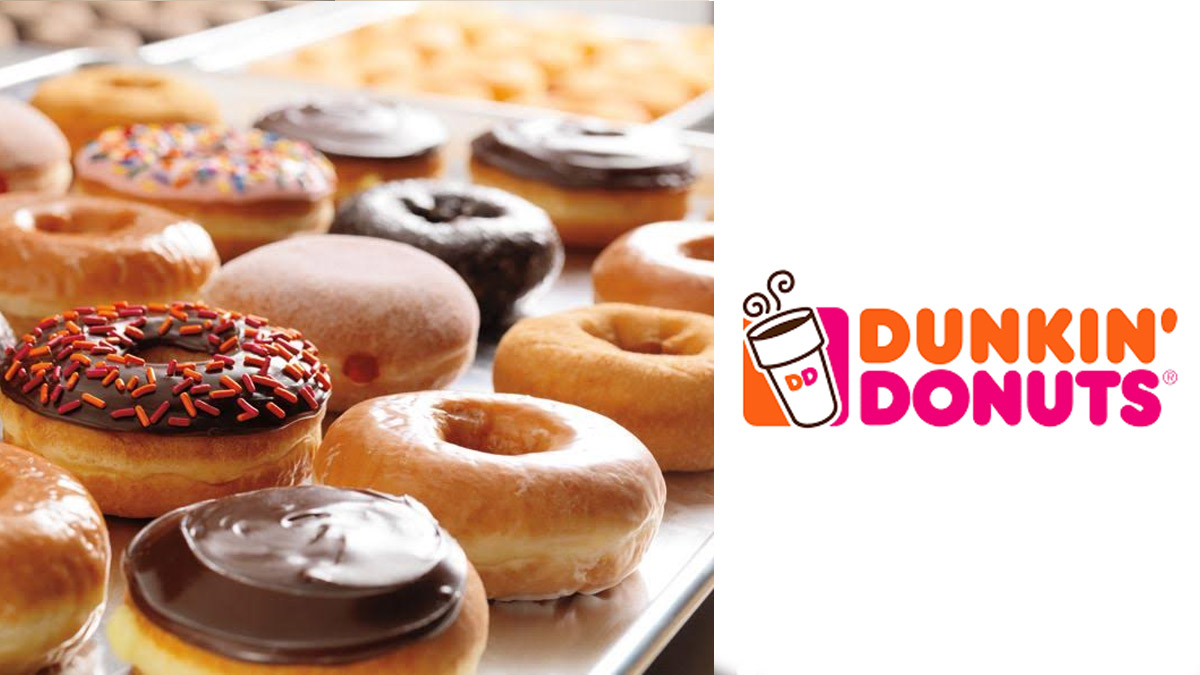
NOIDA: Dunkin’ is done in India. Jubilant FoodWorks Ltd, the country’s leading quick service restaurant operator, has decided not to renew its franchise agreement with the American coffee and doughnut chain, and will wind down its Indian stores in a phased manner before December 31, 2026, bringing a 15-year partnership to a quiet, loss-laden close.
The decision, approved by JFL’s board on March 30, 2026, ends a relationship that began with a Multiple Unit Development Franchise Agreement signed on February 24, 2011. JFL will now evaluate and undertake what it described in a regulatory filing as the “rationalisation and/or cessation of certain operations and/or sale, transfer or disposal of assets and/or assignment or transfer of franchise rights,” all in consultation with Dunkin’s brand owners and strictly within the terms of the original agreement.
The numbers tell the story bluntly. In the financial year 2024-25, Dunkin’ India posted a revenue of Rs 37 crore against a loss of Rs 19 crore — a haemorrhage that was always going to test the patience of a parent company recording revenues of Rs 6,104 crore and a profit of Rs 194 crore in the same period. Doughnuts, it turns out, were never going to move the needle.
The contrast with JFL’s handling of its other marquee franchise could hardly be sharper. Even as it walks away from Dunkin’, the company has just doubled down on Domino’s, signing a fresh Master Franchise Agreement on March 31, 2026, granting it exclusive rights to develop and operate Domino’s Pizza stores in India for 15 years, with an option to renew for a further 10.
JFL, incorporated in 1995 and promoted by the Bharatia family, operates a network of more than 3,500 stores across six markets — India, Turkey, Bangladesh, Sri Lanka, Azerbaijan and Georgia. Its portfolio includes Domino’s and Popeyes on the global side, and two home-grown brands: Hong’s Kitchen and COFFY, a café brand in Turkey.
For Dunkin’, India was always a stretch. The brand never quite cracked the cultural code in a market where filter coffee and chai command fierce loyalty and where the doughnut remains, at best, an occasional indulgence rather than a daily habit. Fifteen years, mounting losses and a parent with better things to spend its capital on was always going to be a difficult equation to solve.
The doughnut has had its last day. The pizza, however, is staying.






