MAM
Adgcraft becomes PR partner of Mega Expo 2022

Mumbai: The leading exhibition company, Ace Exhibitions, has handed over its PR mandate to Adgcraft for it’s upcoming international event, ‘The India Industrial Manufacturing Mega Expo and Mega Green Vehicle & Smart Mobility Show.’
Mega Expo 2022 as an international platform covers outspread shows across the manufacturing ecosystem which will be handled under the banner of Adgcraft and their supervision.
As a part of the mandate, Adgcraft will be the official PR partner for the nationwide event Mega Expo 2022 with the remarks of aiding strategic solutions for communications management and proposing ideas for the betterment of this exhibition as well. Adgcraft as a communication agency is amenable to presenting brand broadening, solutions for unanticipated situations, and magnifying the organization’s position.

The event will take place on 7 to 9 September at Pragati Maidan, New Delhi, where eminent industrial exhibitors, as well as business buyers, would be present. On this platform, the prominent industry leaders will showcase their latest products, innovations, and future technologies in the view of the general public.
Speaking on the association, ACE exhibition business head Anupreet Singh Jaggi said, “This country requires a boost for the MSME sector, and we hope to contribute to India’s growing MSME industry through this exhibition, and having Adgcraft as a communication partner for Mega Expo 2022 will help us achieve that goal more efficiently.”
With a warm judgment, Adgcraft managing director Abhinay Kumar Singh said, “MSME is a sector that is always growing but also requires everyone’s attention; I applaud ACE Exhibitions and Anupreet Singh for doing such amazing work to help this sector. The Adgcraft family is very excited to share the best media approaches for Ace Exhibitions Mega Expo 2022.”




Brands
HP launches Smart Champs learning game show with JioStar for students
Sanya Malhotra hosts quiz series blending fun, learning and prizes
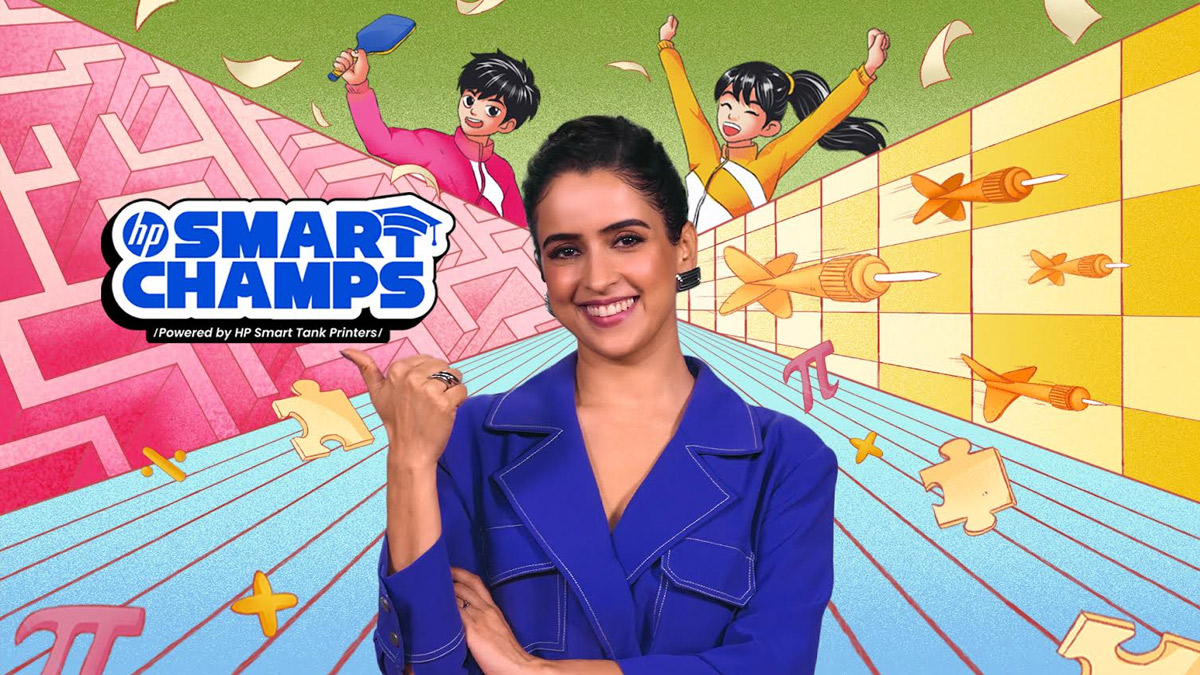
NEW DELHI: HP India has teamed up with JioStar to launch HP Smart Champs, a new learning-based game show designed to make education engaging for school students across the country.
Hosted by Sanya Malhotra, the 10-episode series brings together students from Grades 5 to 9, who compete in teams through quiz and puzzle-based challenges that test knowledge, logic and teamwork. The show will begin streaming on JioHotstar from April 11 and will premiere on Nick on April 18, with weekend episodes airing at 7 PM.
Powered by HP Smart Tank printers, the format integrates print-based learning into the gameplay, using worksheets, clues and visual problem-solving tools to encourage hands-on participation. The idea is to move students beyond rote memorisation and towards more applied, curiosity-led learning.
The competition promises high stakes, with winners set to receive a cash prize of Rs 10 lakh, while runners-up will take home Rs 5 lakh. Additional rewards include HP AI laptops, Smart Tank printers and accessories, while the winning school will be awarded an HP Smart Tech Lab.
Speaking about the initiative, HP India managing director Ipsita Dasgupta said, “At HP, we believe nurturing India’s youth is key to the country’s progress, and technology plays a foundational role in enabling this. With HP Smart Champs, we wanted to create something beyond traditional learning, a fun-filled platform where curiosity, creativity and critical thinking take centre stage.”
On the show’s reach, JioStar head entertainment sales Mahesh Shetty said, “HP Smart Champs reflects how children today learn through exploration and experience. With Nick and JioHotstar, we are creating a multi-screen approach that is both engaging and meaningful.”
Highlighting the role of print, HP India senior director print Satish Kumar said, “The show brings print-based learning to life in an engaging format, helping students develop deeper understanding through hands-on experiences.”
The journey to the finale began with participation from over 1,000 schools across 26 cities, narrowing down to 34 finalists who will compete in a studio showdown in Mumbai.
With its blend of entertainment, education and technology, HP Smart Champs is positioning itself as more than just a quiz show. It is a nationwide push to make learning interactive, accessible and, above all, a lot more fun.







