MAM
Ad honchos: Digital to be central to advertising very soon

MUMBAI: Today’s marketers are working in a complex environment with increasing consumer choice and fragmenting media environment. With mobile becoming central to our lives, content consumption through it has skyrocketed. This has created a dynamic consumer purchase cycle and an opportunity for businesses to find newer sources of growth.
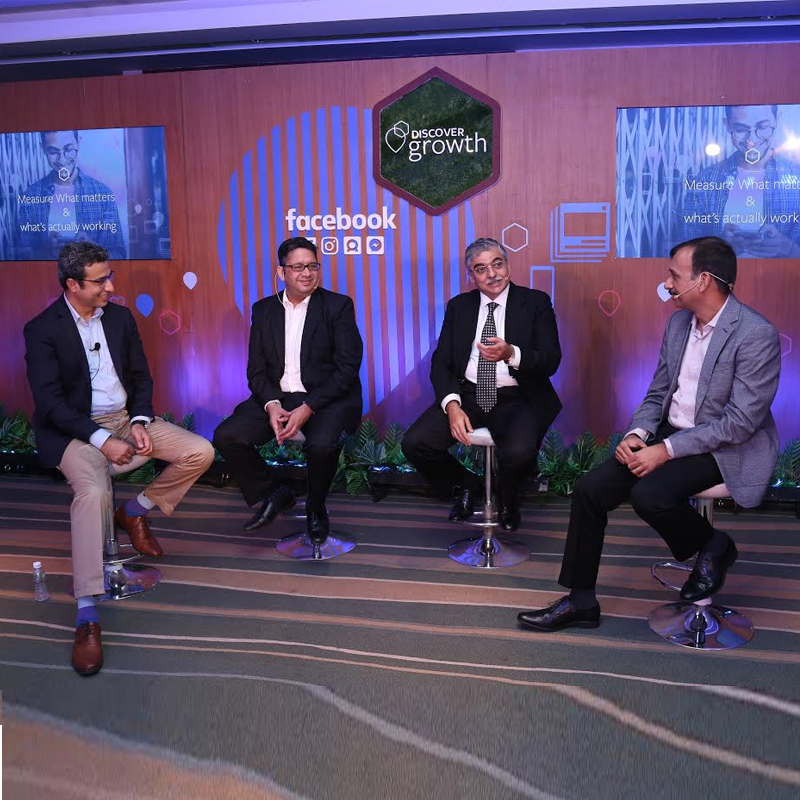
Addressing the needs of the industry, marketers sat down to discuss how brands are tapping into this shift in consumer behaviour and discovering growth at Facebook’s ‘Discover Growth’ session. The session moderated by Facebook India and South Asia interim MD Sandeep Bhushan, had panelists including Dentsu Aegis Network chairman and CEO South Asia Ashish Bhasin, GSK Consumer Healthcare general manager of marketing excellence Alok Agarwal and Ambuj Chandna, head – retail liabilities, investment and payment products at Kotak Mahindra Bank.
Brands today understand the value of mobile because 75 per cent of Indians accessing Facebook do so from their smartphones. The presence of over two million business pages on Facebook indicates that companies expect customers and growth to come from it.
Bhasin opened the panel by pointing out some key trends that are seen in digital. He pointed out that digital is now becoming equivalent to mobile. Digital has benefited some major brands in the country that are investing heavily on the platform.
With 40 per cent of Dentsu Aegis Network’s revenue coming in from its digital operations, Bhasin sees a clear shift in the way digital will impact brands and clients going forward. He expects 25 per cent of the market to be digital by 2020 and digital to be the single largest medium in the industry by 2023 but traditional mediums will continue to grow as well.
Banking was one of the earliest sectors adopters of digital when it provided online banking facility to its existing customers but lately, BFSI sector has also been investing moderately in digital content. This is in contrast to 15 years ago when nothing but physically presenting yourself at the bank could allow a transaction.
Chandna added that almost 60 per cent of Kotak’s active customers is transacting digitally. Kotak Mahindra Bank launched 811, a digital only bank account early this year. The 14-year-old bank has 10.5 million customers as of June 2017 and saw a jump of 30 per cent in two quarters only because of 811 account. “The physical world rules don’t apply to digital as it is important to create value proposition for digital and if you get that right, a brand can scale up dramatically,” he added.
Alok Agarwal mentioned that though internet typically is a male-skewed platform, female consumers are increasingly spending more time on it. “High time spent on internet leads to funnelling of brand spends as they want to tap the customers at all touch points.”
Consumers are platform-agnostic, which is shifting dynamics from television planning to video planning.
Bhasin raised an important point of the need for a common measurement metric system for the advertising industry in the next two to three years. “We are a year away from a very big inflexion point where digital is going to be hugely central if not peripheral,” he adds.
Agreeing to Bhasin on the need for a measurement metric, Chandna cited that initially Kotak heavily depended on traditional media advertising but stopped that when they realised it was only creating a category and not launching a product. The brand is leveraging in a big way to create ease of doing business and have a better connect with its customers. “Kotak Bank’s digital spends have increased by 40X and a majority of that goes into Facebook as we get detailed analysis and data there which is not available on other digital platforms,” he states.
Alok Agarwal concluded the panel by emphasising that Facebook allows GSK to geo-target the customers in ways that were not possible earlier. A brand can also go for advocacy on digital where consumers can react and share their feedback in real time which is not possible on television.