MAM
Ad Club Calcutta inducts Agnello Dias into its ‘Hall of Fame’
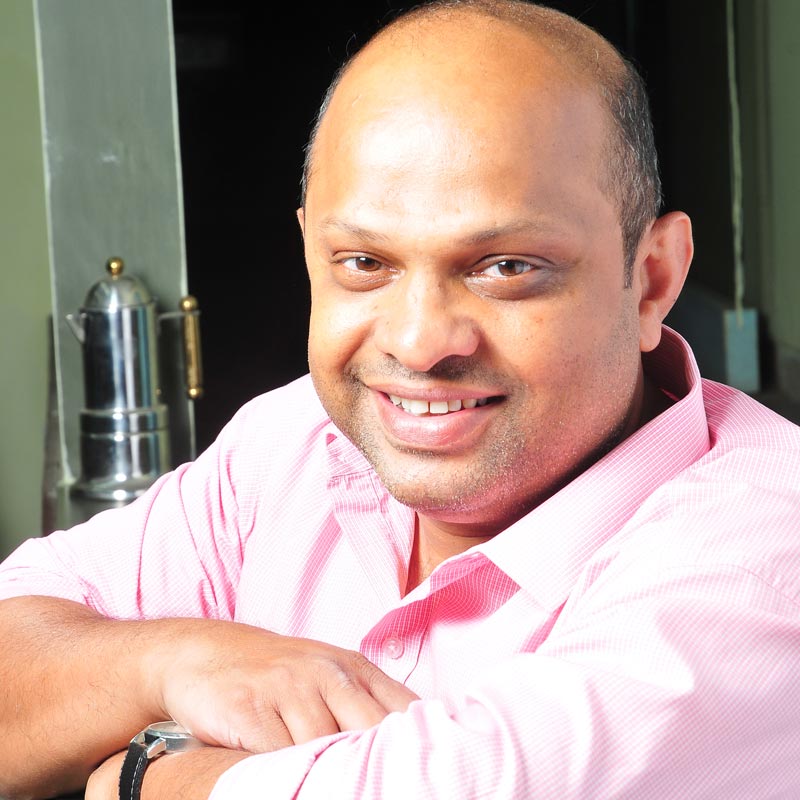
MUMBAI: The Advertising Club Calcutta, the oldest advertising club in India, has inducted Agnello Dias, co-founder and Chief Creative Officer – Taproot Dentsu, into its ‘Hall of Fame’ for the year 2019.
The other famed recipients who have been inducted with this honour earlier include names such as Alyque Padamsee (Lintas), R.K.Swamy (BBDO Advertising), Ram Sehgal (Contract), Ms. Simone Tata (Trent Ltd), Mohammad Khan (Enterprise), Mike Khanna (HTA), A.G.Krishnamurthy (Mudra Communications), Arun Nanda (Rediffusion DY&R), Dr. V.J.Kurien (Amul), Roda Mehta (O&M), Aroon Purie (India Today), Ranjan Kapur (WPP India), Sam Balsara (Madison India), Prem Mehta (Lintas), R Balki (Lowe), Prasoon Joshi (McCann) and Piyush Pandey (Ogilvy & Mather) amongst others.
Speaking on being inducted into the Hall of Fame, Dias said, “It is a privilege to be in the shadow of giants and I am grateful that an institution as respected as the Ad Club of Calcutta considered me worthy of this honour. It feels a tad intimidating to be honest and am truly grateful to the many hands that guided me along this journey.”
Established in 1953, Advertising Club Calcutta is a non-profit society that has been catering to the advertising fraternity of Kolkata for the past 62 years. 45 years ago, it hosted India’s first advertising symposium. Today it remains a relevant and engaging platform that encourages fellowship among the fraternity through a plethora of programmes like debates, corporate quiz shows, educational workshops(Masterclass), etc.
Advertising Club Calcutta recognises and awards not just creativity or the strategy behind campaigns but also iconic professionals through bestowing the Hall of Fame. It is the highest and the most prestigious award that is given periodically to leading advertising professionals

MAM
Raghu Rai passes away at 83, leaves behind iconic legacy
Padma Shri-winning photographer documented history across 5 decades.
MUMBAI: The lens may have stilled, but the stories it captured will never fade. Raghu Rai, one of India’s most celebrated photojournalists, passed away on April 26, 2026, at the age of 83. He breathed his last at a private hospital in New Delhi after battling cancer and age-related health issues.
His son, Nitin Rai, revealed that Rai had been diagnosed with prostate cancer two years ago, which later spread to the stomach and, more recently, the brain. Despite multiple rounds of treatment, his health had declined in recent months.
Born in 1942 in Jhang, Punjab (now in Pakistan), Rai entered photography in his early twenties, inspired by his elder brother, photographer S. Paul. Beginning his career in the mid-1960s, he went on to build a body of work that spanned more than five decades, contributing to global publications such as Time, Life, GEO, Le Figaro, The New York Times, Vogue, GQ and Marie Claire.
His global recognition took a decisive leap in 1977 when legendary French photographer Henri Cartier-Bresson nominated him to join Magnum Photos, placing him among the world’s most respected visual storytellers.
Rai’s lens chronicled both power and poignancy. He photographed towering figures such as Indira Gandhi, Dalai Lama, Bal Thackeray, Satyajit Ray and Mother Teresa, while also documenting defining moments like the Bhopal gas tragedy later captured in his book Exposure: A Corporate Crime.
Over the years, he published more than 18 books, building an archive that blended journalism with artistry. His contributions were recognised early when he was awarded the Padma Shri in 1972 for his coverage of the Bangladesh War and refugee crisis. In 1992, he was named “Photographer of the Year” in the United States for his work in National Geographic, and in 2009, he was honoured with the Officier des Arts et des Lettres by the French government.
Rai is survived by his wife Gurmeet, son Nitin, and daughters Lagan, Avani and Purvai. His last rites will be held at Lodhi Cremation Ground in New Delhi at 4 pm on Sunday.
With his passing, Indian photojournalism loses not just a pioneer, but a patient observer of history, one frame at a time.