MAM
84 per cent of Indian consumers prefer fewer, relevant ads: Criteo report
Fragmented journeys and data gaps leave brands struggling to personalise at scale


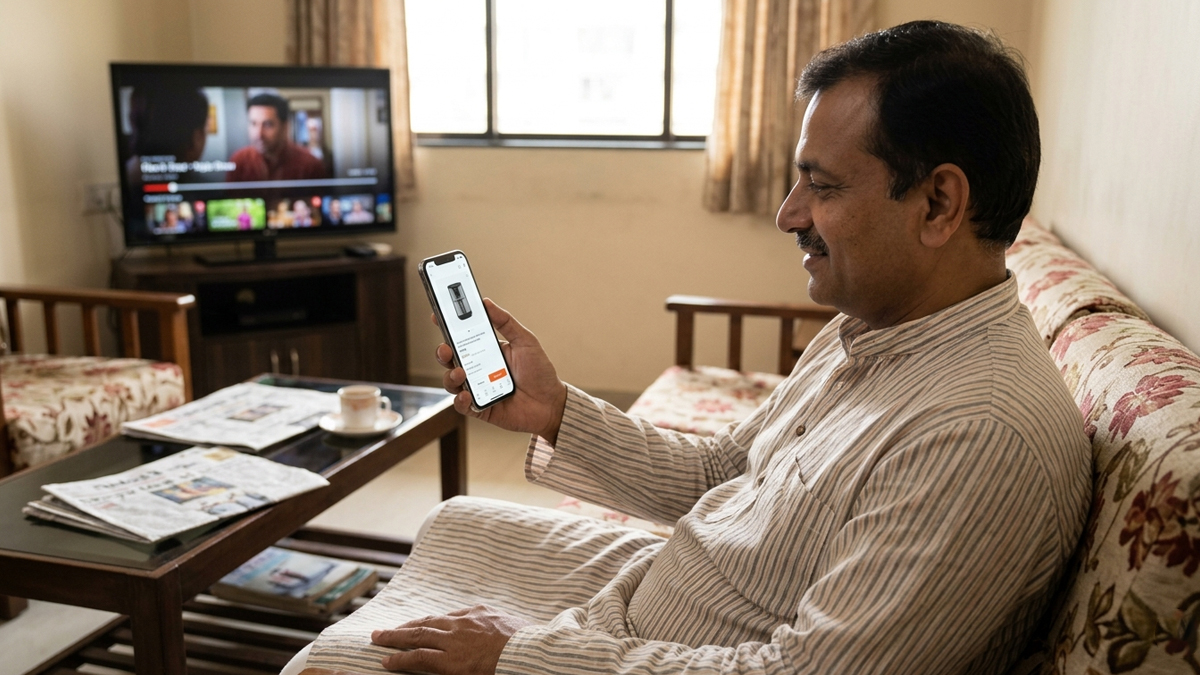
MUMBAI: Indian consumers are sending a clear signal to advertisers: less is more, as long as it is relevant. A new report by Criteo, developed in collaboration with Ecosystm, finds that 84 per cent of consumers prefer fewer, more relevant ads, even if that means sharing their browsing history.
The study, titled From Fragmented Touchpoints to Connected Journeys: A new commerce playbook for India, also reveals that over 60 per cent of consumers find history-based ads helpful. Yet there is a disconnect in execution, with 71 per cent still encountering repetitive messaging, pointing to a gap between intent and delivery.
The findings highlight how Indian shoppers are becoming more deliberate in their purchase journeys. Around 51 per cent conduct research outside retail platforms, while 44 per cent engage across multiple channels before making a decision. Only 5 per cent complete their entire journey on a single platform, underscoring the rise of cross-platform exploration.
Discovery is increasingly happening beyond traditional retail environments. Social media leads the pack, with 67 per cent of shoppers noticing ads there, followed by shopping app searches at 55 per cent, retailer homepages at 51 per cent and product pages at 45 per cent. When it comes to influence, 29 per cent of consumers say social media ads have the biggest impact on their purchase decisions, ahead of video or OTT ads at 25 per cent and search ads at 21 per cent.
Speed also plays a key role. About 26 per cent of consumers make a purchase immediately after seeing an ad, while 38 per cent complete it within the same day. However, 27 per cent take up to a week to research before buying, signalling an opportunity for brands to tighten the loop with smarter targeting.
Despite growing openness to personalised advertising, the industry faces structural challenges. Nearly half of digital advertisers cite measurement and attribution as a key hurdle, while 43 per cent struggle with data standardisation across platforms. Another 32 per cent report difficulties in activating data effectively, leading to fragmented experiences that dilute campaign impact.
Artificial intelligence is emerging as the next big lever, but adoption remains uneven. While 72 per cent of retailers use AI to build privacy-compliant audience segments and 65 per cent to model shopper behaviour, only 46 per cent apply it to dynamically adapt ad creatives in real time across channels such as web, apps and connected TV.
Looking ahead, retailers expect formats like offsite shoppable videos, connected TV and sponsored product listings to drive the highest margin growth in 2026, particularly when backed by better data integration and closed-loop measurement.
Commenting on the findings, Criteo country head Medhavi Singh said, “Retail media in India is at a pivotal moment, with high-intent consumer signals and shrinking purchase cycles creating a strong opportunity for brands and retailers to drive measurable outcomes.” She added that unlocking this potential will require a shift towards connected, full-funnel strategies powered by real-time personalisation and stronger data foundations.
The study, conducted in January 2026, surveyed 573 shoppers, 68 retailers and 74 brands, alongside industry interviews.
Taken together, the message is simple but sharp: consumers are ready for smarter advertising, and brands that cut the clutter while keeping it relevant stand to win the attention game.