MAM
64% Indian streamers are more receptive to ads on streaming platforms than social media: Magnite report

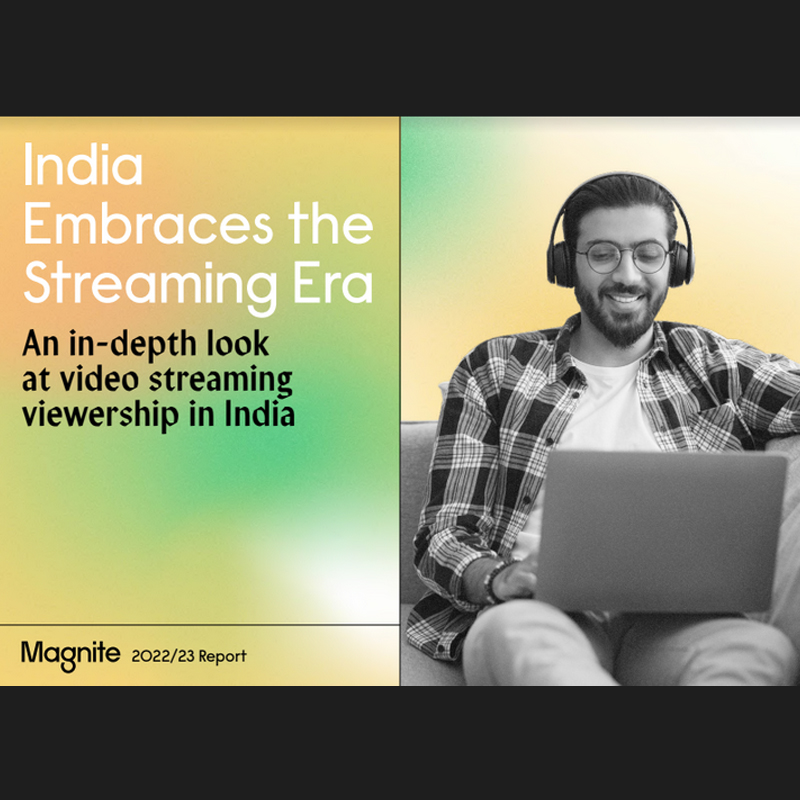
Mumbai: Magnite, the independent omnichannel sell-side advertising platform, on Tuesday released a study entitled “India Embraces the Streaming Era” that found ads on streaming platforms capture more attention than ads on social media. Nearly two-thirds of India’s streamers (64 per cent) are more responsive to advertising on streaming platforms, with many stating they often search for the product (48 per cent) and make a purchase (33 per cent) after the fact.
The study also found that free or ad-supported content is preferred to paying for an ad-free experience. 80 per cent of streamers prefer to watch ad-supported content versus subscribing to an ad-free platform for a monthly fee.
“OTT is unmatched in its ability to engage viewers, and we commissioned this study to better understand consumption patterns across the rapidly growing Indian streaming audience,” said Magnite managing director, Asia Gavin Buxton. “One of the study’s key findings shows that OTT advertising outperforms other mediums like social media when it comes to attention and purchasing power. With three-quarters of video viewers streaming more now than a year ago, advertisers should be actively exploring this channel to reach the right audiences.”

According to the study, two thirds of streamers prefer to watch streaming services over traditional TV, and streamers rank the quality of content, platform usability, and content discovery as the top factors driving their decision to stream. The majority (75 per cent) of streamers are streaming more video content than a year ago, and 66 per cent expect to stream more next year.
“We are witnessing the next stage in streaming’s evolution—one where the lines between SVoD, AVoD, and FAST are being blurred as we see audiences continue to fragment,” said Samsung Ads, India senior director Prabhvir Sahmey. Whilst globally we’re seeing the major streaming giants introduce ad-funded and hybrid models, locally we’ve seen the adoption of these freemium models in India gain considerable viewership. It is exciting to see such a promising future for ad-supported streaming confirmed both recently in our TV ad engagement study and validated in this new report from Magnite.”
“The migration of audiences from linear TV to streaming signals an opportunity for our clients who are looking to invest in CTV and incorporate TV buys into their overall advertising strategies with screen-agnostic planning,” said Omnicom Media Group chief digital officer, APAC Bharat Khatri. “With the breadth of available inventory increasing and the preference for streaming across India according to Magnite’s research findings, advertisers should take note of where viewership is moving and invest in OTT to reach highly engaged viewers watching their favourite shows. At the same time, we are seeing a big shift happening on the measurement front, with viewability amounting to three seconds or half of an ad flashed on rapidly scrolling screens. It’s easy to see a growing gap between the opportunity to be seen and actually being seen, thus the need of the hour is to start optimising based on attention to generate incremental value across creative, media planning, and buying, and in turn improve brand health and performance.”
Additional key findings from Magnite’s study include:
● Mobile commands the majority of streamers’ time, and 88 per cent of viewers reported a positive viewing experience on smartphones, comparable to the number that reported a positive viewing experience on TV screens.
● Mobile is the top streaming device, but time spent streaming on CTV is growing as smart TVs are introduced into Indian homes. 59 per cent of streamers are now watching CTV and spending an average of eight hours per week streaming content on a big screen.
● Live streaming is becoming mainstream. Nearly all streamers (86 per cent) said they watch live content through streaming platforms, with streaming being particularly prevalent across news, sports, and reality content. Streamers are more likely to watch live programming on streaming platforms than on traditional TV.
Check the full report here. ( https://www.magnite.com/research/india-streaming-era/).






Brands
Maharashtra panel orders Lodha to refund Rs 5 crore to homebuyers
Consumer court flags unfair practices in long-running property dispute case

MUMBAI: In a sharp rebuke to one of India’s biggest real estate players, the Maharashtra State Consumer Disputes Redressal Commission has directed Macrotech Developers to refund nearly Rs 5 crore to a senior citizen couple, Uttam and Anindita Chatterjee. The ruling, delivered on March 13, 2026, calls out the developer for “deficiency in service” and “unfair trade practices”, bringing closure to a dispute that has stretched over a decade.
The case traces back to 2015, when the couple booked a 3-BHK flat at World Towers in Lower Parel for Rs 12.22 crore, with possession promised within a year. What followed was a series of changes that complicated matters. After deciding to exit the project, they were persuaded to shift to a 4-BHK in another development priced at Rs 8 crore, with delivery scheduled for 2018. However, within months, the price was allegedly increased to Rs 10 crore. After demonetisation reshaped the market, similar flats were reportedly being offered at lower prices, but the couple were not given the benefit.
Despite paying over Rs 2.83 crore, the couple neither received possession nor clarity. Instead, in 2018, the developer unilaterally cancelled the booking, retained part of the amount as earnest money, and argued that the buyers were investors rather than consumers. The commission rejected this claim, observing that casual references to “investment” do not take away consumer rights when the purchase intent is residential.
The bench also held that the developer could not penalise buyers for payment delays while failing to meet its own delivery commitments. It noted the lack of formal documentation for revised terms and termed the prolonged retention of funds without delivering a home as exploitative.
As part of its order, the commission directed the developer to refund Rs 2.83 crore paid by the couple, along with interest at 10 per cent per annum, amounting to around Rs 2.12 crore. In addition, Rs 1 lakh has been awarded for mental agony and Rs 50,000 towards litigation costs, taking the total payout to over Rs 5 crore. The developer has been asked to comply within two months.
For now, the ruling serves as a reminder that in real estate, shifting terms and delayed promises can carry a significant cost.