AD Agencies
“2002 was good but we hope to grow more from business acquisitions in the coming year” :Madison India CMD Sam Balsara on the year 2002

|
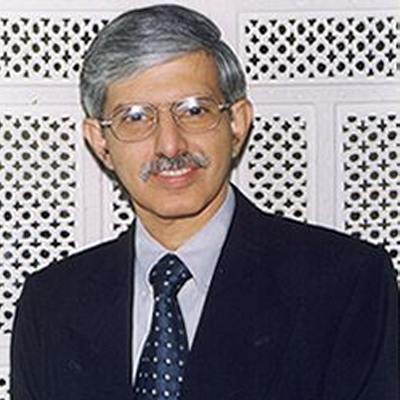
His diminutive size may well fool you. His high pitched voice may mislead you. But make no mistake. Sam Balsara is a powerhouse, a giant of a man in the Indian advertising and media business. Apart from being responsible for the media spends of several hard task master multinational advertisers and for an agency which is today a force to reckon with, he is also leading several industry initiatives.
The 52 year old management graduate (from Jamnalal Bajaj Institute, Bombay) has put in around 25 years in managerial positions in leading marketing and advertising companies.
Balsara founded Madison Communications in 1988 with three blue chip accounts Godrej, Tata (Nelco) and Mafatlal.
Over the last few years, Balsara has acquired a reputation in media having successfully handled the first AOR in the country for Procter & Gamble. Madison is now the AOR for P&G, Godrej, Coke, BPL, Kinetic, Perfetti, Maruti (for TV) ABN AMRO Bank and Playwin Lotteries with media offices in Bombay, Delhi and Bangalore.
Balsara spoke to indiantelevision.com about the highlights of the year 2002 and his take on the future of media in advertising. We present some excerpts –
|
|
|
How has the Madison group fared in the calendar year 2002? Madison Communications has steadily gained in stature and billings and media billings currently stand at Rs 5.5 billion. In the year 2002, Madison as a group grew by 42.15 per cent. Our budgets for this year project us to grow at 44 per cent. We are delighted at this growth in a tough year and that too inspite of one of our major clients reducing spends drastically.
The highlights of the year for us were the rollout of MOMS (Madison Outdoor Media Services) in an aggressive way in all major cities and the launch of Madison Merchandising. Both are doing well. We staffed all of MOMS’ offices fully early in the year and today, it is our fastest growing unit. Madison Merchandising has three clients – Airtel, Samsung and Shaw Wallace.
|
|
|
What were the salient features of the media buying and planning functions (in general) for the industry as a whole in 2002? The media market continues to be dynamic with an accelerating pace of change; in the way media sells, advertisers buy and agencies plan. There have been some dramatic changes in both approach and practice.
There is a greater focus on results – short term and medium term. Media planning and buying impact measured on the basis of the sales it has generated despite the fact that it is only ONE of the factors. The tools for developing a correlation have not yet been fully developed.
Media buying decisions are being decentralised – the business head has more clout and has to balance between long term brand-building initiatives and short-term results. The media buying cycle has been shortened; plans are made for short-term objectives and results.
Budgets have been squeezed and this has led to pressure on media buyers to negotiate better and optimise buying. Over the last six years the advertising market has grown from under Rs 20 billion per annum to over Rs 80 billion per annum. If one assumes an average advertising to sales ratio of 5 per cent, this additional investment should have led to an increase of Rs 1200 billion in terms of advertiser company sales. This hasn’t happened.
Media planning is no longer about number crunching but involves examining the psychographics and demographics of the media vehicle. The use of niche channels and print media has also increased in order to reduce wastage.
The key is to understand the eventual target audience – be it in the metros, medium, small towns – and use media vehicles to subtly influence their daily lives.
Clients are looking at media planners to give them insights which will help them in formulating their marketing plans.
Underlying this change is the basic reason that advertising is working less effectively today for the advertiser, than it did five years ago. |
|
|
What were the new clients bagged by Madison in 2002? In terms of new business, we have been very proactive and have systematically identified the big-ticket sectors and clients. Having a highly motivated core management team also helps in setting realistic targets and attaining them.
Certain sectors such as insurance and retail finance have seen a surge in advertising activity and the need to stretch the rupee and get more bang for the buck has never been felt more, in this sector. I am particularly pleased that Madison Media has been chosen to meet this challenge by the Kotak Mahindra group.
Madison’s various units made several new business gains. Among them:
Madison Communications: Creative business for Crocodile, Click, Amtrex and Red Bull.
Madison Media: ESSEL Group, Godrej Tea, ABN Amro Bank, IFB Appliances, NISSIN Foods, Ozone Ayurvedics and Kotak Mahindra
Madison PR: SIFY, FDC, TBZ, Swagelok, Empire, Vicks, FICCI, BPC, Istma, JBCPL, Camlin, Indo Nissin, Writer, Red Bull, IGI, ACC, Zoroastrian Bank and Shriram TPT Financials.
Madison Outdoor: Titan, ESPN, AVIVA, Tanishq, Nokia, Godrej Agrovet, Radio Mirchi, ABN AMRO Bank, VIP and Milton
Madison Merchandising: Airtel, Samsung and Shaw Wallace
Anugrah Madison (Rural Unit): ACC and Shriram
The future growth will come from from the existing streams of revenue and new streams. And for existing streams we hope to gain more from new business acquisitions than from growth in spend from existing business. |
|
|
What were the new media tools and techniques introduced in 2002? Two major tools and techniques were introduced by us in 2002 MPP – Madison Programme Predictor and Town & Country – asset of tools and guidelines that assist advertisers in harnessing the potential of small towns and large villages. |
|
|
How will the media function change in the near future? The future media specialist of the coming year will be a creative person who uses an innovative approach for selecting the media mix -traditional as well as new economy media. The forthcoming implementation of conditional access system will open new vistas and increase choices for ad agencies and advertisers.
Media specialists must effectively communicate that media is the starting point and plays an important role in ensuring that advertising becomes more efficient and result oriented.
Media specialists must realise that the growth of the advertising pie will directly depend on creating advertising (all functions) that impacts sales.
Ineffective ads shrink the advertising pie and ad agencies must communicate to the publishers and broadcasters that there is a need to rationalise the prices of their offerings.
Media specialists must become more open to regular media audits. A universally accepted efficient system across agencies and across media for press and television operations will soon emerge.
Advertisers will treat media planners with greater regard if and only if all the above mentioned things happens. |






