iWorld
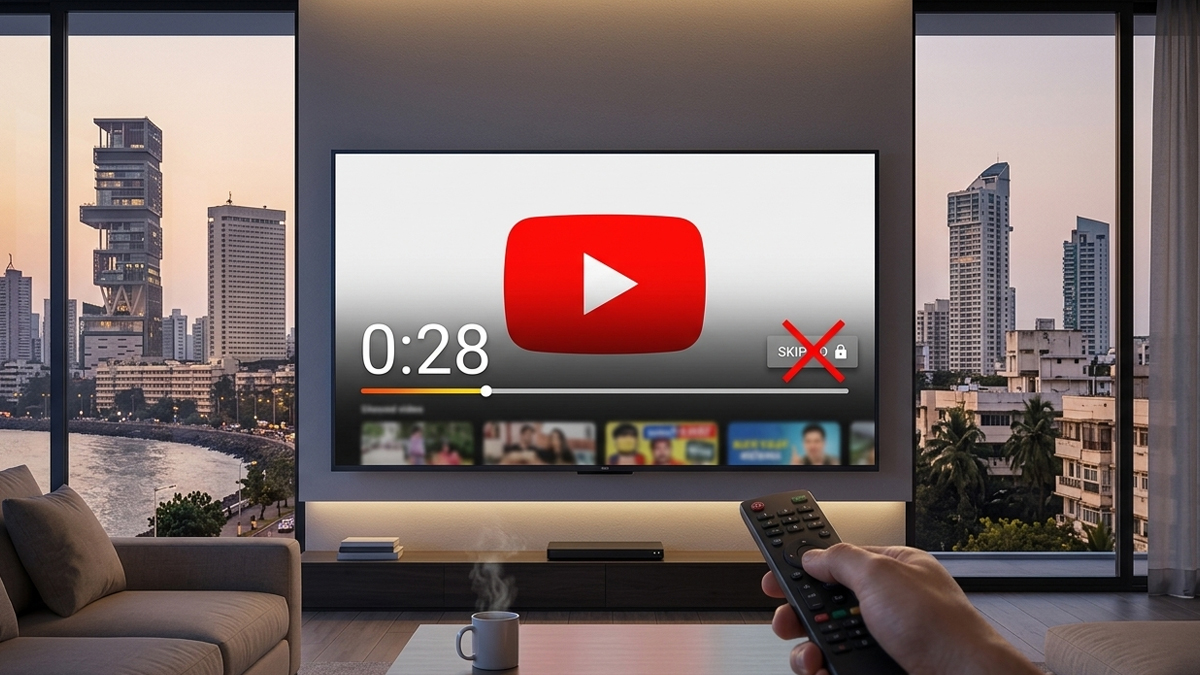
YouTube rolls out 30-second unskippable ads on smart TVs worldwide
New connected TV format and pause ads push viewers towards longer ad breaks
MUMBAI: Your trusty skip ad button may soon become a rare sight, at least when you are watching YouTube on the big screen. As of March 2026, the platform has completed the global rollout of 30-second non-skippable advertisements for connected TV apps.
The move affects viewers watching YouTube on smart TVs, gaming consoles and streaming devices such as Roku or Apple TV. Instead of seeing two separate 15-second ads that could sometimes be skipped after a few seconds, users are increasingly being served a single uninterrupted 30-second advertising block.
The change is primarily tied to YouTube Select, the company’s premium advertising inventory that features the top 5 per cent of most-watched content on the platform. For advertisers, it offers a more predictable and television-like experience. For viewers, it means settling in for the full half-minute.
Behind the scenes, artificial intelligence is also taking on a larger role. Google’s ad systems now dynamically decide which format works best for each viewer. The rotation may include quick 6-second bumper ads, traditional 15-second spots, or the new 30-second connected TV format depending on the content and audience.
Even pressing pause is no longer an escape from advertising. YouTube has started rolling out so-called pause ads, where the video shrinks on the screen and a static or interactive advertisement appears alongside it when a viewer stops playback.
The strategy reflects how YouTube’s viewing habits are changing. Television screens have become the platform’s fastest-growing viewing surface, and in the United States it now ranks as the leading streaming service by watch time, ahead of major subscription platforms.
There is also a practical reason. Ad-blocking software is far less common on smart TVs than on browsers or mobile devices. By shifting more advertising to the living room screen, YouTube is protecting a crucial source of revenue.
At the same time, the company appears keen to nudge more viewers towards its paid offerings. Longer unskippable ads on the free tier make services such as YouTube Premium and the lower-priced Premium Lite subscription more appealing.
For now, mobile and desktop viewers can breathe a small sigh of relief. The 30-second unskippable format is currently limited to connected TVs, while phones and computers still mostly cap non-skippable ads at around 15 seconds.
So the next time you lean back on the sofa to watch a video on YouTube, be prepared. The ads might just be settling in for the full half-minute as well.

Gaming
Bluestone FY26 revenue rises to Rs 2,436 crore, turns profitable
Q4 profit at Rs 31 crore, full-year profit at Rs 13 crore vs loss last year.
MUMBAI: From sparkle to numbers, Bluestone seems to be polishing more than just jewellery this year. Bluestone Jewellery and Lifestyle Limited reported a sharp turnaround in FY26, with revenue from operations rising to Rs 2,436 crore (Rs 24,364 million), up from Rs 1,770 crore (Rs 17,700 million) in FY25. The company posted a full-year profit of Rs 13 crore (Rs 131.79 million), a significant recovery from a loss of Rs 222 crore (Rs 2,218 million) a year ago.
Total income for the year stood at Rs 2,486 crore (Rs 24,860 million), compared to Rs 1,830 crore (Rs 18,300 million) in the previous year, reflecting both topline growth and improved operational momentum.
The March quarter, however, told a more nuanced story. Revenue from operations came in at Rs 681 crore (Rs 6,814 million), down from Rs 748 crore (Rs 7,486 million) in the year-ago period, though higher than Rs 461 crore (Rs 4,613 million) in the preceding December quarter. Net profit for Q4 stood at Rs 31 crore (Rs 311.81 million), compared to Rs 68 crore (Rs 688 million) a year earlier, but a clear reversal from a loss of Rs 51 crore (Rs 512 million) in Q3.
Margins were shaped by higher input costs, with raw material consumption rising to Rs 2,204 crore (Rs 22,043 million) for the full year, alongside employee benefit expenses of Rs 282 crore (Rs 2,824 million) and finance costs of Rs 210 crore (Rs 2,104 million). Other expenses came in at Rs 371 crore (Rs 3,715 million), slightly lower than Rs 393 crore (Rs 3,938 million) in FY25.
On the balance sheet front, total assets expanded to Rs 4,961 crore (Rs 49,610 million) as of March 31, 2026, from Rs 3,532 crore (Rs 35,322 million) a year earlier, driven largely by a surge in inventories to Rs 2,672 crore (Rs 26,718 million). Equity also strengthened to Rs 1,803 crore (Rs 18,030 million), nearly doubling from Rs 911 crore (Rs 9,107 million).
Cash flows reflected the cost of growth. Net cash used in operating activities stood at Rs 199 crore (Rs 1,990 million), while investing activities saw an outflow of Rs 239 crore (Rs 2,392 million). Financing activities, however, generated Rs 497 crore (Rs 4,971 million), helping the company end the year with cash and cash equivalents of Rs 108 crore (Rs 1,075 million), up from Rs 49 crore (Rs 487 million).
Earnings per share for FY26 came in at Rs 1.10, a sharp improvement from a negative Rs 79.74 in FY25, underlining the shift from losses to profitability.
With revenue scaling up, costs still glittering on the higher side, and profitability finally back in the black, BlueStone’s FY26 performance suggests a business mid-transition less about shine alone, and more about sustaining it.