
e-commerce
UPI turns 10 as transactions surge nearly 13,000-fold in a decade
UPI processed 24,162 crore transactions worth Rs 314 lakh crore in FY2025-26


MUMBAI: A decade ago, paying by phone was a novelty; today, it is almost second nature. As the Unified Payments Interface (UPI) marks 10 years, its journey from a 21-bank network to one of the world’s largest real-time payment systems is reflected in a staggering rise in transaction volumes and value.
Prime Minister Narendra Modi marked the milestone in a post on X, describing UPI as a major turning point in India’s digital payments journey and inviting citizens to share how the platform has changed their everyday lives.
Launched by the National Payments Corporation of India (NPCI) in April 2016 with 21 member banks, UPI was opened to the public in August 2016. It has since evolved into a core part of India’s payments infrastructure, enabling instant bank-to-bank and merchant transactions through mobile applications.
The numbers tell the story. UPI transactions rose from 1.78 crore in FY2016-17 to 24,162 crore in FY2025-26, an almost 13,000-fold increase. Transaction value climbed from Rs 0.07 lakh crore to around Rs 314 lakh crore over the same period, according to data cited by DD News.
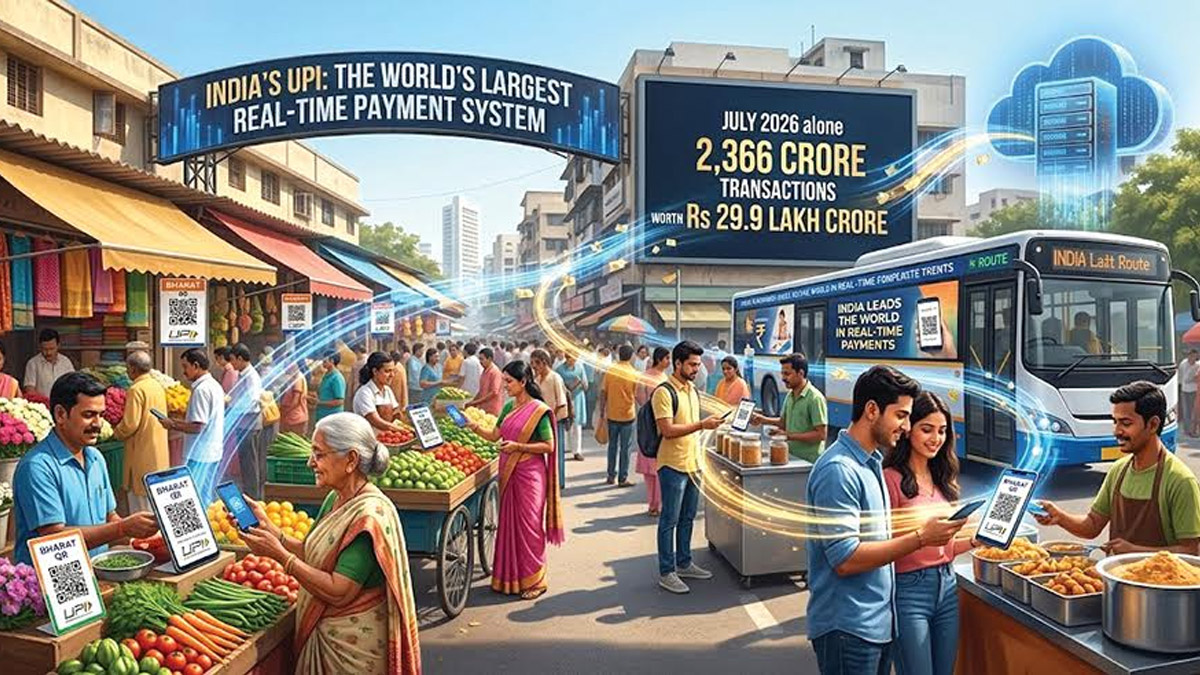
The momentum has continued into 2026. In July 2026, UPI processed a record 2,365.8 crore transactions worth approximately Rs 29.87 lakh crore. Daily volumes averaged around 66 crore transactions during the year, while 741 banks were live on the network as of July.
From small payments to a financial backbone
UPI’s dominance is particularly visible in India’s wider digital payments ecosystem. It accounted for around 84 per cent of digital payment transactions in FY2025-26, with person-to-merchant payments making up about 63 per cent of transaction volume.
Much of that activity involves relatively small everyday purchases. Around 86 per cent of person-to-merchant UPI transactions in FY2025-26 were below Rs 500. Person-to-person payments, meanwhile, accounted for roughly 71 per cent of transaction value.
The platform has also moved well beyond simple transfers. Its ecosystem now includes UPI AutoPay, UPI Lite, UPI 123PAY, credit-line integration, UPI Circle and on-device authentication, alongside uses such as IPO applications, recurring payments and tax payments.
The scale-up has also crossed India’s borders. UPI now has an international footprint spanning 11 countries, including Singapore, the UAE, France, Sri Lanka, Mauritius, Qatar, Cambodia, Greece and the Maldives, as well as Bhutan and Nepal.
According to data cited by DD News, UPI accounted for nearly 49 per cent of global real-time payment transaction volume in 2025. Its development and interoperability have also drawn recognition from the International Monetary Fund.
The growth has remained visible even in the latest monthly data. NPCI figures showed that UPI processed 22.35 billion transactions worth Rs 29.03 lakh crore in April 2026, representing 25 per cent year-on-year growth in transaction volume.
From its launch with 21 banks to 741 banks on the network, UPI’s first decade has turned the humble payment tap into a piece of everyday financial infrastructure. The decade may be over, but India’s tap-to-pay story is still very much in motion.






