iWorld
The 74th BAFTA Awards to stream exclusively on SonyLIV


Lights! Camera! and a lot of Action is about to unfold as we gear up to watch one of the biggest award nights of the year. Celebrating excellence in filmmaking across the globe and bringing an enriching experience for movie lovers, SonyLIV will exclusively stream the British Academy of Film and Television Arts Awards, 2021 (BAFTA). The prestigious awards night will live stream on Sunday, April 11th, 11:30 PM directly from the Royal Albert Hall in London. BAFTA 2021 will be hosted by Edith Bowman and Dermot O’Leary.
The much-coveted ceremony will see seventeen BAFTA winners being announced along with screening of nominated films and behind-the-scenes footage, which will highlight the creative process that went behind curating these masterpieces. Drumming up the buzz further, BAFTA will also honour Ang Lee with the Fellowship this year. The awards night will witness presenters like Asim Chaudhry, Priyanka Chopra Jonas, Sophie Cookson, Phoebe Dynevor, Chiwetel Ejiofor, Cynthia Erivo, Hugh Grant, Richard E. Grant, Tom Hiddleston, Felicity Jones, Gugu Mbatha-Raw, James McAvoy, David Oyelowo, Pedro Pascal, Jonathan Pryce, Rose Byrne, Andra Day, Anna Kendrick and Renée Zellweger from London and Los Angeles, respectively.
With praises pouring in from world over for his incredible performance, young Indian talent Adarsh Gourav has been nominated in the “Best Actor in a Leading Role” category at BAFTA. Gourav will compete against veteran British actor Anthony Hopkins for The Father, French actor Tahar Rahim for The Mauritanian, Riz Ahmed for Sound of Metal, late Chadwick Boseman for Ma Rainey's Black Bottom and Mads Mikkelsen for the Danish language film Another Round.

Here's a quick rundown on the nominations across categories –
BEST FILM
Nomadland
The Father
Promising Young Woman
The Mauritanian
The Trial of the Chicago 7
BEST ADAPTED SCREENPLAY
Bahrani, Zhao – Nomadland
Moira Buffini – The Dig
Christopher Hampton and Florian Zeller – The Father
Rory Haines, Sohrab Noshirvani, and MB Traven – The Mauritanian
OUTSTANDING BRITISH FILM
Calm With Horses
The Dig
The Father
His House
Limbo
Mogul Mowgli
Promising Young Woman
Rocks
Saint Maud
The Mauritanian
LEAD ACTRESS
Vanessa Kirby – Pieces Of A Woman
Frances McDormand – Nomadland
Bukky Bakray – Rocks
Radha Blank – The Forty-Year-Old Version
Wunmi Mosaku – His House
Alfre Woodard – Clemency
BEST DIRECTOR
Both Zhao
Gavron
Thomas Vinterberg
Shannon Murphy
Jasmila Zbanic
Lee Isaac Chung
SUPPORTING ACTOR
Daniel Kaluuya – Judas And The Black
Barry Keoghan – Calm With Horses
Alan Kim – Minari
Leslie Odom Jr – One Night In Miami…
Clarke Peters- Da 5 Bloods
Paul Raci – Sound Of Metal
SUPPORTING ACTRESS
Yuh-Jung Youn – Minar
Niamh Algar – Calm With Horses
Kosar Ali – Rocks
Maria Bakalova – Borat Subsequent Moviefilm
Dominique Fishback – Judas And The Black Messiah
Ashley Madekwe- County Lines







iWorld
Tech firms tweak office operations amid LPG shortage concerns
Infosys, HCLTech and Cognizant adjust cafeteria services and work policies.
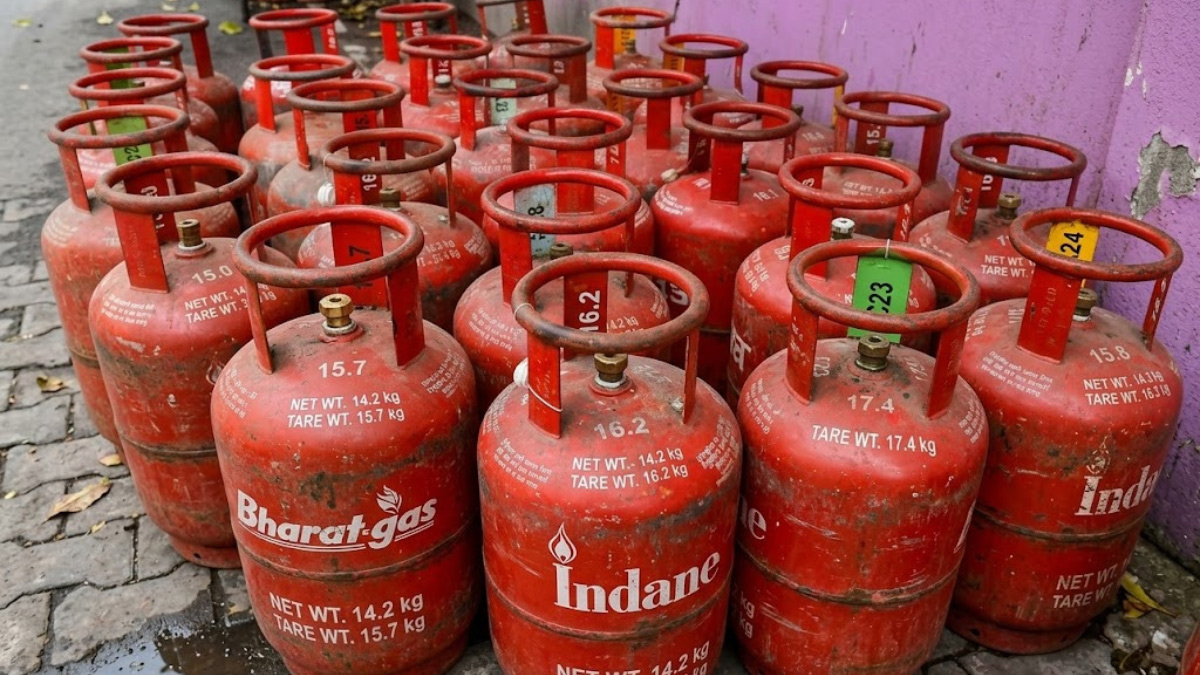
MUMBAI: When geopolitics turns up the heat, even office cafeterias start feeling the burn. Several technology companies in India are adjusting workplace operations and food services as concerns over a nationwide shortage of liquefied petroleum gas (LPG) grow following escalating tensions in West Asia. Major IT firms including Cognizant, Infosys and HCLTech have begun rolling out contingency measures to reduce dependence on office cafeterias that rely heavily on commercial LPG.
The disruption stems from rising geopolitical tensions involving Iran after military action by the United States and Israel reportedly led to the closure of the Strait of Hormuz, a critical global shipping route for oil and gas supplies. The closure has disrupted the movement of LPG and liquefied natural gas across international markets, triggering concerns about supply constraints and price volatility.
According to a report by The Times of India, Cognizant has advised employees to bring their own meals to office where possible to reduce reliance on office cafeterias dependent on LPG based cooking.
The company has reportedly told staff that it is preparing for potential disruptions driven by supply prioritisation, price fluctuations and pressure on vendor networks.
As part of contingency planning, Cognizant is identifying alternative food vendors that do not rely on LPG. These include kitchens using induction based or solar powered cooking systems.
The company is also exploring partnerships with cloud kitchens that operate on electric or solar power to ensure uninterrupted food supply in case conventional cooking gas availability worsens.
Additionally, Cognizant is evaluating the possibility of expanding work from home or hybrid arrangements for non critical roles, partly to reduce commuting exposure if fuel prices rise sharply due to global energy disruptions.
Meanwhile, HCLTech allowed employees at its Chennai office to work from home on March 12 and March 13 after cafeteria vendors were unable to operate because of the LPG shortage.
Several food service vendors at the campus reportedly suspended operations as they struggled to secure cooking gas supplies, prompting the company to permit staff to work remotely for the two days.
Infosys has also issued internal advisories across multiple locations, including its campuses in Bengaluru and Chennai.
The company informed employees in Bengaluru that cafeteria services would continue but with reduced menu options due to concerns around commercial LPG availability.
As part of the temporary adjustments, live food counters have been suspended, and employees have been encouraged to bring home cooked food while the situation evolves.
While LPG shortages in India remain a developing situation, the measures taken by these technology firms highlight how global geopolitical disruptions can ripple through unexpected corners of the economy, even the humble office lunch.
For companies with large campuses and thousands of employees relying on daily cafeteria services, cooking fuel shortages can quickly turn into an operational challenge. Until global supply chains stabilise, many workplaces may find themselves rethinking everything from food sourcing to flexible work policies.







