
iWorld
Prime Video India bets on IP, multilingual stories and global audiences: Shilangi Mukherji
After a decade, the streaming platform is betting on rooted stories, franchises and choice


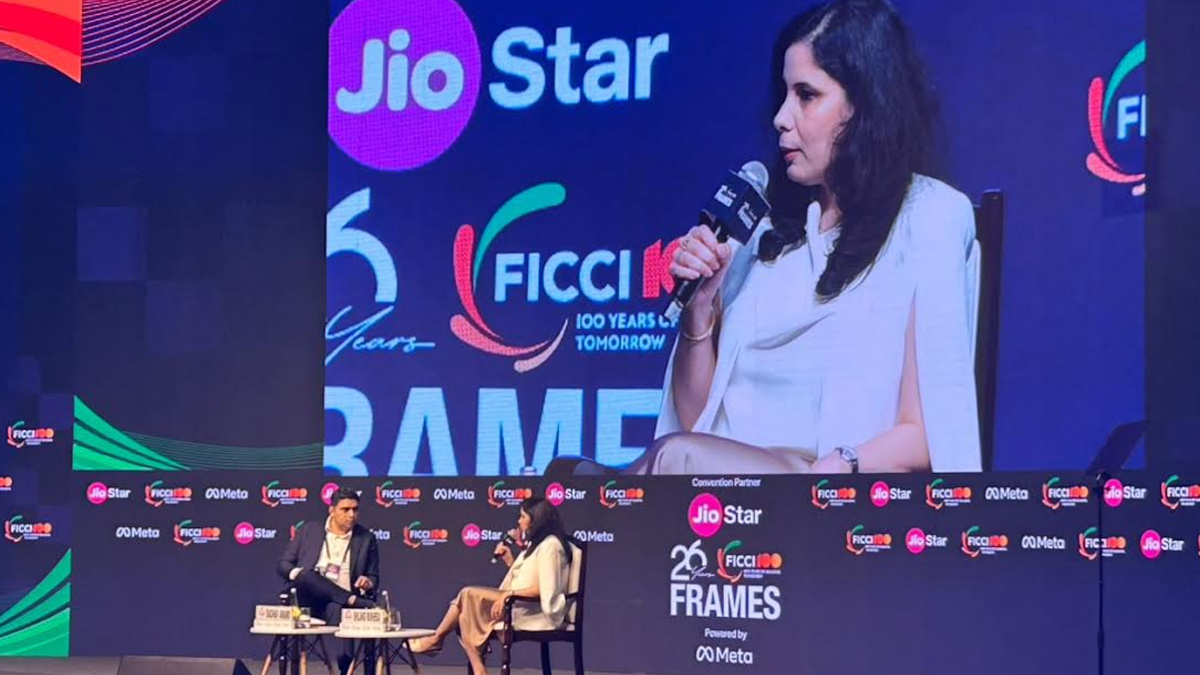
MUMBAI: Ten years in, Amazon Prime Video is looking beyond simply adding more shows to its catalogue. Its next chapter in India is shaping up around deeper audience engagement, stronger intellectual property, wider access, multilingual content and stories that can travel well beyond the country.
Speaking at FICCI Frames 2026, Shilangi Mukherji outlined how the platform is approaching its next phase after a decade in the Indian market.
Prime Video India has built a slate of more than 130 original and exclusive titles, with more than 100 additional projects at various stages of development and production. The business is also increasingly focused on taking Indian stories to audiences outside the country.
The international opportunity has already become a significant part of the platform’s viewing mix, with 15 per cent of its viewership coming from outside India. The shift reflects a broader evolution in India’s position in the global content economy, from being primarily a consumer of international stories to becoming a source of content for audiences worldwide.
The evolution of Prime Video India has also moved beyond the traditional streaming model.
The service now brings together original and exclusive series, licensed content, movie rentals, add-on subscriptions and theatrical releases. It has more than 30 add-on subscriptions, allowing customers to access other streaming services through the Prime Video ecosystem.
The strategy is centred on giving consumers greater choice while creating multiple ways to engage with entertainment. The platform’s expansion into theatrical releases further extends its role across the content value chain.
The approach also places greater emphasis on creating content that can develop into long-running intellectual property rather than remaining a one-season or one-off proposition.
Around 60 per cent of Prime Video India’s IPs are now in their second seasons, underlining the growing focus on franchises and recurring audience relationships. The strategy also allows successful properties to move between formats and screens, with the example of Madgaon Express illustrating how content can extend from a streaming ecosystem into theatrical entertainment.
For Prime Video, deciding what belongs on the platform involves a combination of audience data and creative judgement.
The selection process places importance on whether a story is distinctive, culturally rooted and capable of connecting with Indian audiences. Beyond initial acquisition, content is also assessed for its ability to attract new customers, retain existing members and sustain engagement over time.
Franchise potential is another consideration. Stories with the capacity to develop across seasons, formats or markets can create longer-term value than projects designed as one-off viewing experiences.
The international potential of a story is increasingly part of that equation. Content that can travel through subtitles and dubbing can reach viewers beyond India’s diaspora, opening the door to audiences with no direct connection to the culture in which the story originated.
The next phase of growth is therefore being viewed as broader than simply adding subscribers.
Audience attention is increasingly fragmented, making engagement and retention just as important as acquisition. The strategy is to build a deeper relationship with customers across multiple entertainment needs and formats.
Prime Video’s positioning as part of the wider Prime ecosystem also gives it several points of entry. The service combines video with benefits linked to shopping, shipping and music, while offering different viewing options across devices and screens.
Connected television is expected to play an increasingly important role. According to figures cited from the FICCI-EY Media & Entertainment Report, 68 million customers in India currently have access to connected TVs, while the number of homes using smart TVs is expected to reach 100 million.
The opportunity is particularly significant in a country of more than 1.4 billion people, where the next phase of streaming growth depends not only on reaching new customers but also on making services accessible and relevant to different consumer segments.
Prime Video’s reach already extends across 99 per cent of Indian pincodes, reflecting the breadth of its distribution footprint.
Language is another major part of the platform’s India strategy.
The country’s diversity means consumers increasingly move between languages rather than consuming entertainment in only one. Prime Video’s audience reflects that behaviour, with 62 per cent of customers streaming content in four or more languages.
That creates an opportunity for platforms to build content strategies around India’s linguistic diversity rather than treating it as a collection of isolated markets.
Personalisation can help audiences discover stories across languages, while dubbing and subtitling can allow Indian content to travel internationally.
The broader opportunity is to make Indian storytelling more representative of how audiences actually live, speak and consume entertainment.
The discussion also placed emphasis on the economics of India’s creator ecosystem.
As one of the country’s largest streaming platforms, Prime Video has a role in creating sustainable opportunities for writers, directors, actors, technicians and other creative professionals. Developing fresh voices and new talent is increasingly important as the volume of content expands.
That also means moving beyond short-term hits. The focus is on creating stories that can remain part of popular culture, develop across seasons and retain relevance years after their initial release.
For creators and emerging streaming businesses, the broader message is to prioritise authenticity, diversity and long-term thinking rather than simply replicating successful formats or chasing immediate trends.
As Prime Video enters its second decade in India, its growth story is increasingly tied to how effectively it can combine content, technology, access and multiple entertainment formats. The ambition is no longer just to build a bigger catalogue, but to create a broader entertainment ecosystem that can keep audiences engaged while giving Indian stories a bigger global stage.






