Comment
Mr. Netflix, are you ready for India?

After tasting global success, Mr. Netflix is revving up to thrust into India by 2016. But let’s take a breather here. We are talking about a country which debates about Bharat and India and where a part of the demography still views its favourite content in black and white CRT TV.
While youngsters these days are widely speaking about Game of Thrones, Breaking Bad, House of Cards and Orange Is The New Black, dear Mr. Netflix wait before you get buoyed by all these series that generates millions for you, as Indians still believe in ‘torrent’ing .

In India, while some of the best movies, made by the greatest filmmakers have been uploaded on YouTube, what has worked is the bathroom comedy by All India Backchod. Why do I talk about this, because if one has to believe the sources, Netflix is meeting a lot of producers across India to rope in quality content for the subscription based video on demand (SVOD) platform.
I know that the unprecedented number of downloads of Hotstar has tested your temperament and you can’t wait to enter the lucrative Indian market, but this video on demand (VoD) platform from Star India, got most of its downloads, thanks to Cricket, a religion in India. The app has so far been downloaded by more than 10 million Android users.
Hotstar was placed in the top spot in the Google free app category even taking over Facebook and Whatsapp while the ICC Cricket World Cup was on. Now that the World Cup and IPL are over, the platform is not even in the top 10. This substantiates the fact that Hotstar’s unprecedented success was because of the two cricketing events.
So what are you thinking now, Mr Netflix? Hotstar does not have adequate content? Hold on, the platform has 20,000 hours of content spread across seven languages. This includes 120+ full length TV shows and 500+ movies. This apart, the app also live streams popular sports like Cricket, Football, Tennis and Kabbadi. In short, Hotstar caters to a very large and diverse audience.
Hotstar is not the only VOD platform India has. Right from Zee’s DittoTV, Spuul, Zenga, YupTV to the speculated Viacom 18’s soon to be launched VOD platform, competition will be tough. So, Mr Netflix it’s not just another regular expansion of business, you are going to enter a war: A war of over the top (OTT) services.
Not only domestic players, but international ones like HOOQ and Vuclip among others have already entered the Indian market. HOOQ launched in India in May 2015 with a subscription plan of Rs 199.
The subscription based platform has managed to secure 10,000 downloads in the two months since its launch. So Mr. Netflix, you may just have to change your strategy and become an ad based VoD platform, to woo Indian consumers. If industry sources are to be believed, Netflix is looking for a possible tie up with HOOQ for its India launch.
Mr Netflix if you are thinking you will change your strategy and take the ad route let me throw a few numbers. Of the Rs 414 billion Indian advertising budget, only 10.5 per cent is expected to be spent on digital. Eating into this 10.5 per cent will be giants like Google, Yahoo and Bing among others, leaving you with a meager percentage share of the ad pie. If this satisfies you, join the fight and prepare yourself with some melodrama content that can please the advertiser.
By now you must be thinking: what do 1,280 million people in India do and what about the 300 million smartphone exaggeration? Let’s take the number route again. Yes it’s true that India is about to dethrone the US and become the second largest mobile internet market by having more than 300 million wireless internet users and the year-on-year growth rate stands at 31 per cent. The main reason behind it is availability of smartphones at a low price which is enabling the penetration in rural India. But Mr Netflix what content will you provide in rural India? Malgudi Days? And you think rural India will accept it? On a Rs 5,000 smartphone Malgudi Days will look like Guilever Travels and produce sound like a radio. So not convincing!
I know what is lucrative — 210 million wireless internet connections which is estimated to reach 402 million by 2017 and 528 million by 2019. While urban India widely speaks about 3G, majority of them disable their 3G service and stay satisfied with Edge or 2G service. 3G is largely alien to rural India. To add to your vivid imagination, while you are widely reading about smartphone penetration, 66 per cent of the urban internet traffic comes from desktop. 11 per cent of active urban consumers use tablets to access internet of which only 16 per cent consider tablets as their primary device for internet access.
So Mr Netflix, if you still have zest let me present to you the fiercest competition: Television, which you think will diminish with the emergence of digital. Yes, there are close to 300 million internet users whereas only 168 million television households in India. But if one takes a closer look, the168 million households amount to 825 million television viewers.
The growth rate of internet users is also expected to be much higher compared to that of television. From 2014-19 television is expected grow at a CAGR of 3 per cent, when pitched against the huge CAGR 18 per cent for internet users. The television growth can go much higher if more areas are empowered with electricity.
So, only if there is a complete paradigm shift, with five national MSOs and six DTH players committing a bundle of mistakes and a Tsunami of technology comes in to change the entire infrastructure, a concept like SVOD may work, otherwise it may just perish.
Mr Netflix let me introduce a term to you which you might have never come across throughout your journey – ‘buffering’. To watch a video at 144p one has to go through numerous buffering so guess what will happen to someone who wants to watch an Argo or Apocalypse Now.
The only ray of hope for you Mr. Netflix is 4G. Airtel has already launched 4G in some parts of the country and Reliance Jio is expected to launch by 2015 end. 4G is supposed to be a lot faster compared to 3G but the price is yet to be determined. Why did I mention price? As the current scenario goes, to watch 1GB of content one has to pay around Rs 300. So for 10 GB worth of content, one has to pay approximately Rs 3,000 — an amount that can give 500 channels on television for 10 months.
The other ray of hope is Prime Minister Narendra Modi’s ‘Digital India’ vision.
Mr Netflix don’t worry India believes in Atithi Devo Bhava (Guest Is God) and hence will welcome you with grace and gratitude, like the nation did with Starbucks and Dunkin Donuts.
But at the end of the day as Charles Darwin said ‘Survival of the fittest.’




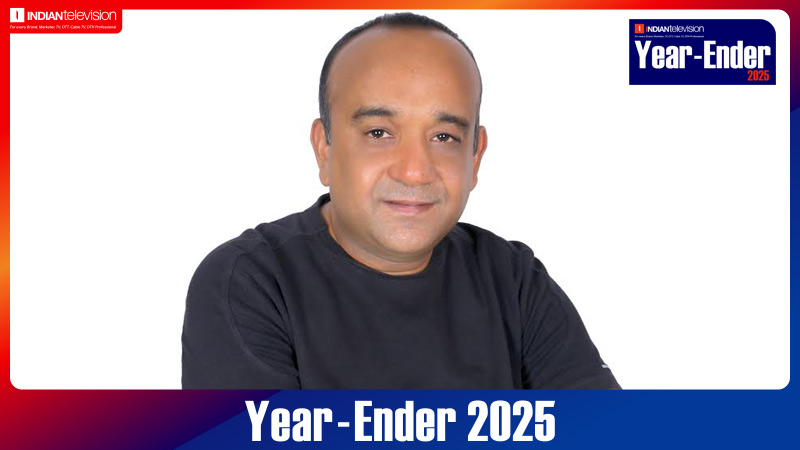
MUMBAI: 2025 will be remembered as the year India’s OTT industry stopped chasing scale for its own sake and began reckoning with how audiences actually consume content. Completion rates fell, patience wore thin and the limits of long-form excess became impossible to ignore. In this guest column, Pratap Jain, founder and CEO of ChanaJor, traces how micro-drama moved from the fringes to the centre of viewing behaviour, why short-form fiction emerged as a retention engine rather than a trend, and how platforms that respected time, habit and emotional payoff were the ones that truly grew up in 2025.
If there is one thing 2025 will be remembered for in the Indian OTT industry, it’s this: the industry finally stopped pretending.
Stopped pretending that bigger automatically meant better.
Stopped pretending that viewers had endless time.
Stopped pretending that scale without retention was success.
What began as a quiet reset in 2023 and a cautious correction in 2024 turned into a very visible shift in 2025. Business models matured. Content strategies tightened. And most importantly, platforms started aligning themselves with how Indians actually watch content, not how the industry wished they would.
At the centre of this shift was micro-drama—not as a trend, but as a behavioural inevitability.
When OTT finally understood the time problem
For years, long episodes were treated as a marker of seriousness. A 45–60 minute runtime was almost a badge of credibility. Shorter formats were pushed to the margins, labelled as “snack content” or “mobile-only.”
That belief quietly collapsed in 2025.
What platform data showed very clearly was not a drop in interest—but a drop in patience. Viewers weren’t rejecting stories. They were rejecting commitment.
Across platforms, the same patterns appeared:
* First-episode drop-offs on long-form shows kept increasing
* Completion rates continued to slide
* Viewers were sampling more titles but finishing fewer
At the same time, shows with episodes in the six to 10 minute range started showing the opposite behaviour: higher completion, higher repeat viewing, and stronger daily habit formation.
Micro-drama didn’t win because it was short. It won because it respected time.
Micro-Drama didn’t arrive loudly. It took over quietly.
There was no single moment when micro-drama “launched” in India. It crept in through dashboards and retention charts.
By mid-2025, it was clear that viewers were happy watching four, five, sometimes six short episodes in one sitting—even when they wouldn’t finish a single long episode. Romance, relationship drama, slice-of-life conflict, and grounded comedy worked especially well.
This wasn’t disposable content. It was compressed storytelling.
In shorter formats, there was no room for indulgence. Every episode had to move the story forward. Weak writing was punished faster. Strong writing was rewarded immediately.
Micro-drama raised the bar instead of lowering it.
Where ChanaJor naturally fit into this shift
ChanaJor didn’t pivot to micro-drama in 2025 because the market demanded it. In many ways, the platform was already built around the same viewing behaviour.
From the beginning, ChanaJor focused on short-to-mid-length fictional stories that felt close to everyday Indian life—hostels, rented flats, office romances, small-town relationships, young people figuring things out. Stories that didn’t need heavy context or cinematic scale to connect.
What worked in ChanaJor’s favour in 2025 was clarity:
* A clearly defined audience
* Tight episode lengths
* Storytelling that prioritised emotion and pace over spectacle
While several platforms rushed to copy global micro-drama formats, ChanaJor stayed rooted in familiar Indian settings and conflicts. That familiarity mattered. Viewers didn’t have to “enter” the world of the show—it already felt like theirs.
Why audiences started responding differently
One of the biggest misconceptions going into 2025 was that audiences wanted shorter content because their attention spans had reduced. That wasn’t entirely true.
What viewers actually wanted was meaningful payoff per minute.
On platforms like ChanaJor, episodes didn’t waste time setting the mood for ten minutes. Conflicts arrived early. Characters were recognisable within moments. Emotional hooks landed fast.
A typical consumption pattern looked like real life:
* One episode during a break
* Two more before sleeping
* A few the next day
This is how viewing habits are built—not through marketing spends, but through comfort and consistency.
Viewers came back not because every show was a blockbuster, but because they knew what kind of experience to expect.
2025 was also the year OTT faced business reality
The other big change in 2025 was on the business side. Subscriber growth slowed. Discounts stopped hiding churn. Customer acquisition costs rose.
Platforms were forced to ask harder questions:
* Are viewers finishing what they start?
* Are they returning without reminders?
* Is this content worth what we’re spending on it?
This is where micro-drama began outperforming expectations. A well-written short series could deliver sustained engagement without massive budgets. It didn’t peak for one weekend and disappear—it stayed alive through repeat viewing.
Platforms like ChanaJor benefited because they weren’t chasing inflated launch numbers. The focus was on consistency and retention, not noise.
Failures Became Visible Faster
2025 also exposed weaknesses brutally.
Several platforms assumed micro-drama was a shortcut—short episodes, quick shoots, instant traction. What they discovered was that bad writing fails faster in short formats than in long ones.
Viewers dropped off within minutes. Episodes were abandoned mid-way. Weak stories had nowhere to hide.
Micro-drama didn’t forgive laziness. It amplified it.
The platforms that survived were the ones that treated short storytelling with the same seriousness as long-form—sometimes more.
OTT Stopped Chasing Prestige and Started Chasing Habit
Perhaps the most important shift in 2025 wasn’t technical or creative—it was psychological.
OTT stopped trying to look like cinema. It stopped chasing validation through scale and awards alone. It began behaving like what it actually is in people’s lives: a daily companion.
Platforms like ChanaJor found their space here because that mindset was already baked in. The goal wasn’t to dominate a weekend launch. It was to quietly become part of someone’s everyday viewing routine.
That shift changed everything—from release strategies to how success was measured.
What 2025 Ultimately Taught the Industry
By the end of the year, three truths were impossible to ignore:
* Time is the most valuable thing a viewer gives you
* Retention matters more than reach
* Format must follow behaviour, not ego
Micro-drama didn’t take over because it was fashionable. It took over because it fit real life.
Looking Ahead
Micro-drama is not replacing long-form storytelling. It is redefining the baseline of engagement.
Longer shows will survive—but only when they earn their length. Short-form fiction will continue to evolve, becoming sharper, more emotionally confident, and better written.
Platforms like ChanaJor have shown that it’s possible to grow without shouting—by understanding the audience, respecting their time, and telling stories that feel real.
2025 wasn’t the year OTT became smaller. It was the year it became smarter.
Note: The views expressed in this article are solely the author’s and do not necessarily reflect our own.






