iWorld
L’Oréal Paris leads micro influencer push with 610 posts in India
Micro creators drove 82 per cent of its content, while the brand recorded the lowest relative impact score among six rivals


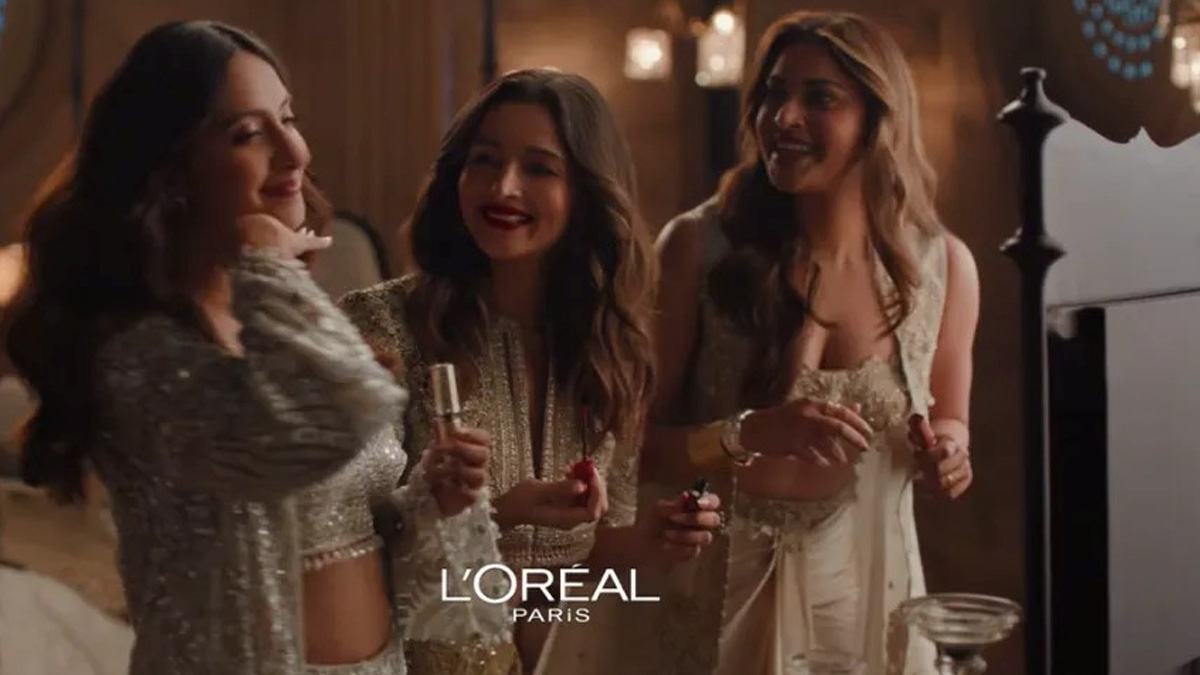
MUMBAI: In the beauty business, L’Oréal Paris is putting more faces to its name, but not necessarily the biggest ones. The brand is leaning heavily on micro-influencers to build its presence on social media, generating 610 posts through 278 creators in India between March 2024 and February 2025, according to influencer marketing data accessed by Storyboard18.
The numbers put L’Oréal Paris second in content volume among six beauty and skincare brands analysed, behind Minimalist, which recorded 660 posts through 441 influencers. Lakmé followed with 446 posts involving 432 creators, while Olay India generated 226 posts through 142 influencers. The Derma Co and Dot & Key recorded 96 and 22 posts, respectively.
However, the more interesting detail lies in how the brands assembled their creator networks. L’Oréal Paris generated its substantial content volume through a comparatively smaller pool of influencers, suggesting a more concentrated approach to creator-led marketing than some of its competitors.
Creators with between 10,000 and 100,000 followers accounted for 498 of L’Oréal Paris’s 610 posts, or approximately 82 per cent of its total influencer content during the period.
Macro-influencers, with 100,000 to 500,000 followers, contributed another 83 posts, while nano-influencers accounted for 17. At the upper end, mega-influencers with 500,000 to one million followers generated eight posts, and creators with more than one million followers contributed just four.
The distribution puts micro-influencers firmly at the centre of the brand’s content strategy, with larger creators playing a considerably smaller role.
The approach is not entirely different from that of its competitors, although the mix varies. Minimalist generated 323 posts through micro-influencers, 144 through macro-influencers and 154 through nano-influencers. Lakmé recorded 316 micro-influencer posts and 75 nano-influencer posts.
Olay India, meanwhile, generated 89 posts through micro-influencers and 93 through macro-influencers, making the latter its largest contributor among the two categories.
The figures suggest that while micro-influencers are an important source of content across the beauty category, brands are distributing their activity across creator tiers in different ways.
L’Oréal Paris’s relatively compact creator network becomes more apparent when its post volume is measured against the number of influencers involved.
Its 610 posts across 278 creators translate into approximately 2.2 posts per influencer during the period. Minimalist averaged around 1.5 posts per creator, while Lakmé recorded just over one post per influencer.
In other words, L’Oréal Paris generated more content from each creator on average, rather than spreading its activity across as many individual influencers as some competitors.
That does not necessarily mean the brand had more long-term partnerships or repeat collaborations. The data does not clarify whether the higher posting frequency came from multiple deliverables within individual campaigns, recurring engagements or longer-term creator relationships.
Still, the difference highlights two distinct approaches to influencer marketing: building a wider network of creators or generating a higher volume of content from a more concentrated group.
There is, however, a gap between L’Oréal Paris’s content output and its relative impact score.
Despite ranking second in the number of influencer posts, the brand recorded the lowest relative impact score among the six companies, at 0.7x.
Dot & Key, which generated only 22 posts, topped the comparison with a score of 1.5x. Lakmé followed at 1.4x, The Derma Co recorded 1.1x, Minimalist stood at 1.0x and Olay India registered 0.9x.
The contrast is particularly striking: L’Oréal Paris produced 610 posts, while Dot & Key generated just 22, yet the latter recorded more than twice the relative impact score.
The figures underline why content volume alone cannot tell the full story of an influencer campaign. A larger number of posts does not automatically translate into stronger audience response or marketing effectiveness.
However, the dataset does not specify how the relative impact score is calculated. It is therefore not possible to establish whether the measure reflects engagement, reach, audience response or another set of parameters. Nor can it be treated as a direct measure of return on investment.
When it comes to format, short-form video is doing most of the heavy lifting across the six brands.
Of L’Oréal Paris’s 610 influencer posts, 609 were Reels, with just one carousel post and no standalone image posts. The format preference was similarly pronounced among competitors.
Minimalist recorded 617 Reels, 29 carousel posts and 14 image posts. Lakmé generated 436 Reels, eight carousels and two images, while Olay India produced 210 Reels, 12 carousel posts and four images.
The numbers show how firmly Reels have established themselves as the preferred format for influencer-led beauty content, leaving static images and carousels with a much smaller share of activity.
For a category that relies heavily on product demonstrations, application routines and visual storytelling, the dominance of short-form video is reflected in the content mix across the brands analysed.
The creator landscape is also less exclusive than brand campaigns might suggest. The data reveals considerable overlap between L’Oréal Paris’s influencer network and those of competing beauty and skincare companies.
Of the 278 influencers associated with L’Oréal Paris, 216 were classified as unique within the competitive comparison. The brand shared 32 creators with Minimalist, the highest overlap among the five competitors.
The Derma Co followed with 21 shared influencers, while Lakmé had 15. L’Oréal Paris also shared nine creators with Olay India and eight with Dot & Key.
This overlap indicates that several influencers featured in the marketing networks of multiple beauty brands during the period. However, the data does not establish whether the collaborations took place simultaneously or involved competing products and categories.
Taken together, the figures offer a snapshot of how India’s beauty brands are approaching creator-led marketing. Minimalist generated the highest overall post volume and worked with the largest creator pool, while Lakmé spread its activity across almost as many influencers as it had posts.
L’Oréal Paris, meanwhile, combined the second-highest content volume with a smaller network dominated by micro-influencers. Its average of 2.2 posts per creator was also higher than that of Minimalist and Lakmé.
But the relative impact scores offer a reminder that the influencer marketing race is not simply about who can fill the most feeds. The number of posts, the size of the creator network and the impact attributed to that content are different measures — and, in this comparison, they do not necessarily move in the same direction.