e-commerce
Is FB-Jio deal just a great Indian e-commerce story?

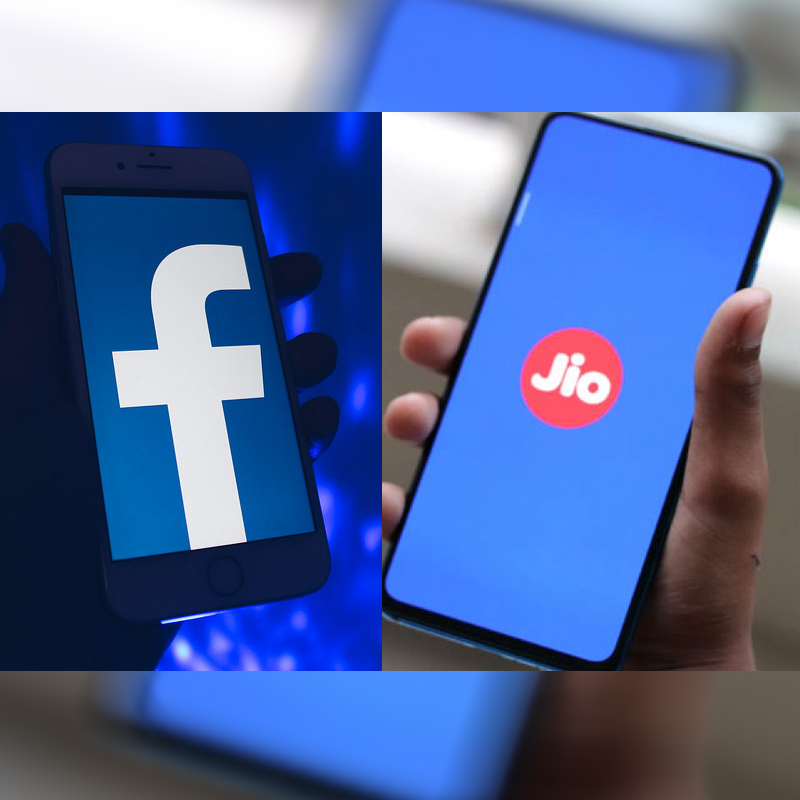
MUMBAI: What has been hogging the limelight lately? The Rs-43,574-crore Facebook-Jio deal. When the entire country continues to be bogged down by the Covid2019 pandemic, when marketing sentiments were at their nether, the deal came as a big surprise, a refreshing break from all the gloom and doom. Indeed, it is worth the tom-tom, for, the world’s largest social media group has just invested in India’s largest telecom operator, Jio, run by the country’s richest man Mukesh Ambani. Irrefutably, it's a multifaceted deal, but more skewed towards e-commerce play. Even though Jio’s parent company Reliance Industries Ltd (RIL) has a hold over the Indian media and entertainment ecosystem, there have been speculations about its impact on the sector but it's going to be a minor one for now.
Because the two giants have been known to disrupt the ecosystems over and again, it's not easy to predict the direction this new association might take. But the e-commerce ambition is unquestionable and has become more evident with JioMart going live on WhatsApp in some areas of Mumbai. Announcing the deal, Jio said: “Our focus will be India’s 60 million micro, small and medium businesses, 120 million farmers, 30 million small merchants and millions of small and medium enterprises in the informal sector.”
Will India get its own WeChat?
SBICap Securities institutional equity research head Rajiv Sharma says WhatsApp Payments is in the process of getting launched and it took five years for Paytm to get all the vendors and merchants signed up. While Jio is doing this kirana commerce, it will be significantly faster for WhatsApp Payments to go to market thanks to the partnership.
“For Facebook, it is ‘get set go’ on the WhatsApp Payments and WhatsApp Business and if it can make it work here then not only it will improve the value but also the investment it has made, and it will create a new revenue stream. And that model can be replicated in other countries,” he adds.
An analyst unwilling to be named says WhatsApp will turn out as WeChat of India as Facebook will use even Instagram and look at expanding the horizon by looking at other sectors like healthcare as well. According to him, Jio is going to create a market along with Facebook through this “thick partnership.” It will empower them to do multiple businesses.
“I'd always said India will be eventually a hybrid e-commerce market with neighbourhood kirana stores being an integral part of fulfilment strategy. JioMart and WhatsApp have the potential to significantly build on this model and change the rules of the e-commerce landscape in India. While on one side the ease of WhatsApp will make it convenient for consumers to transact, the reach and prowess of the JioMart engine will provide the necessary boost to WhatsApp to exponentially grow as a business platform. It will be interesting to see how Google Spot and Paytm Mall play out their strategies in this space,” PwC India media, entertainment and sports advisory, partner and leader Raman Kalra says.
What Jio gets out of it?
Ambani’s biggest bet for the future will also benefit from the deal. The first and foremost is Jio’s debt coming down as RIL may go soon with the former’s initial public offering (IPO). Moreover, the company had laid out a plan to become net debt-free. The deal also comes at a time when the market is significantly hit by the Covid2019 crisis, making business worse for many tycoons. And not to be forgotten, RIL’s oil business may face a huge headwind in the future, especially with the delay in its deal with Saudi Aramco too.
Sharma explains that while Jio is focusing a lot on commerce, WhatsApp is a great brand to make it very easy for the kirana guys to relate to, if you have payments linked to your chat. Elara Capital VP – research analyst (media) Karan Taurani says that access to Facebook’s large user base across apps will help Jio’s e-commerce ambition, making it a large entity after Amazon and Flipkart.
“Across various platforms (Facebook, WhatsApp, Instagram), FB enjoys significant time wallet share of Indian consumers and with Jio's reach across content and commerce, it creates an attractive value proposition and stickiness for existing consumers as well as the incremental net new consumers. This boost can fuel the digital adoption across multiple untapped segments of society across end consumers and small businesses. With Facebook's focus around groups and communities, the extended reach can provide an exponential boost across healthcare and education segments,” Kalra adds.
Will the media and entertainment sector see an immediate impact?
Although e-commerce is the biggest narrative here, stakeholders and experts across the media and entertainment sector are also evaluating the deal. This is not unpredictable as RIL has built its own media empire by acquiring majority stakes in networks, content production studios, etc. While there is no short-term impact, the combined force can create another wave of disruption in the industry.
Sharma says that both could share insights around consumers and subscribers, based on data that could allow them to understand consumer behaviour around digital content in a much better way. If Facebook shares some of the consumer insights on Indian users and Jio shares that of all its users, both the parties can have a huge understanding of how the larger part of India is consuming content.
“From a media and entertainment perspective, the combined force will carry the potential. However, a lot would depend on the content creation and sharing strategies between the two. With extended reach into the hinterland and rural segments, Facebook will have the opportunity to provide extended services around short-form video creation like TikTok and end the monopoly in that segment. I do expect sports streaming to become a strategic focus for the combined force in times to come. All this leading to higher time share on FB platforms could also help them with a few incremental points gain in the digital advertising market share,” Kalra says.
Data sharing concerns?
With the massive extraordinary user base, both the parties have access to huge data which has created a concern in the ecosystem. One of the legal experts in the M&E sector says it's important to evaluate the conditions of data sharing, given Facebook’s tainted record, especially in the recent past with regard to data privacy and sharing. Considerably, India is yet to finalise a data protection law. He also adds that the unfair advantage of data sharing may throw more challenges to competitors. However, according to media reports, both the parties emphasised that there would be no data sharing.