iWorld
Instagram rolls out tools to protect creators from content theft
Meta’s new feature flags copied videos, while a separate test targets AI accounts reusing scripts and jokes


MUMBAI: The joke may be old, but the punchline could belong to someone else. Instagram is rolling out new tools to help creators identify and tackle content theft, after comedians raised concerns about AI-generated accounts lifting their jokes, scripts and even on-screen personas to attract audiences.
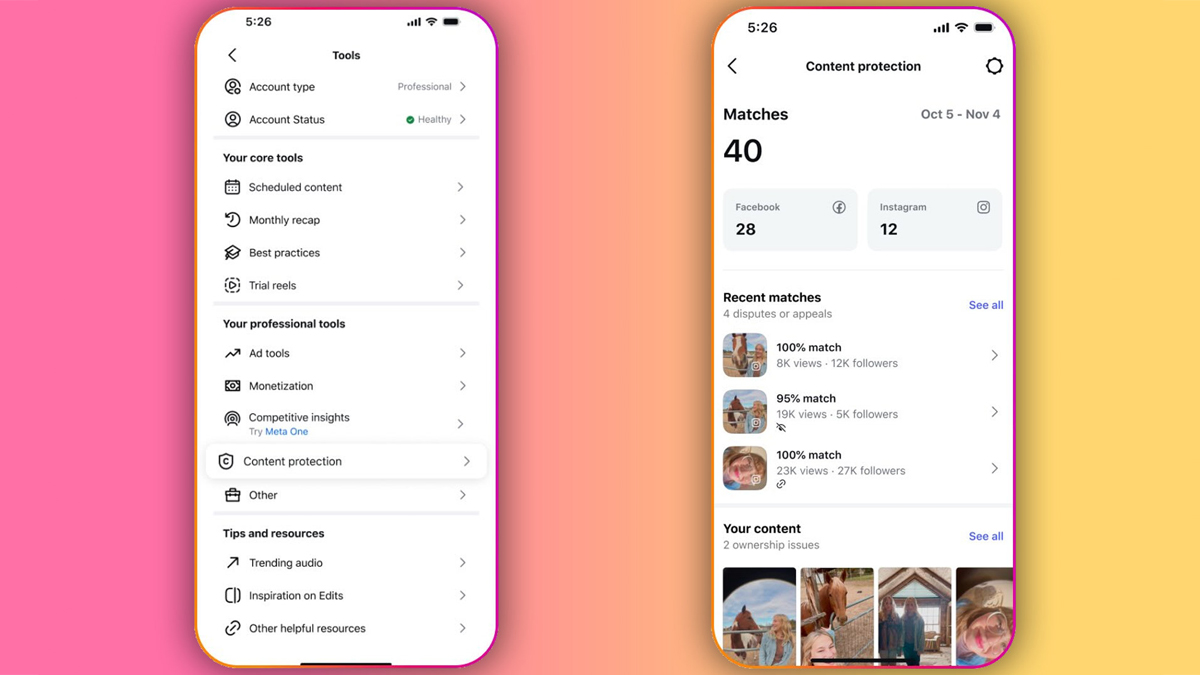
The new initiative, called Content Protection, will alert eligible creators when Instagram detects visual matches of their original videos. They can then review the copies and decide whether to track them, add a link directing viewers to the original content or hide them.
The broader rollout is accompanied by a separate, limited test of script detection, designed to identify accounts that reuse a creator’s words, jokes or scripts while changing the visuals using artificial intelligence (AI).
The move follows reports of comedians finding their material reproduced almost word for word by accounts featuring AI-generated performers. Some of these profiles reportedly used the stolen material to build audiences and were linked to OnlyFans accounts, raising concerns about creators losing both recognition and potential commercial opportunities to fabricated online personalities.
Instagram chief Adam Mosseri announced the Content Protection feature on Threads on Tuesday, saying creators would be able to see and review copies of their videos through their Instagram insights.
According to the company, eligible creators will receive a notification in their activity feed inviting them to enrol. Once enrolled, their newly uploaded original videos will automatically receive protection. Creators can also manually select eligible older videos to include in the system.
When Instagram identifies a visual match, the creator will be alerted and given options to decide what happens next. They can track the copied video, add a credit link directing viewers to the original or hide the copy.
This gives creators a way to respond without having to discover every unauthorised repost themselves. It also offers a mechanism to redirect attention towards the original account, an important consideration for influencers and digital performers whose reach, engagement and earnings depend on their content being correctly attributed.
However, the system is not designed to catch every form of plagiarism from the outset. Instagram has acknowledged that its detection capabilities will need to improve, particularly as AI makes it easier to reproduce content while changing its appearance.
The more complicated challenge lies in identifying content that has been copied without retaining the original video’s visuals.
In October, comedians George Brett Olson and Julia Jasunas shared side-by-side comparisons showing how their jokes had allegedly been reproduced by AI-generated performers. The accounts used different appearances and visuals, but the underlying material was strikingly similar.
Olson described the experience as AI stealing his joke and outfit, while Jasunas raised concerns about AI-generated comedy accounts going viral and audiences mistaking the fabricated performers for real people.
The problem is not limited to a straightforward repost. A creator’s original video may be replaced with an AI-generated character, while the script, punchline or delivery remains recognisable. This makes conventional visual matching less effective because the copied material may no longer look like the original.
Instagram is therefore testing script detection with a small group of creators. The tool is intended to identify accounts that reuse original scripts or jokes while replacing the visuals with AI-generated content.
The company has clarified that this remains a limited experiment, separate from the wider Content Protection rollout, and said it plans to expand the test.
Mosseri said Instagram was also working on ways to identify copies that are harder to detect, including instances where someone takes a creator’s script or jokes and uses AI to change the visuals.
“We will not get everything right at first, but we’ll keep improving as fast as we can,” he said.
A Meta spokesperson said the broader service would alert eligible creators when visual matches of their original videos are found, allowing them to choose whether to track a copy, add a credit link or hide it.
The distinction between the two tools is important. Content Protection is being rolled out more broadly to eligible creators for detecting visual matches, while script detection remains a smaller test focused on material that has been copied and repackaged using AI.
The company has not provided a specific timeline for making script detection widely available.
The rollout comes as AI-generated personalities and synthetic content become increasingly common across social media. While these tools can help creators produce and edit material, they can also make it easier for others to reproduce someone else’s work without preserving the original creator’s identity or credit.
For comedians, the consequences can be particularly frustrating. A joke may be built around a distinctive writing style, delivery or personal experience, but an AI-generated character can perform the same material while appearing to be an entirely different creator.
The commercial implications extend beyond comedy. Original videos help creators build audiences, secure brand partnerships and generate revenue. When copied material attracts views elsewhere, the original creator may lose visibility while another account benefits from the work.
Instagram’s new measures attempt to address part of that problem by giving creators greater visibility and control over detected copies. But identifying a direct video match is considerably easier than determining whether a joke, script or creative idea has been reused in a substantially altered form.
That is where the AI detection test will face its real challenge. As synthetic performers become more convincing and copied content becomes harder to recognise, platforms will need to look beyond the pixels to identify who actually created the material.
For now, Instagram is giving creators a new way to call out copycats. Whether its technology can catch the joke even after AI has changed the face telling it remains to be seen.