iWorld
Indian YouTubers turn creator channels into businesses with teams and original IP
At CII Big Picture Summit 2026, Mortal, Thugesh and Aishwarya Singh discuss monetisation, AI and global ambitions


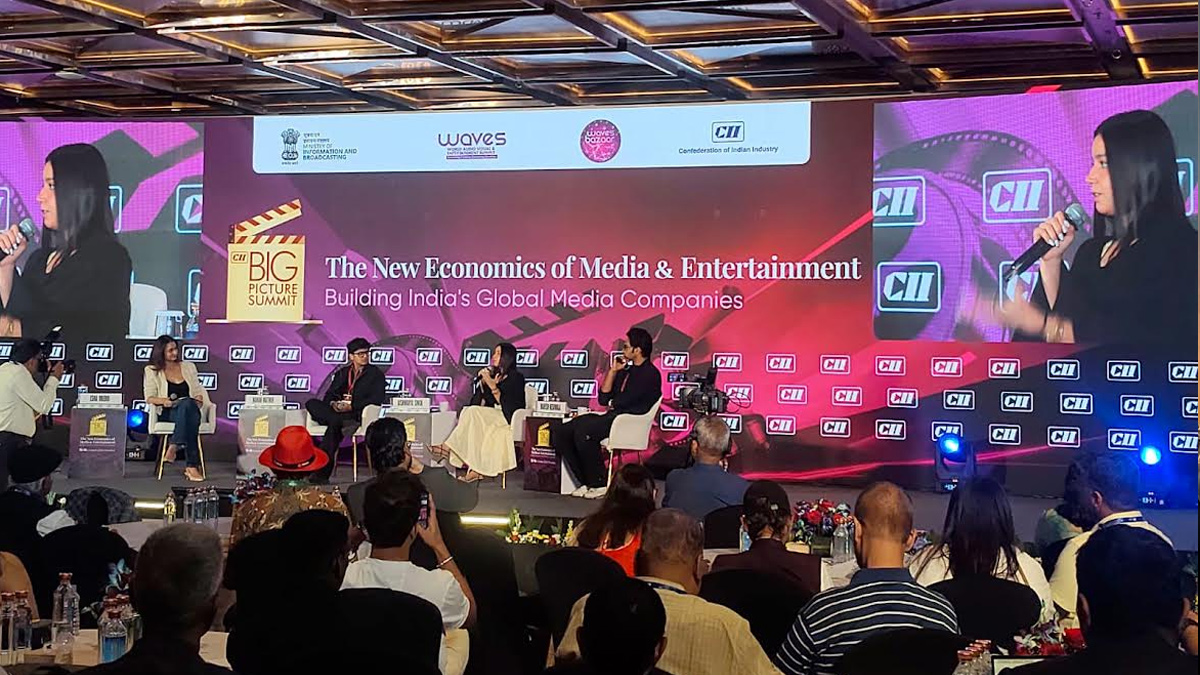
MUMBAI: The creator economy is no longer just about chasing views; it is about building ventures that can keep running long after the camera stops rolling. At the CII Big Picture Summit 2026, Indian creators discussed how they are moving beyond one-person operations to build teams, develop original intellectual property (IP), diversify revenue and turn loyal audiences into sustainable businesses.
The session, ‘The Creator is the New Studio’, moderated by YouTube strategic partnerships manager Esha Oberoi, featured Aishwarya Singh of The Desi Studios, gaming creator Naman Mathur, popularly known as Mortal, and YouTuber Mahesh Keshwala, known as Thugesh. The conversation explored how creators are becoming entrepreneurs in their own right, building direct audience relationships and expanding their work across formats, platforms and commercial ventures.
The shift from making videos to managing a business has not been without its growing pains. Thugesh recalled that when he began creating content around 2017 or 2018, he wrote, edited and uploaded his videos himself. Today, a shoot for one of his shows can involve around 40 people on set.
His personal team includes four editors, three writers and a manager, while an external agency handles brand deals. He said managing people had been one of the biggest adjustments, admitting that he found it difficult to be a strict boss and relied on a manager to handle employee-related issues.
Mortal described a similar transformation. Since beginning his YouTube journey in 2018, he has expanded from gaming videos and live streams to a more extensive content operation. His on-ground management team has around 15 people, with another 10 to 15 people involved in managing creators personally.
For creators, the challenge is no longer simply making the next video. It is building an operation capable of producing content consistently, managing commercial relationships and developing new formats without leaving the creator responsible for every decision.
The panellists said scaling a creator business requires a change in mindset: the creator cannot remain the only product the business sells.
Oberoi highlighted how creators increasingly employ editors, writers, managers and other professionals, contributing to employment and supporting a wider ecosystem of businesses. As their operations expand, creators are also having to learn how to delegate, establish systems and allow teams to execute their creative vision.
For Aishwarya Singh, whose Desi Studios focuses on storytelling and true crime, the challenge is to grow the business without losing the reason audiences arrived in the first place.
She explained that diversification does not necessarily mean abandoning a successful genre. Instead, it can involve taking the same core content into different formats. Desi Studios published its first book in the previous year, with each chapter built around a true-crime story, and plans to publish a second book this year.
The company has also experimented with live shows at cafes and restaurants in major Indian cities, while exploring a basic crime game and personal-safety products inspired by the themes it covers. It also writes for different platforms.
Singh said these ventures were designed to retain the core appeal of storytelling and true crime while giving audiences new ways to engage with the material.
The approach illustrates a broader shift in the creator economy: a channel can become the starting point for a wider business, with books, live experiences, products and other formats extending the life of an idea beyond an individual upload.
Advertising and brand partnerships remain important income sources, but the creators said they were increasingly considering other ways to monetise their audiences.
Thugesh said brand deals and advertising had been his primary revenue streams, but he had begun researching the possibility of launching his own brand. Working with advertisers, he said, had given him a clearer understanding of how much value brands could generate from creator-led content.
That raised a question for him: if a brand could make money through his videos, why should he not consider building something of his own? He offered a hypothetical example of a brand paying a creator Rs 10 lakh to Rs 15 lakh, suggesting that an established audience could also provide a route to marketing a creator-owned product.
He said research and development for a potential brand had been under way for several months, although he did not announce a launch or identify a product category.
Mortal highlighted fan funding as another important source of income. During live streams, viewers can pay to have their messages highlighted through YouTube’s Super Chat feature. Advertising revenue generated by views also contributes to his earnings.
Merchandising is another area he wants to explore, saying creators can use their existing teams to research and develop products for their audiences.
For Singh, diversification is less about adding unrelated revenue streams and more about preserving the audience’s interest across formats. Her example of books and live shows shows how a creator can extend an established content proposition into other experiences without changing its central identity.
The discussion placed particular emphasis on intellectual property, or IP, as a way for creators to build businesses that are not dependent on a stream of individual videos.
Thugesh said he began developing his own show in 2022, when creator-owned formats on YouTube were less common. Building the show required him to learn the practicalities of production, from camera budgets and lighting to sound equipment and staffing.
The first season, comprising 10 episodes, generated around 150 million views, he said. The second season recorded approximately 60 million to 70 million views.
For him, the value of an original show goes beyond the performance of individual episodes. It can keep a channel relevant, introduce viewers to different creators and encourage audiences to explore other content on the same channel.
He cited collaborations with creators such as Mortal as examples of how a show can bring different audiences together. When viewers arrive for a guest or a particular format, they may also discover other content from the host, supporting broader channel growth.
Mortal said his own content had evolved from gaming towards real-life entertainment. When he started in 2018, gaming had a smaller audience among some sections of Indian viewers, prompting him to explore formats that could introduce new audiences to gaming and its creators.
His organisation, S8UL, brings together around 30 to 35 creators who live under one roof and produce content together. While its members are individual gamers, their collaborative videos also feature cricket, challenges and other activities that are not restricted to gaming.
Mortal said this variety helps creators reach viewers who may not otherwise watch gaming content. Collaboration, in turn, can strengthen the overall audience base by exposing each creator to the others’ followers.
For Singh, IP development is equally important, but the emphasis is on building a body of work around stories that might otherwise remain unheard. Desi Studios has been running its DC Crime format for six years, while another listener-led storytelling format discussed at the session has been running for around four years.
The studio has also begun bringing people with direct experience of cases into its content. Singh cited a recent episode featuring Ujjwal Nikam, explaining that certain stories require the perspective of people directly involved rather than relying only on narration by the creators.
She said this approach helps the studio reach audiences looking for different treatments of crime, from narrated stories to interviews and first-hand accounts.
Expanding into new formats brings its own risks. A creator who has built an audience around one type of content may find that viewers do not respond in the same way to a sudden change.
Thugesh said he prefers introducing new formats gradually. Having experimented with gaming, vlogging, documentaries, news videos and talk shows, he said creators need to give audiences time to understand what else a channel can offer.
He compared the process to steering a car around a bend: the transition needs to be managed rather than executed abruptly. In his case, he began introducing news videos before moving into talk shows, allowing him to gauge the response before expanding further.
Mortal said his approach has been different. He has frequently changed formats and experimented with new ideas, believing that viewers who connect with his personality will continue to follow him even as the content evolves.
Singh, meanwhile, said she has not felt the need to move away from her core subject because the audience continues to respond to it. For her, experimentation lies in changing the format rather than the underlying focus.
She is considering an investigative podcast in which each episode follows a single story, potentially involving travel across India to revisit the events being examined.
The different approaches reflect the absence of a single formula for creator-led growth. Some businesses expand gradually around a recognisable niche, while others rely on the creator’s personality to support more rapid changes in format.
The panellists also discussed whether international expansion should be a priority, particularly as digital platforms make content accessible across borders.
Singh said she was keen to take Indian stories to international audiences. She pointed to South Korea as an example of a country that had built global interest in its cultural output across areas such as beauty, film and education.
She said the opportunity for Indian creators was to develop content rooted in their own experiences and perspectives, while making it accessible to viewers elsewhere. The Desi Studios podcast is produced in English, partly because English is the language Singh and her co-host instinctively use to research and write their scripts.
She said each weekly episode involves around 10,000 to 11,000 words of scripting, with the episodes running for more than an hour. Although the content was not originally designed specifically for overseas viewers, its audience has expanded internationally over time.
Mortal said his primary focus remained Indian audiences, although his organisation, S8UL Esports, competes across around 14 gaming titles internationally. The organisation works with gamers from markets including Australia and the United States, and some of its content explores the experiences of these players and the Indian audiences supporting them.
He also said international collaborations could generate strong interest among his followers, though he continued to prioritise the domestic audience.
Thugesh said reaching international viewers remained a work in progress. He believes that dubbing documentaries into American or British accents could help some overseas viewers connect with his content, as he continues to explore ways of extending its reach.
The discussion suggested that global expansion need not mean abandoning Indian audiences or perspectives. Instead, creators are looking at language, collaborations and new formats to help their work travel further.
Artificial intelligence also featured prominently in the conversation, particularly in relation to production costs and the balance between automation and human creativity.
Thugesh said members of his team were already using AI, joking that the technology had made him question how much he needed to pay editors when some tasks could potentially be completed himself. However, he stressed that human input remained important because different team members brought different perspectives to content.
Singh described a more specific use case involving a true-crime production. During a recording, she and her co-host realised about 20 minutes into an episode that the script was not working: details had become confusing, and the victims had not been clearly distinguished.
Rather than discard the entire production, the team completed the recording and attempted to repair the material in post-production. Singh said she used an AI tool to process the recording, the script and a detailed set of instructions about the changes required. A task that would previously have taken considerable time was completed in around 15 minutes, she said.
She sees value in using AI for repetitive and logistical tasks that can reduce production costs. However, she drew a clear distinction between those tasks and the editorial decisions required in true-crime storytelling.
Questions about the line between suspense and sensationalism, how victims should be portrayed and what degree of accountability a story requires, she said, must remain subject to human judgement.
Thugesh shared another example of AI being used to address a production problem. In one episode, a guest’s audio recording was missing, leaving only low-quality audio captured by the camera. Recalling the cost of bringing the guest back to Mumbai for another recording, he said he used AI to recreate the guest’s voice from the available material, including an attempt to reproduce a Haryanvi accent.
He also said thumbnail creation, which had previously involved paying editors, had become possible for him at no cost using AI tools.
The examples illustrated how AI can help creators manage practical production problems and reduce expenses, while also raising questions about transparency and the use of synthetic voices. The panellists’ experiences suggested that the technology is becoming part of everyday creator workflows, though its role varies according to the content and the decisions involved.
The session’s central theme was that a creator’s long-term value increasingly lies in what can be built around the audience relationship. A channel can become the foundation for a team, a catalogue of original formats, products, live experiences and other businesses.
The figures shared during the discussion also pointed to the scale of the ecosystem. Oberoi said there were more than 18,000 creators with over one million subscribers, highlighting the growing competition for attention and the importance of developing distinctive IP.
For the panellists, building a sustainable creator business requires more than chasing viral moments. It involves understanding what audiences value, creating systems that can function beyond the individual creator, investing in original formats and finding revenue streams that fit the content.
As creators expand into merchandising, publishing, live experiences, podcasts and international collaborations, their businesses are beginning to resemble independent media houses. The transition is not without challenges, from managing staff and controlling costs to preserving editorial responsibility while adopting AI.
But the direction is clear: the creator is no longer simply the person in front of the camera. Increasingly, the creator is also the owner of the format, the manager of the team, the architect of the brand and the entrepreneur responsible for turning audience attention into a lasting business.