iWorld
GUEST COLUMN | India didn’t import microdramas. It is finding its own way to export them
Sharlton Menezes of Pratilipi and Double Tap Films explores how India’s vast storytelling ecosystem and audience insights could help discover, develop and export homegrown intellectual property to global markets.


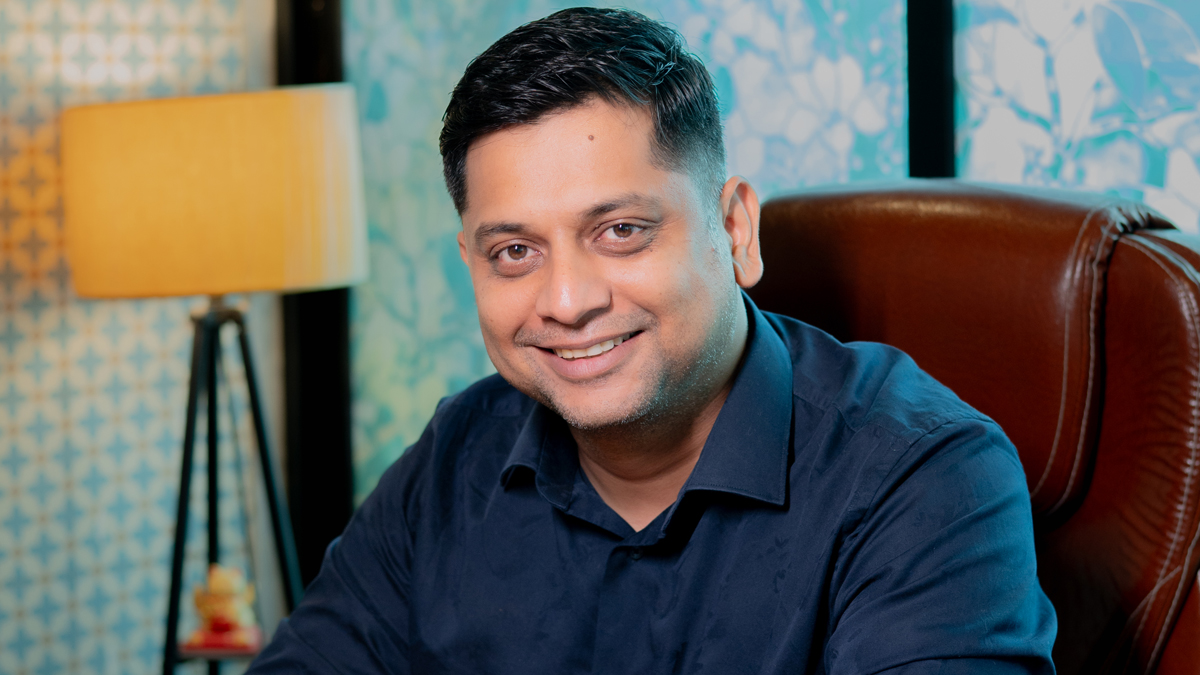
BENGALURU: Microdramas are reshaping the entertainment landscape, changing not only how audiences consume stories but also how the industry discovers, develops and distributes intellectual property (IP). As India’s mobile-first entertainment market expands, the country’s vast repository of regional-language stories is opening up new opportunities for homegrown content to reach international audiences.
In this authored article, Sharlton Menezes, vice president of IP and strategic partnerships at Pratilipi and Double Tap Films, explores how audience engagement and reader behaviour can help identify stories with the potential to become screen adaptations even before production begins. Drawing on India’s emerging microdrama ecosystem and Double Tap Films’ international distribution partnership with TikTok, Menezes examines why India’s opportunity lies not merely in adopting a global entertainment format, but in developing a distinctive, data-led model for discovering and exporting Indian stories.
Two years ago, when microdramas were beginning to take off globally, the industry made an assumption that now feels distinctly old-school: that mobile audiences had developed an appetite only for stories that could be consumed in under a minute. We were mistaking scrolling behaviour for attention span.
The more we looked at audience behaviour, the clearer the distinction became. People don’t necessarily want shorter stories. They want stories that earn the next minute.
That, to me, is the more interesting story behind the rise of microdramas. The vertical screen is only the format. The real shift is in how quickly a story has to establish a relationship with its audience, and increasingly, how early audience behaviour can inform what gets made next.
A format that became a habit
China figured this out earlier than most. What began there as a mobile-first experiment has grown into a substantial entertainment category, with short-form scripted stories becoming a mainstream part of the viewing ecosystem and increasingly travelling beyond China’s borders.
The US is now catching up in its own way. Specialist microdrama platforms have built audiences around the format, while established entertainment players are beginning to bring vertical storytelling into their own ecosystems.
That progression is important. Once a format moves from being a curiosity on the edges of entertainment to something established platforms are willing to programme, it stops being a trend and starts becoming part of the vocabulary.
India is somewhere in the middle of this evolution.
We have not followed China’s path, nor do we need to. Our market has its own peculiar advantages and constraints. What is particularly interesting is that the appetite for mobile-first storytelling is developing alongside a massive ecosystem of vernacular digital content. And that changes the starting point.
India’s opportunity starts before the camera rolls
For a long time, the entertainment industry has operated on a relatively familiar sequence: develop an idea, package it, pitch it, commission it, and then wait to see how audiences respond.
Digital platforms disrupted distribution. Microdramas may now be disrupting the discovery of IP itself.
India has an enormous volume of stories being written and consumed every day, particularly in languages and communities that traditional entertainment development has historically struggled to reach. On Pratilipi alone, the ecosystem spans more than 20 million stories across 12 Indian languages.
The interesting question isn’t simply how many stories exist. It is whether audience behaviour can tell us which of those stories have the ingredients to become compelling visual IP and we have seen that happen.
By looking at signals such as completion and engagement, it becomes possible to identify stories that audiences have already demonstrated a willingness to stay with. That creates a fundamentally different kind of development pipeline, one in which the audience isn’t only the eventual consumer of the IP. It becomes part of the discovery process.
This is particularly relevant in India because some of the strongest signals are coming from audiences outside the traditional centres of entertainment.
A small-town romance, a family conflict or a workplace dynamic rooted in a particular cultural context may not look like an obvious national proposition on a pitch deck. But when thousands of readers voluntarily stay with that story, return to it and share it, the equation changes. The audience has already voted with its time.
The next question is whether Indian stories can travel
This is where the global microdrama boom becomes particularly interesting for India. The conventional wisdom around international entertainment has often been that content must be heavily localised to travel. Microdramas are beginning to challenge that assumption.
An international distribution partnership of Indian microdramas through Tiktok gave us an opportunity to test exactly this. Twenty-one original Indian series were taken into markets including the US, Canada, Brazil and Japan, initially retaining their Hindi audio with subtitles.
The thinking was simple: don’t assume that cultural specificity is a handicap before the audience has had a chance to decide. The response was encouraging enough to make the question bigger.
Perhaps a Hindi story doesn’t need to become culturally neutral to travel. Perhaps the very specificity of its relationships, conflicts and characters is what makes it interesting to someone encountering it from another part of the world.
Of course, localisation will matter. Dubbing, language adaptation and eventually local remakes will all have a role to play. But there is a difference between making a story accessible and sanding away everything that made the story distinctive in the first place. That distinction will matter as Indian microdramas move from being consumed by the diaspora to being discovered by global audiences more broadly.
The format is only the beginning
There is a tendency with every new entertainment format to focus on the format itself.
How long should an episode be?
How many episodes should a season have?
Should it be free or subscription-led?
Should it live on an app or a social platform?
Those are useful questions, but they are not the questions I find most interesting. The bigger opportunity is what microdramas are teaching the industry about the relationship between content and audience.
A story can be discovered before it is produced.
Its audience can be understood before it is marketed.
Its performance can inform its next adaptation.
And an IP that works in one language can be tested in another market without rebuilding the entire proposition from scratch.
That is a meaningful change to the economics and the creative process of entertainment. It also explains why I don’t think the future of microdramas belongs exclusively to microdrama companies. The format will increasingly be absorbed into the broader entertainment ecosystem, much as other forms of digital storytelling eventually were. The more interesting question will be who has the strongest IP, who understands audience behaviour deeply enough to identify it, and who can take it across formats and borders.
From importing a format to exporting a model
India is still early in this journey. There will be experimentation, consolidation and, inevitably, plenty of content that doesn’t work. But we have an unusual opportunity. We don’t have to replicate China’s playbook or wait for the US market to define what the category becomes. India has a vast, multilingual storytelling culture, an audience already accustomed to consuming entertainment on mobile, and increasingly sophisticated ways of understanding what those audiences choose to stay with. That combination could make our contribution to the global microdrama economy bigger than simply supplying more shows.
The real opportunity may be to export a different way of finding stories. For decades, entertainment has largely relied on a combination of instinct, experience and market research to decide what deserves to be made. Those things will continue to matter. But audience behaviour can now enter the equation much earlier. I have come to think of that as the real source code of this category: not the vertical screen, not the one-minute episode, not even the cliffhanger.
It is the ability to recognise a story’s potential before the expensive part begins.
If microdramas ultimately become just another format, the industry will absorb them and move on to the next thing. If they become a new model for discovering and developing IP, however, their impact will be much harder to measure in minutes watched. And that is where I believe India’s most interesting opportunity lies.
As microdramas continue to evolve, India’s opportunity lies in looking beyond the format to the stories that can travel across languages, platforms and borders. By combining its multilingual storytelling heritage with audience insights to identify promising intellectual property, the country could shape a new approach to entertainment development. For Menezes, the real potential of microdramas lies not simply in producing more shows, but in recognising a story’s potential before production begins, creating a model that could influence how the global entertainment industry discovers and develops its next generation of content.