e-commerce
Gig worker unions oppose legal challenge to Karnataka welfare law
IFAT, TGPWU and KAWU urge platforms to withdraw petition against workers’ rights


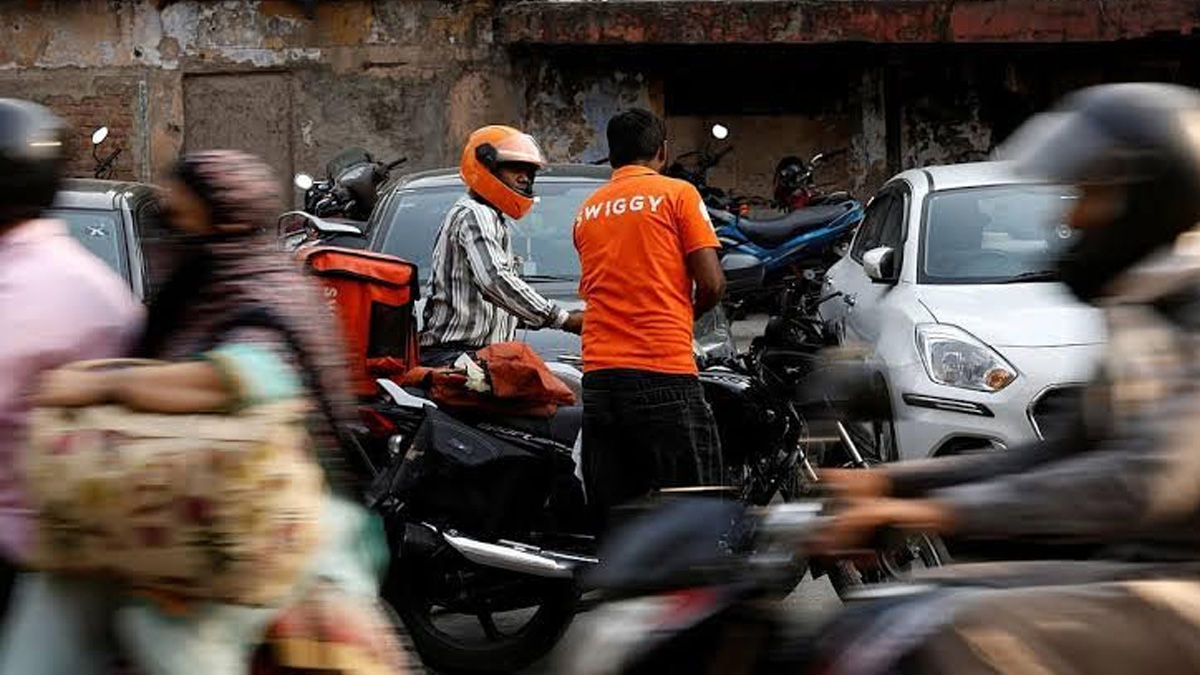
MUMBAI: The battle for gig workers’ rights is shifting from the streets to the courtroom, with both sides now racing to shape the future of India’s platform economy. Worker unions have come out strongly against platform companies challenging Karnataka’s landmark gig workers’ welfare law, calling the move an attempt to deny millions of workers access to social security and fair working conditions.
The Indian Federation of App-Based Transport Workers (IFAT), Telangana Gig and Platform Workers Union (TGPWU) and Karnataka App-Based Workers Union (KAWU) have criticised Swiggy, Zepto and other platform companies for approaching the Karnataka High Court against the constitutional validity of the Karnataka Platform-Based Gig Workers (Social Security and Welfare) Act, 2025.
The legislation, enacted earlier this year, establishes a welfare framework for platform workers through social security benefits, grievance redressal mechanisms, transparency in algorithmic management and safeguards against arbitrary account deactivations.
Reacting to the legal challenge, IFAT co-founder and national general secretary and TGPWU founder president Shaik Salauddin said the petition was an attempt to deprive gig workers of basic rights to welfare, social security and dignified working conditions. He argued that the digital economy should not be built on insecurity and worker exploitation.
Responding to the industry’s contention that the Karnataka law conflicts with the Code on Social Security, 2020, Salauddin said the state legislation complements rather than replaces the Central framework. He maintained that despite the national law, gig workers continue to lack adequate social protection and states have both the constitutional authority and responsibility to bridge those gaps.
The unions also pointed to evolving international labour standards, arguing that platform workers should be recognised as workers entitled to full labour rights and that aggregators should contribute towards welfare instead of opposing such measures. They urged companies to withdraw the petition and engage with governments and worker organisations to develop a sustainable platform economy.
The statement follows a petition filed before the Karnataka High Court by the Internet and Mobile Association of India (IAMAI), along with Eternal Ltd, Zepto, Swiggy, Urban Company and Valmo Transportation. The companies have challenged several provisions of the Act, including the requirement to establish Internal Dispute Resolution Committees (IDRCs), pay welfare fees and share information with government authorities.
According to the petition, Parliament has already enacted the Code on Social Security, 2020, creating a uniform national framework for gig and platform workers. The companies contend that Karnataka’s legislation establishes parallel welfare mechanisms, imposes additional financial obligations and creates overlapping compliance requirements, arguing that where any conflict exists, the Central law should prevail.
Besides challenging the parent legislation, the petition also seeks to quash the Karnataka Platform-Based Gig Workers (Social Security and Welfare) Rules, 2025, the notification constituting the Karnataka Platform-Based Gig Workers Welfare Board and the government order dated 12 February 2026.