
iWorld
Chahal spins a new tale for Story TV
Short drama platform bowls over viewers with 200 million hits.


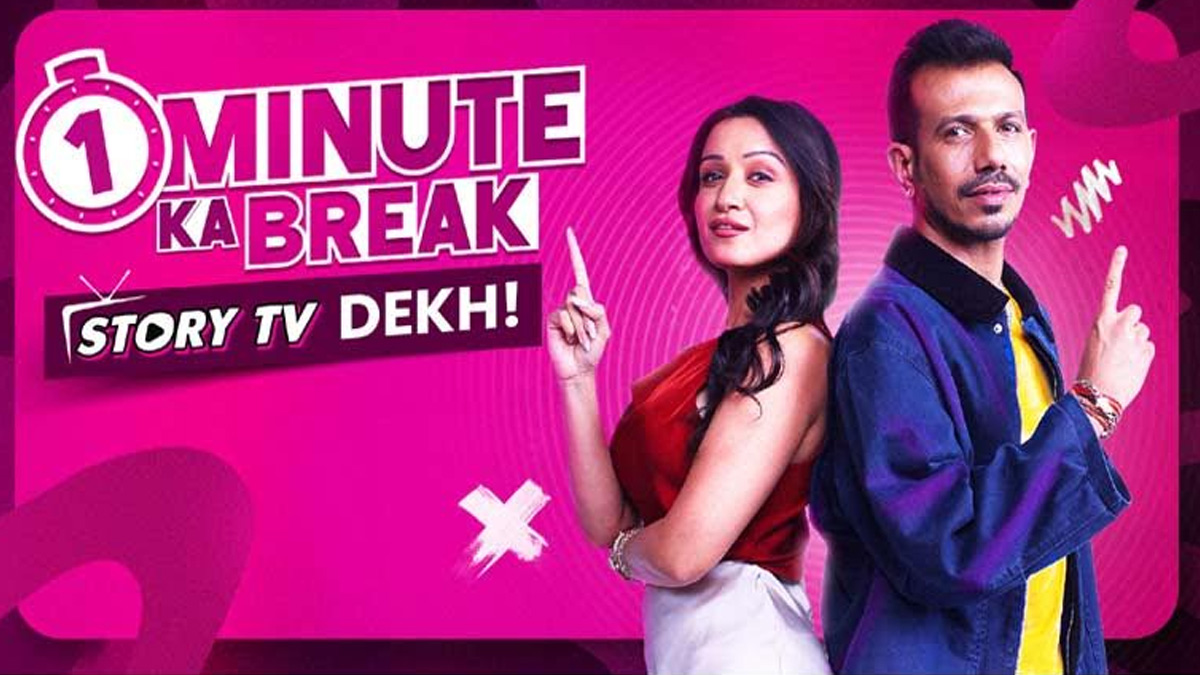
MUMBAI: If cricket has its quick singles, storytelling now has its quick spins. Story TV, India’s leading short drama platform, has unveiled a new campaign featuring cricketer Yuzvendra Chahal and TV anchor-actor Shefali Bagga and it plays out like a one-minute match packed with twists. The film captures a spirited exchange between Chahal, introduced as Chief Story Officer, and Bagga as they brainstorm a new short drama idea. What begins as a creative discussion soon turns into a playful back-and-forth, mirroring the dramatic, high-energy format the platform is known for.
The campaign positions Story TV as a master of what it calls the “instant hook” narratives designed to grab attention within seconds and deliver punchy pay-offs within a minute. The tone is light, self-aware and fast-paced, much like a T20 over where every ball matters.
The numbers suggest the format is striking a chord. Story TV currently hosts India’s most viewed short drama, clocking over 200 million views, while several other titles have crossed the 100 million mark. Its content library now spans more than 600 short dramas across genres including romance, love, sports and thriller.
The platform has also scaled rapidly on the distribution front. With over 5 crore downloads and users spending more than 80 minutes per day on the app, Story TV has, over the past six months, emerged as the second most downloaded app worldwide in the Entertainment category, according to Sensor Tower. It also consistently ranks number one on the Play Store in its segment.
Speaking about the campaign, Story TV CMO Nishant Kumar said the platform was founded on mastering the art of the instant hook. While it pioneered the “1-Minute Break” format in India, he noted that the vision has evolved beyond simply filling spare moments. In an era of shrinking attention spans and rising audience expectations, he described Story TV as transitioning from a platform into what he termed a global cultural powerhouse.
Kumar added that the collaboration with Yuzvendra Chahal and Shefali Bagga during the T20 World Cup was a deliberate attempt to sit at the intersection of India’s two great passions cricket and cinematic storytelling. He likened the platform’s short dramas to a T20 match, where every ball can change the game, saying the narratives are high-stakes and twist-filled. Chahal’s unpredictability and Bagga’s quick-witted energy, he said, align closely with the Story TV DNA.
Chahal, reflecting on his appointment as chief story officer, described the experience as an opportunity to explore his creative side beyond the cricket field. He said the script allowed him to be himself on screen and tell a story in under a minute, adding that he enjoyed discovering his acting and writing skills during the shoot.
Shefali Bagga echoed the sentiment, noting that short dramas felt like a natural extension of her journey in entertainment. She said she had been hearing about the format for some time and was immediately drawn to the idea when Story TV approached her. For Bagga, the campaign offered a chance to experiment while staying authentic to her personality.
At a time when content consumption is increasingly fragmented and mobile-first, Story TV’s model banks on brevity without sacrificing drama. With industry actors fronting its short dramas and audiences spending more than an hour each day on the app, the platform appears to have tapped into a format that blends binge-watching with snackable storytelling.
In a media landscape where attention is the most contested currency, Story TV is betting that one minute is all it takes provided the spin is right.






