iWorld
BBC brings CBeebies programmes to Netflix in UK from 2 December
Limited trial will feature 24 selected shows, while BBC iPlayer retains the full CBeebies library


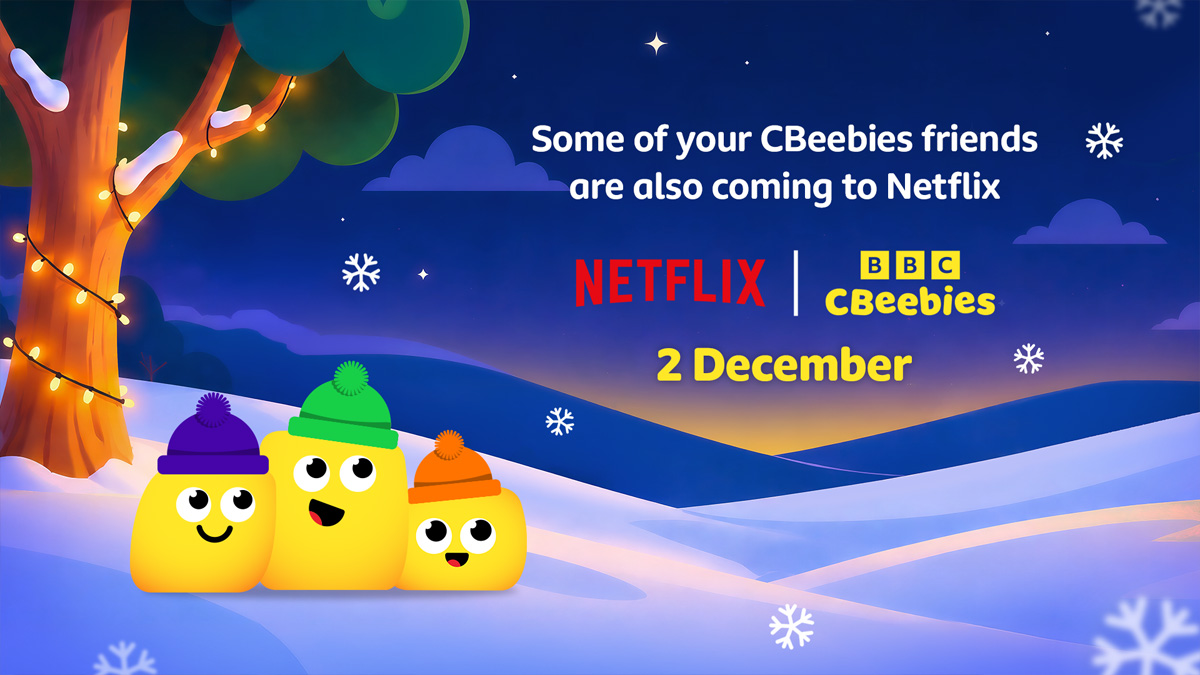
MUMBAI: CBeebies is getting a new playdate, and this time the invitation extends beyond the BBC. The British broadcaster is bringing a selection of its popular pre-school programmes to Netflix in the UK from 2 December, in a limited trial designed to test whether streaming partnerships can help its home-grown children’s content find more viewers.
The collaboration will introduce a dedicated CBeebies-branded hub on Netflix, featuring 24 selected programmes from the BBC’s pre-school portfolio. However, it is not a wholesale move of the children’s brand to the streaming platform. BBC iPlayer will continue to remain the destination for the complete CBeebies offering, while all programmes included in the Netflix trial will also remain available on the BBC’s own streaming service.
The arrangement marks another step in the BBC’s effort to reach audiences beyond its traditional broadcast and digital platforms. Rather than relying solely on viewers finding its programmes through BBC channels and iPlayer, the broadcaster is testing how placing selected titles on an external streaming service could improve visibility and introduce its content to families who may not regularly use its platforms.
The curated selection will include titles such as Numberblocks and Teletubbies, expanding Netflix’s existing collection of British children’s programming, which already features Shaun the Sheep and Hey Duggee.
The 24 programmes have been chosen as examples of the home-grown, high-quality content associated with CBeebies. The dedicated hub will give Netflix subscribers a single destination to discover the selected shows, while the wider catalogue, channels, games and other CBeebies experiences will continue to be available through BBC iPlayer, the CBeebies channel and YouTube.
For the BBC, the trial is as much about understanding audience behaviour as it is about adding another distribution outlet. The broadcaster plans to assess how the partnership affects reach, discoverability and engagement, as well as how viewing activity on an external platform can be attributed back to the BBC.
The findings could help it understand whether partnerships with third-party streaming services can bring distinctive British programming to audiences who might otherwise miss it.
BBC chief content officer Kate Phillips said the broadcaster was looking at ways to help more people discover its established content brands.
“The BBC has some of the world’s most loved content and brands, and we’re always looking at how we can help more audiences discover them,” Phillips said.
She added that the limited trial would provide an opportunity to understand how partnerships could extend the reach of BBC programming, deliver value to audiences and champion British creativity, while BBC iPlayer continued to host the full CBeebies experience.
Patricia Hidalgo, director of BBC Children’s and Education, said CBeebies had been part of family life for generations, offering trusted programmes created with young viewers in mind. She said changing viewing habits had prompted the broadcaster to explore new ways of presenting its content, describing the Netflix selection as a taster of the wider CBeebies offering.
For Netflix, the partnership adds another collection of established British children’s titles to its UK catalogue. Anne Mensah, vice-president of UK Content at Netflix, said CBeebies had a special place in the lives of UK families and that the collaboration would support British children’s programme-makers.
The platform also said it wanted to build a fun and safe environment for parents, with programming that children could enjoy.
The move comes at a time when broadcasters and streaming platforms are increasingly exploring ways to make children’s content available across different viewing environments. For the BBC, the challenge is to extend the visibility of its programming without shifting the full CBeebies experience away from its own services.
The Children’s Media Foundation (CMF) described the arrangement as an innovative and potentially exciting development, arguing that the BBC needed to take its content to platforms where audiences were increasingly spending their time.
The organisation said high-quality BBC programming reaching more children and families was welcome, provided that content created for licence fee payers remained available to them without additional cost.
It also pointed to the potential financial benefits for the BBC and production companies, particularly as the UK children’s media industry faces commissioning cutbacks and limited advertising revenue from YouTube.
Greg Childs, director of the CMF, said CBeebies had become an important shared experience for young audiences in the UK through its storytelling, factual programming and educational content. He welcomed the possibility of its reach extending internationally, provided viewers could access it without additional costs.
The foundation’s support, however, came with an emphasis on maintaining access to the full service for existing audiences. Its position reflects a wider question facing public broadcasters: how to make established programmes available on commercial streaming platforms while protecting the value and accessibility of their own services.
For now, the Netflix arrangement remains a limited UK trial rather than a permanent migration of CBeebies content. With 24 selected programmes forming the initial line-up, the BBC will be watching not just how many families press play, but whether the partnership helps more viewers discover its programming and return to its own platforms for the full experience.