DTH
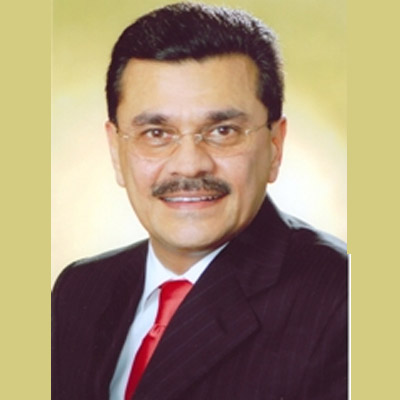
‘Collecting subscriber numbers is not enough’ : Tata Sky MD & CEO Vikram Kaushik

When Star floated a company for DTH, there were several issues raised on shareholding and other related matters. Was that a ghost that initially haunted you when you joined Tata Sky?
When on its own, Star made no progress and the DTH venture couldn‘t kick off due to reasons outside their control. Then they floated a joint venture company with the Tatas and I joined to head that. The past never bothered the venture. We developed a blueprint from the first day itself, but the project was delayed as we chased for licence approval.
The delays were not entirely due to the government; competitors wanted to delay the project. The bad thing that happened is that several retrograde steps were introduced which should have never been there in the first place. Interoperability, no exclusive content and foreign direct investment (FDI) cap of 49 per cent, for instance. There is still a lot of nervousness regarding foreign ownership.

But isn‘t the government more comfortable with DTH now?
The government has started understanding that without digitalisation, the media and entertainment industry can‘t grow; you won‘t get transparency and addressability in the distribution chain.
Has the government then become supportive?
The government needs to do much more. Across the world, the government has provided subsidies for digitalisation. In India, the private sector has entirely taken up this responsibility – and this investment is coming at a very high cost.
The DTH sector is heavily taxed. There is also a distortion because of the under-declaration of subscribers by the cable operators. This leads to the inevitable need of regulatory intervention to correct these anomalies.
Despite these anomalies, the DTH sector is on a fast growth track. When you first outlined the business plan, did you foresee such an exponential growth in DTH subscribers?
We are somewhat surprised by the volume growth. But nobody expected that India would have six players and with deep pockets. The marketing activity stimulated the sector‘s growth. Also, the digital cable initiatives could not match up to the DTH challenge; cable has not been able to upgrade.
How did you strike a balance between volume chase and maintaining a premium brand positioning?
When we started out, we decided that we won‘t go to small towns and villages and chase low lying fruits. Our strategy was to first capture the top 50 towns and then spread out. Dish TV, on the other hand, tapped the cable dry areas and expanded outside.
We feel ours has been the right approach. We have a better quality subscriber base. And while Dish TV has more subscribers, we are the biggest Indian DTH company when it comes to revenues.
The dilemma continues even today: Should we go largely for value or look at volumes. It is easy to chase volumes. In the longer run, the correct strategy is not to lose sight of volumes but focus on value. We never panicked when our competitors mopped up more subscribers in a month. What matters in the long term is higher ARPUs and sticky customers.
‘Given the cable ARPUs and lack of exclusive content, it is difficult to independently drive them up beyond a point. The content cost is also high, while the hardware prices are not low enough. It is a tough game to play‘
What other hard decisions did you have to take at the start?
We had to decide whether the STBs should be given free or sold. We believed the free model, in vogue in matured ARPU markets, wouldn‘t work in India. That turned out to be the right decision.
Why did you soon have to revise your investment plan from Rs 30 billion to Rs 40 billion?
We were initially looking at an investment of Rs 12 billion and then came up with a realistic estimate of Rs 30 billion. Subsequently, we revisited that plan and estimated our funding requirement to be Rs 40 billion. There are too many DTH operators and the price war came at an early stage of the game.
Has that business projection gone through further changes?
Our fund requirement will be over Rs 40 billion. We have already spent more than Rs 35 billion and have mopped up over six million customers. We are on course for operational break even. Broadly, this takes 5-7 years.
Aren‘t you disappointed that Tata Sky still lags behind Dish TV in subscriber numbers?
They may have more subscribers because of their first mover advantage, but we have beaten them in revenues. Though ARPUs (average revenue per user) for the sector are still pretty bad (Rs 135-150), ours is the highest in the industry (Rs 195).
What we have learnt in this business is that collecting subscriber numbers is not enough. This is a sector where subscriber acquisition costs are high and ARPUs low. If you have a faster churn, then you have a real problem. Sun Direct and Videocon d2h run a danger in that.
Can ARPUs rise to a comfortable level?
Given the cable ARPUs and lack of exclusive content, it is difficult to independently drive them up beyond a point. The content cost is also high, while the hardware prices are not low enough. It is a tough game to play.
The hyper competition among the DTH players has not been healthy. Everybody has bled heavily on account of the price war.
And still in this clutter, Tata Sky has stood out as a brand. How did you manage that?
Building a brand in this sector is a unique challenge. We build a pedigree brand with our high quality and performance focus. When you have the ‘Tata‘ and ‘Sky‘ names behind the product, the challenge is to weave a double-barrelled branding. The fact is that we have stood up against Airtel and the others.
We have also extended the brand to franchises like Tata Sky Plus. The satisfying part is that in a highly cluttered environment, we have spent less for many years than our competitors, but used the medium much more effectively. We have also used celebrity advertising in a manner that was never done before.
How has Sky been an advantage?
We could have the best and world class knowhow from them. There were 30 expatriates working in Tata Sky before we even started our service. That resource is continually available to us.
The Tata brand, in turn, brought in credibility with the government, trade, consumers and potential employees.
Q. Star has upped its effective stake in Tata Sky to 29.8 per cent. The additional 9.8 per cent stake for Rs 3.24 billion pegs the valuation of Tata Sky at Rs 33.06 billion. The market cap of dish TV is Rs 74.73 billion. Are you happy with this valuation?
Star will hold close to 30 per cent in Tata Sky. The Tatas will have around 60 per cent and Temasek 10 per cent.
As for Tata Sky‘s valuation, this won‘t be the right way to look at it. The stake acquisition is done by one of the promoter partners. This is an internal and not an external valuation.
Q. What are the technological advantages that Tata Sky has brought to the sector?
We continue to lead the way in terms of technology, customer service or innovations relating to packaging. We are the leading platform to promote education – be it to small children or to housewives learning English. We pioneered the concept of pre-paid customers in DTH. We are clearly at the forefront when it comes to PVR, VOD and other interactive services.
We have played a significant role in bringing the hardware costs down. Interestingly, the set-top box (STB) cost is cheaper from China to India than in China itself. We have also set some global benchmarks in productivity, growth and value creation.
We have used consumer research very effectively. TruChoice, for instance, recognises viewership habits and makes that content available. People tend to buy genres and that is related to the nature of the family. For those families having children, it is important to have kids programming and knowledge in the menu. Families with older people will tend to look at movie packs.
Q. How do you approach the South India market?
We don‘t compete on price. The market is too unremunerative.
Q. On the content cost front, do you see the Trai tariff order (channels to give to DTH at rates 35 per cent of analogue cable) as the right formula for DTH companies?
This is a step in the right direction, though we feel it should have been closer to 20 per cent. Broadcasters shouldn‘t have moved the court. Addressability is in the interest of the broadcasters; and yet they are resisting any kind of tariff regulation. I see short term perspectives prevailing in the entire media industry.
Q. Do you see the telecom companies having an advantage in the DTH space?
The telecom players feel that there will ultimately be convergence and they will stand to gain. They are, perhaps, driven by some fancy strategists. The truth is that there is need for domain expertise in each of these businesses. And each of these businesses are unique.
Q. Why is private equity reluctant to invest in the DTH companies?
I do not see too much private equity coming into the DTH sector. There will be a selective and long term approach. Fundamentally, the business model is saddled with high taxation, low ARPUs, and too many players. Profitability is an issue. In many cases, by piling up customers, you are not building assets but liabilities.
We could, perhaps, see consolidation in the next few years. There will be space for three players and maybe a regional operator.
Q. How much of capital will be required by the time the DTH sector reaches 50 million subscribers?
The industry will need Rs 200-250 billion for 45-50 million subscribers. There is already an investment of Rs 120-150 billion. But there won‘t be shortage of capital to fund the sector‘s growth.






DTH
DD Free Dish e-auction revenue dips to Rs 642 crore as slot sales fall
Revenue dips as revised norms reshape bidding in 94th round
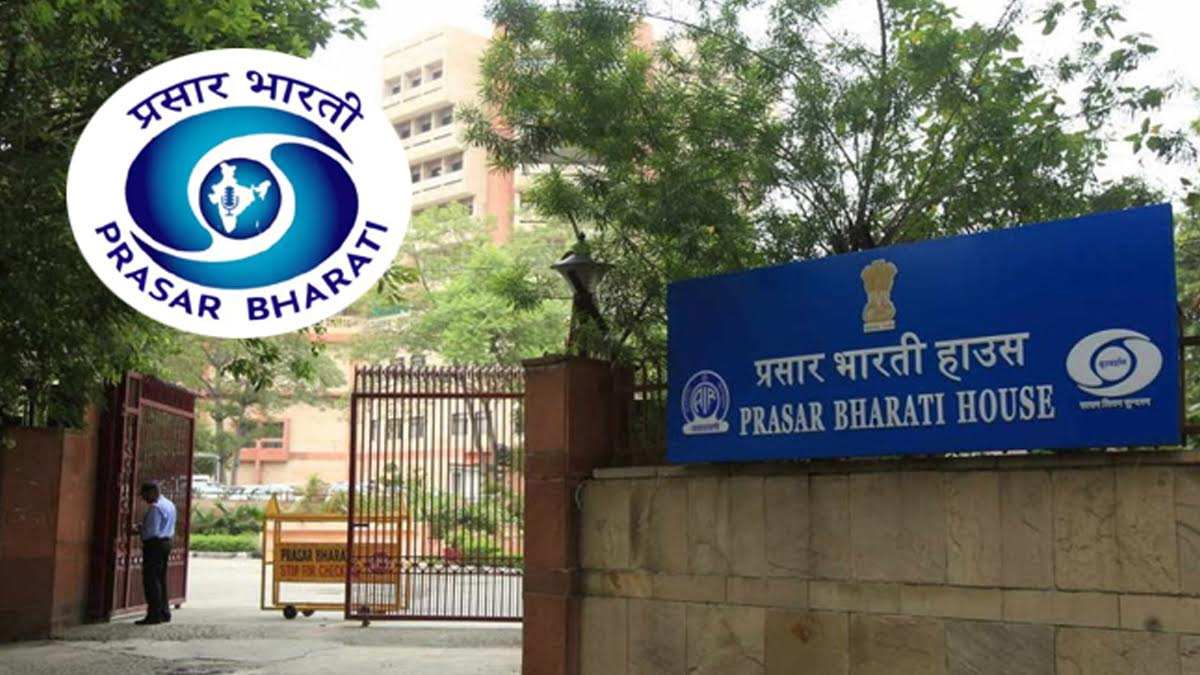
NEW DELHI: Prasar Bharati’s DD Free Dish has closed its 8th annual, and 94th overall, e-auction for MPEG-2 slots with total collections of Rs 642 crore for the period April 1, 2026 to March 31, 2027.
That is lower than last year’s Rs 780 crore haul, with 55 slots sold compared with 61 in FY25–26. The softer topline reflects both a slimmer inventory and a recalibrated auction framework.
This was the first auction conducted after amendments to the e-auction methodology, including tighter eligibility norms and a revised reserve price structure for MPEG-2 slots. The stated aim was greater transparency and more serious participation. The immediate outcome appears to be more measured bidding in certain categories.
Day one set the tone. Eight slots were sold, six in the premium Bucket A+ and two in Bucket A. The strong early action in A+, which typically houses Hindi GECs and movie channels, reaffirmed the enduring appeal of mass Hindi programming on the platform.
Among the broadcasters securing slots in the initial rounds were Zee Entertainment Enterprises, Sony Pictures Networks India, Viacom18’s Colors network, Sun Network and Shemaroo Entertainment. Their continued presence signals that, despite the pull of digital platforms, Free Dish remains a strategic must have for legacy networks chasing scale in price sensitive markets.
The final bouquet of 55 channels leans heavily towards Hindi news, movies, devotional fare, Bhojpuri and regional programming.
In Hindi news, familiar heavyweights such as Aaj Tak, ABP News, India TV, News18 India, Republic Bharat and Zee News made the cut. Entertainment and movie offerings include Colors Rishtey, Star Utsav, Dangal TV, Sony Pal, Shemaroo TV, Goldmines, B4U Movies and Zee Biskope. Devotional viewers will find Aastha, Sanskar and Sadhna Gold among the selected channels.
Regional representation includes Sun Marathi, Fakt Marathi, PTC Punjabi and GTC Punjabi.
Equally telling were the absences. Broadcasters such as Big Magic, Filamchi Bhojpuri, India News, Bharat Express, Movieplex Maithili, TV9 Marathi, Shemaroo Marathibana, Zee Chitra Mandir and Satsang did not participate. The pullback is particularly visible across Marathi, Bhojpuri, Maithili and spiritual programming. Industry observers point to the revised reserve prices, tighter eligibility norms and a reassessment of commercial viability as possible factors.
DD Free Dish continues to beam into over 40 million homes, largely in rural and semi urban India. For advertisers and broadcasters alike, it offers efficient access to Bharat markets where pay TV penetration remains uneven and OTT subscriptions are limited.
The moderation in revenue this year may be read as a pause rather than a retreat. Fewer slots, a reworked auction playbook and evolving broadcaster strategies have clearly shaped outcomes. Yet premium Hindi entertainment retains its pull, and the platform’s mass reach remains hard to ignore.
As the FY26–27 line-up settles in, the mix of winners and walkaways will define the private satellite channel landscape on DD Free Dish for the year ahead.