
DTH
Panel seeks fresh update on DD Free Dish and built in TV tuners
DD Free Dish reaches 49 mn homes with 482 channels as tuner rollout faces delays


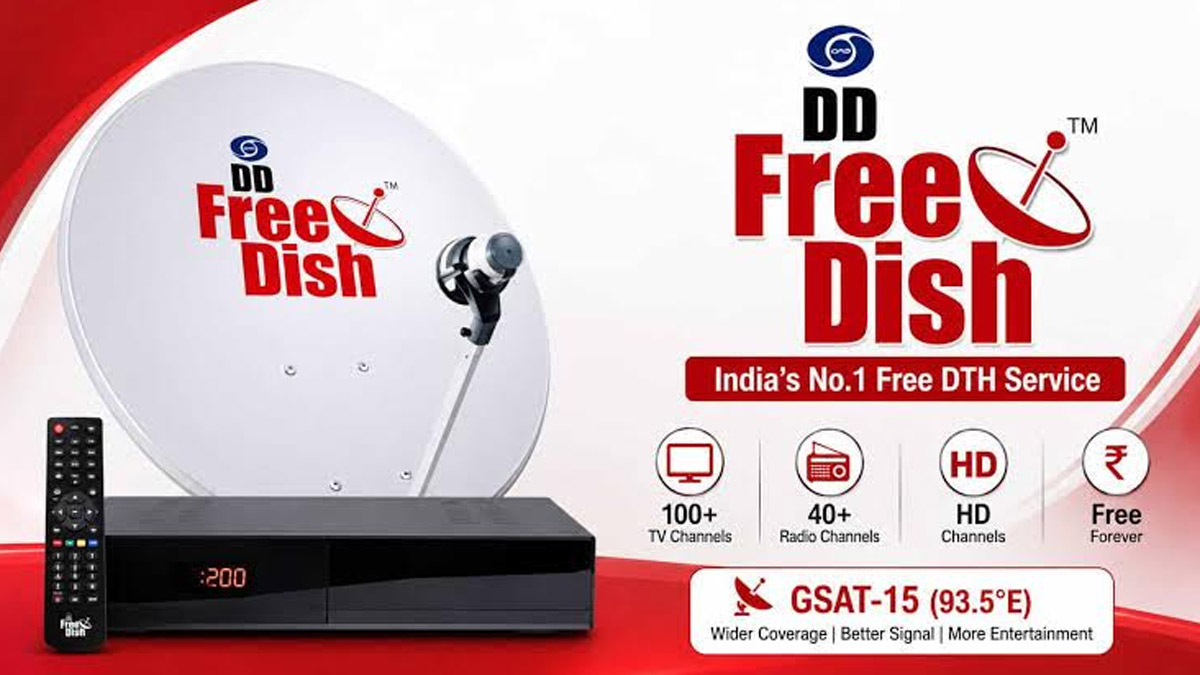
MUMBAI: The free dish is still on the table, but Parliament wants to see what’s actually being served. A Parliamentary Standing Committee has sought fresh, measurable data from the Ministry of Information and Broadcasting on the rollout of built-in satellite tuners in television sets and whether the move is translating into wider adoption of DD Free Dish.
In its Thirtieth Action Taken Report, the Standing Committee on Communications and Information Technology, chaired by Dr Nishikant Dubey, questioned repeated extensions to the compliance timeline for mandatory tuner integration and asked the ministry to provide a detailed status update on implementation.
The panel is particularly seeking measurable outcomes from the Bureau of Indian Standards (BIS) and Ministry of Electronics and Information Technology (MeitY) mandate requiring television sets sold in India to include built-in satellite tuners compliant with IS 18112:2022.
The policy was intended to make accessing DD Free Dish simpler by removing the need for a separate set-top box. With a compatible television and an antenna, viewers would be able to receive free-to-air satellite channels directly.
According to the ministry’s Action Taken Reply, all prominent television brands have introduced models with built-in tuners compliant with the standard. Prasar Bharati and Doordarshan are also working with television and set-top box original equipment manufacturers to introduce an advanced electronic programme guide (EPG) that would allow viewers to search channels without a set-top box or internet connection.
Industry bodies including the India Cellular and Electronics Association (ICEA) are coordinating with television manufacturers and operating system developers such as Google TV OS, WebOS and Tizen OS to facilitate the implementation.
The ministry said television sets without Digital Video Broadcast (DVB) radio frequency tuner cards were proposed to be phased out from July 2026, while most television models entering the market already feature built-in tuners. Prasar Bharati has also been asked to work with manufacturers to promote the technology.
But the committee wants evidence that the policy is moving beyond the showroom floor.
It has asked the ministry to report on the actual implementation of the BIS and MeitY mandate, the extent to which DD Free Dish has expanded following the introduction of built-in tuners, and the results of Prasar Bharati’s engagement with television manufacturers and OEMs.
The panel has also sought detailed outcomes from the collaboration between Prasar Bharati, Doordarshan, television OEMs and set-top box manufacturers on the advanced EPG.
It specifically called for measurable results from Prasar Bharati’s efforts to market and promote built-in satellite tuners, rather than repeatedly extending compliance deadlines.
The scrutiny comes as DD Free Dish remains a major free-to-air television platform, particularly for viewers in remote, tribal and border regions. According to the report, the service currently offers 482 television channels, comprising 35 Doordarshan channels, 11 HD channels, 95 private television channels and 320 educational channels, alongside 64 radio channels.
The platform reaches more than 49 million households, according to market estimates cited by the committee and the FICCI-EY report released in March 2025.
Yet DD Free Dish is operating in a television market facing pressure from OTT platforms, financial challenges for broadcasters and slowing growth in linear TV. Even so, the platform generated around Rs 814 crore in revenue during FY26.
The government has also been trying to strengthen DD Free Dish’s regional appeal. It previously told the committee that additional MPEG-4 slots would be created during FY27 to accommodate more regional-language channels, while broadcasters from underrepresented regions would be offered slots at promotional reserve prices to improve penetration in southern and eastern India.
The committee now wants to know whether these measures have delivered tangible gains in reach and adoption. For DD Free Dish, therefore, the next test is not simply getting more televisions ready for free satellite viewing, but proving that those tuners are actually turning into more viewers.






