Cable TV
“Our aim is clear: creating content and news and distributing it as far and wide as we can.”

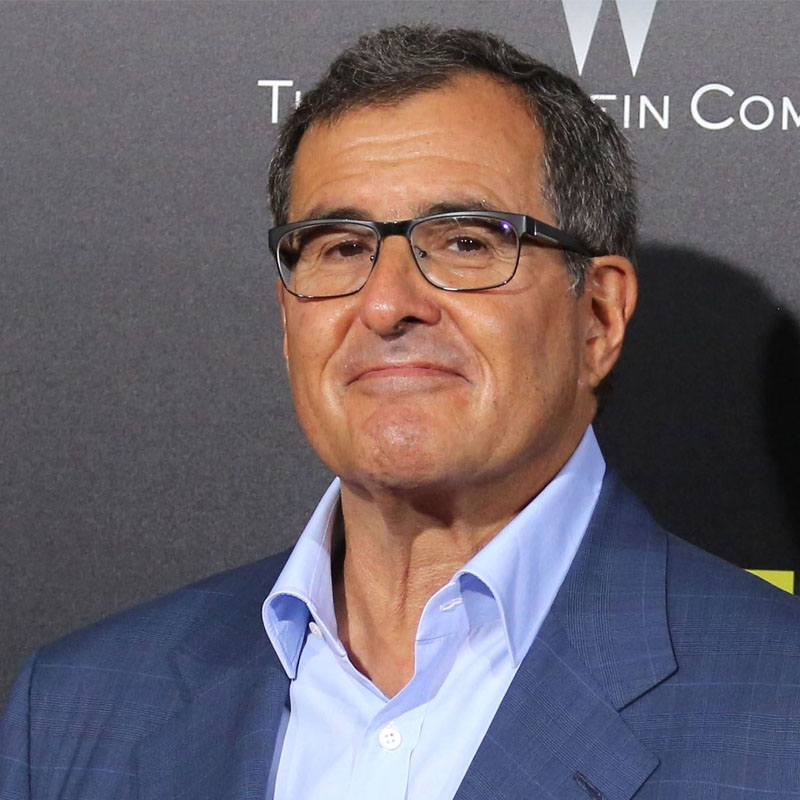
52-year old Peter Chernin does not come across like your typical media CEO. No flamboyance, no arrogance, no showing off. Just a regular business guy. The bespectacled chief operating officer of News Corp and Rupert Murdoch’s No 2 looks more like a number cruncher or an economist. An affable one too. Which he is.
He is behind such mega blockbusters as Speed, Titanic and Independence Day, which he steered when at the Fox film studio in the early nineties. Impressed with his ability, Murdoch gave him the responsibility of running the Fox Entertainment Group (80 per cent owned by News Corp) in 1998. Which he has done fabulously well with his charge accounting for 75 per cent of News Corp’s overall operating earnings.
He is seen to be the perfect foil to the septuagenarian Murdoch. And also a tough negotiator as Disney found out when Michael Eisner bought the Family Channel from News for $5.2 billion, a billion more than he should have paid.
Chernin is also pretty well-informed about News Corp’s Asian and Indian operations in particular. In fact he reeled off details, which shows why News Corp remains one of the most solid media companies in the world today.
Indiantelevision.com’s Anil Wanvari caught up with Chernin in Cannes’ Carlton Hotel during Mipcom. Chernin was awarded the Personality of the Year award by the Reed Midem. Excerpts from the interview:
What are your views about your pet initiative – the battle against piracy? And would you reinvest the savings in the business if piracy was reduced ?
The film business is going through a crunch time thanks to piracy. It is growing in single digits. If piracy was reduced, we could look at investing the money back. The movie business loves 20-30 per cent margins. Nevertheless budgets are going up. You can’t make a movie with a camera alone these days. The average price of a movie is $85 million. About $55 billion goes into production, another $30 million is needed for promotion and marketing. It is a tough business. The movie business is not about charity. It will disappear if things are not controlled on this front.
From the consumer perspective if consumers don’t cut down on piracy, they will not have movies to watch. It is crucial they look at it from that aspect.
What are the expansion plans for News Corp? Would you buy a broadcaster in the UK now that laws are proposed to be changed to allow foreigners to own networks there?
We are very consistent that we are not interested in buying a broadcaster in the UK. We are interested in expanding the existing TV channel business. Hence, National Geographic, Adventure Channel, Fox Entertainment – which has moved in to Spain and Italy. We have invested less than $30 million for the new Fox entertainment channel we will launch in the UK.
As far as Sky Italia goes, it is very early days as yet. We launched only on 31 July there. The response has been very positive. The conversion has been very good: about 50,000 boxes a week. We also discovered that there was a lot of piracy when it was run by Telepiu. Almost 50 per cent of our new subscribers have boxes. But now that has been stemmed. There have been no cases of breaking in of our smart cards since we started.
Our aim is clear: creating content and news and distributing it as far and wide as we can.
With the Direct TV approval also to come, we have got a lot on our plate today.
We want to focus on the businesses we have. In Asia, Taiwan and Hong Kong. Star TV India has a huge profit potential. In China, we are beginning to do well. We have moved into the middle east.
What about your plans to move into DTH in India? The group tried once in 1997, but it failed singularly then?
The only place in the new markets we see potential for DTH is in India. And we will abide by and live under all regularity norms the countries that we operate in ask us to. You saw that in the Star News case. We see limits on ownership and those are fine by us.
Hasn’t Zee TV beaten you to the launch of DTH in India?
Zee TV has not launched as yet. They keep making announcements. It is a soft launch. And you are not going to see a hard launch of Zee TV’s DTH.
What do you have to say about James Murdoch’s candidature to head BSkyB?
I’d like to see him as CEO of BSkyB. We could have gone through the process: hiring a recruiting firm, the nominating committee and the board. And I believe James would have fitted the bill. News Corp has in the past put in place candidates into BkyB and they have done well: Sam Chisolm, Tony Ball. Our track record has been good.
We will not put in an inferior candidate into place into what has been built into a huge business. There is a fair bit of noise being made about James. It think it is ironic. The media should quieten down. He is a very experienced executive. A professional. He has built up India into the fastest growing business we see. Let him come in. The people in the UK will love him. I am sure the BSkyB guys in London must be talking to their colleagues in Star Hong Kong to find out whether he is a good guy or a jerk. And the verdict is going to turn out to be very positive. At the end of the day we need a good guy for the job. Which he is.