Cable TV
‘Broadcasters should black out areas where DAS implementation is tardy; Govt should move SC:’ VD Wadhwa

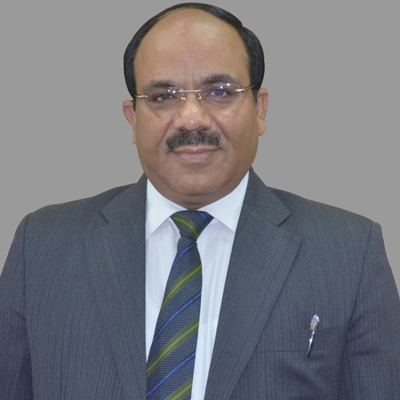
An Alumnus of Harvard Business School and a fellow member of the Institute of Company Secretaries of India, V D Wadhwa carries his multifarious responsibilities with a humility and ease that belies the positions he had occupied in the private sector.
SitiCable executive director and CEO, Wadhwa has almost 30 years of general management experience in consumer lifestyle and retail industries. Additionally, he has also served on various committees of FICCI and Assocham besides serving as president of the Horological Federation of India.
His personal interests include – playing squash, adventure sports, and travelling.
Donning the hat of All India Digital Cable Federation’s president for the past 15 months, Wadhwa is convinced that the move towards digital addressable system (DAS) is in the right direction. In an interview with Indiantelevision.com, he justifies this and is of the opinion that there should be no let up.
Excerpts from the interview:
With cable operators and multi system operators in so many states having got extension orders from the courts, do you feel the government should have given more time before implementing Phase III covering all urban areas?
No, I feel that the Government has taken the right decision in not extending the date except where Court orders have come. With reports that there are pockets even in the first two phases where analogue signal is still being beamed, any extension by the Government would have made the MSOs and LCOs go slow and this could have gone on for years.
At least the stakeholders now know they have a deadline that they have to meet. We should not forget that all stakeholders knew since September 2014 that the Government had set a deadline it would stick to, and had enough time to get ready for DAS Phase III.
What is the way out?
The Government should go to the Supreme Court and stop all the High Court cases on DAS.
But there is great shortage of set top boxes, if you go by the pleadings before the High Courts…
In SitiCable, we have 11 million subscribers on our network and we have already seeded three million STBs in Phase III. I am confident that we will complete five to six million in the next couple of months and reach 10 million by March. Thus we will cover 6.5 million boxes of the first three phases. Other stakeholders had enough time to order STBs if they had acted in time.
But these are Chinese STBs with little or no service.
They are Chinese, but they are reliable and when we fit this in any household, we give the requisite service for taking care of any problems.
What about indigenous STBs?
It is true that there is very little indigenous production with just two manufacturers. There are less than two per cent indigenous STBs. The Government will have to facilitate more under its Make in India scheme. But that is not our field. We have expertise as the distribution pipe.
Pricing of STBs is also a problem since there is no fixed rate.
STBs had initially cost much more, but are now being sold for just around Rs 1200 and even on a rental basis.
What do you think should be done to speed up the DAS process?
Implementation on the ground needs support. And the broadcasters should black out areas where implementation is tardy.
And now the Government is gearing up for Phase IV, which covers the rural areas…
In my view, Phase III and Phase IV should have been done together as the government had initially planned. In any case, there is a 30 per cent base of direct-to-home (DTH) platforms in Phase IV so a large pocket is already digitised. In fact, the total DTH segment in Phase III and IV is around seventy per cent.
What are SitiCable’s future plans?
We are very clear that we now have to concentrate on broadband and add on at least 500,000 subscribers every year.