Brand Wizards Roundtable
From front pages to podcasts and creators, PR success is no longer one-size-fits-all
The definition of PR success is changing


MUMBAI: For decades, a front-page newspaper story or prime-time television appearance represented the ultimate validation for a brand or public figure. But as audiences fragment across podcasts, YouTube, Instagram, digital publications and creator communities, the value of a communication opportunity increasingly depends on where the audience is, rather than the prestige of the platform alone.
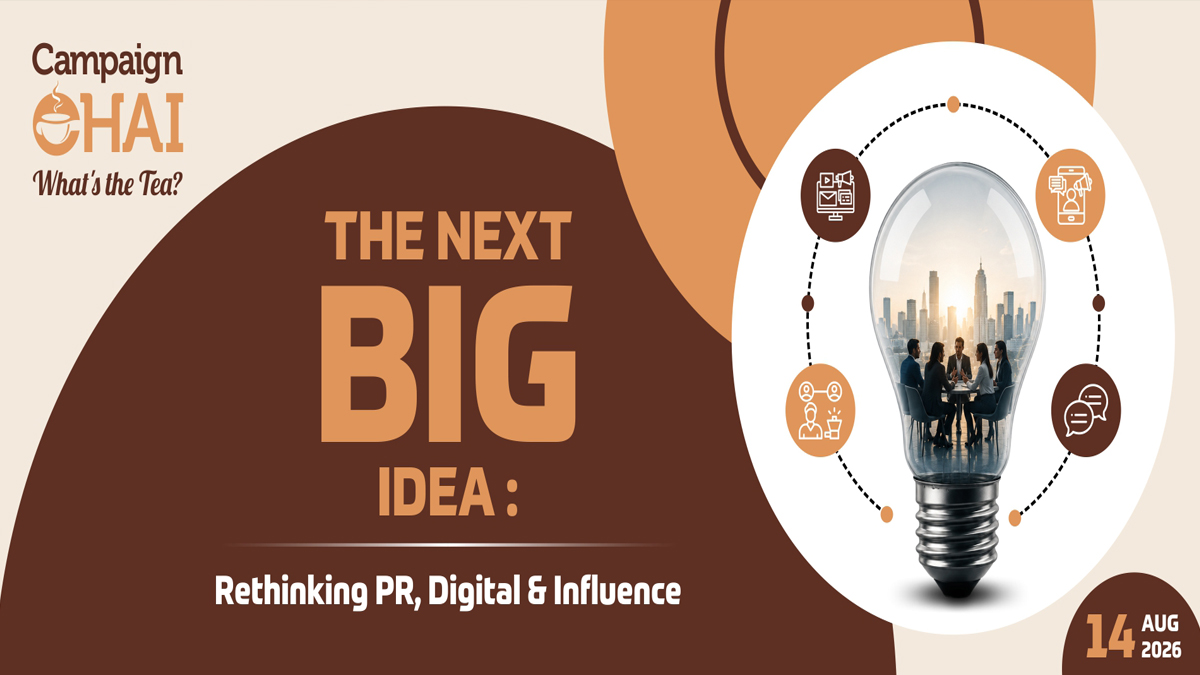
That was another key theme at IndianTelevision.com’s closed-door roundtable, “The Next Big Idea: Rethinking PR, Digital & Influence”, moderated by Anil Wanvari. The discussion brought together Vishaal Shah, Founder, Moe’s Art; Mausam Shah, Founder, Maars Communicates; Vikram Kharvi, CEO, Bloomingdale PR; Parull Gossain, Film & Entertainment Publicist; Tanya Shandilya, Vice President, West Head, Kaizzen; Sangya Lakhanpal, Associate Director, Pitchfork Partners; and Prashant Golecha, Independent PR Consultant.
That was another key theme at IndianTelevision.com’s closed-door roundtable, “The Next Big Idea: Rethinking PR, Digital & Influence”, moderated by Anil Wanvari.
The panel questioned whether traditional media visibility should still be treated as the definitive measure of PR success.
The answer was largely dependent on the brand.
For some organisations, print continues to matter because their target audience is still there. For others, a podcast, CEO interview, YouTube programme or digital editorial may deliver significantly greater relevance. Speakers stressed that the right placement is the one that reaches the right audience, rather than automatically chasing the biggest or most prestigious outlet.
Traditional media itself is adapting to this reality.
Publications are increasingly extending their stories across Instagram, LinkedIn, YouTube and other digital formats, effectively turning one piece of journalism into multiple forms of content. That diversification reflects the changing ways audiences consume information.
Video, in particular, emerged as increasingly difficult to ignore.
Whether through Instagram, YouTube or other visual platforms, video has become an important part of the communication mix. The discussion pointed towards a future in which an article may no longer exist as an isolated piece of coverage but may also be repackaged into video and social formats to reach audiences across platforms.
The fragmentation of audiences also means that communication strategies can no longer follow a one-size-fits-all model.
The panel’s discussion around “India and Bharat” highlighted the complexity of reaching consumers across different languages, regions, platforms and consumption habits. Some audiences may continue to consume newspapers, while others may rely almost entirely on YouTube or WhatsApp. The communication strategy therefore has to be built around the specific audience rather than simply translated from one platform to another.
This becomes even more complicated in influencer marketing.
The panel argued that brands should move away from treating creators as interchangeable distribution channels. Micro-creators, in particular, can have highly engaged communities, but their value depends on understanding those communities and adapting communication accordingly.
The conversation also examined the growing presence of synthetic and virtual creators.
While AI-generated personalities may have applications in certain categories such as storytelling or entertainment, the panel suggested that human creators continue to have an advantage when authenticity, credibility and trust are central to the communication.
This is also changing how PR measurement needs to work.
Impressions and reach remain part of the picture, but they do not necessarily explain whether communication has actually influenced an audience. Engagement, watch time, share of voice and other indicators are increasingly entering the conversation, particularly in influencer campaigns. At the same time, the panel acknowledged that the industry still lacks a universally accepted framework for determining ROI across creators and campaigns.
The larger takeaway is that PR is moving from a platform-first model to an audience-first model.
The question is no longer simply, “Did we get coverage?”
It is increasingly, “Did we reach the people who matter, in the environment where they actually pay attention?”