Ad Campaigns
CEAT unveils transformed TATA IPL strategic timeout board

Mumbai: CEAT, India’s leading tyre manufacturer, announced a significant shift in its communication identity and strategy. This transformation seeks to resonate with the changing lifestyles and preferences of contemporary consumers who are increasingly embracing travel, exploration, and adventure.
The new strategy positions CEAT as the ideal companion for exploration, reinforcing the brand’s commitment to consumer engagement and shared passion. This approach aligns with the shift being witnessed towards all-terrain vehicles and high-performance off-road bikes, as well as the growing interest in travel and discovery. CEAT has a range of high-performance tyres including Y-rated tyres for speed and all-terrain tyres that are designed to provide consumers with ultimate control and confidence on every journey.
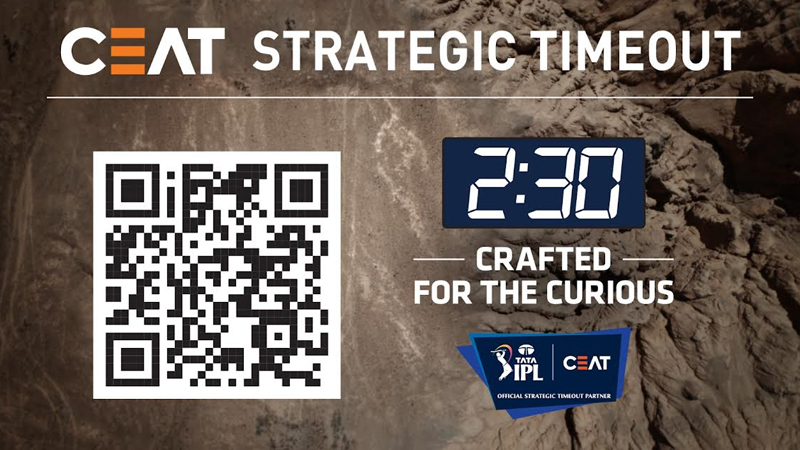
As part of the newly launched campaign, CEAT has leveraged its decade-long association with TATA IPL Strategic Timeout to deliver its brand message. The CEAT Strategic Timeout board has been transformed in line with the new positioning and will continue to remain so throughout this TATA IPL season. The board colours changed from the traditional blue to integrate the campaign colours along with an interactive QR code that sparked curiosity inviting consumers to scan the code and unlock the next step.
CEAT Ltd MD & CEO Arnab Banerjee commented on the strategic evolution, saying, “CEAT’s transformation underscores our dedication to staying in tune with the aspirations of our consumers. Our new brand communication emphasizes our support for the explorer mindset of
discovering hidden gems which are accessible during their travels. This move represents our ongoing commitment to exceeding consumer expectations and delivering high-quality products that inspire confidence in every journey, whether on road or off road.
CEAT Ltd CMO Lakshmi Narayanan B, elaborated on the campaign’s direction: “Our new approach incorporates partnerships with prominent travel influencers to showcase the versatility and durability of our tyres in various unexplored yet accessible locales. This series of two-part campaigns is not just a visual treat, but also ignites intrigue and curiosity among our consumers through the novel interactive QR element embedded in the ads. Our high-performance products have been crafted for the curious enabling their passion for adventure and discovery.”
The campaign features captivating visuals and influencer-led storytelling, highlighting CEAT’s products in challenging environments. The first advertisement which is live on TV and social media features Brinda Sharma, a prominent travel influencer.
CEAT’s strategic shift marks a significant step towards redefining its brand promise while continuing to uphold its legacy of safety and reliability. By combining high quality products with a modern, exploratory ethos, CEAT strives to be a dynamic and trusted partner – a brand that fosters “shared passion” with their consumers to drive a deeper more meaningful relationship.