News Headline
Sports TV 2016: Digital explosion, player consolidation & confusion

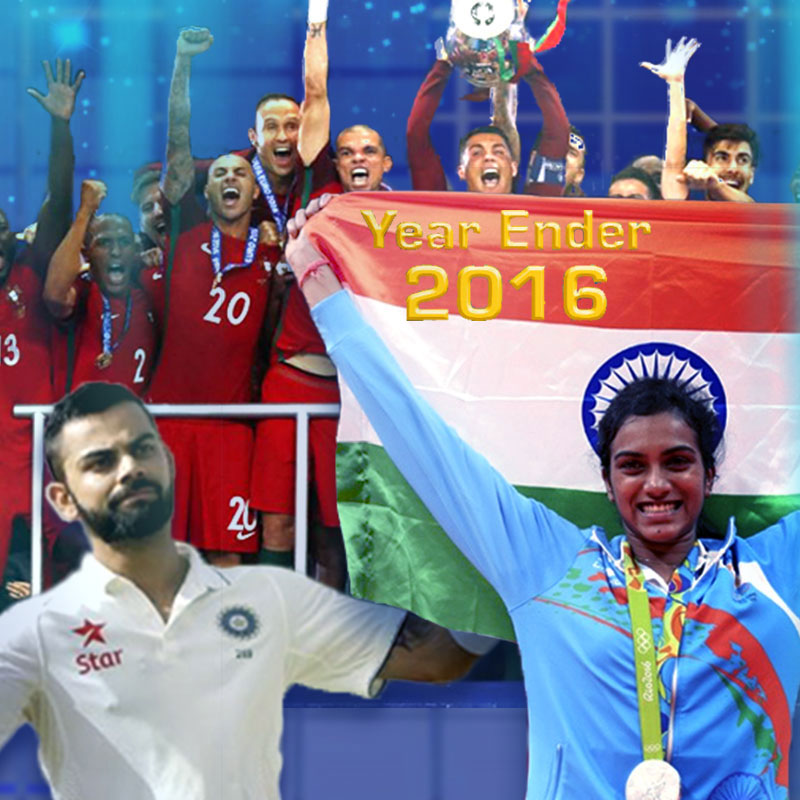
2016 was a roller-coaster for Indian sports in the truest sense. It was akin to a Bollywood pot-boiler of the country’s sportspersons bringing cheer and applause in various disciplines, including Rio Olympics, to melodrama and suspense of wrestler Narsingh Yadav’s doping issue and whether he or Sushil would represent India to superb action on and off the field (off the field ones involving mostly our politician-administrators and their disdain for rules of the games) to romance to multiple climaxes in a game-changing year that could well herald Indian sports broadcasting becoming a two-horse show with digital media piggy-back riding sports in general.
The year began on a strong note with Sony Pictures Network India (SPNI) joining hands with majority Walt Disney-owned ESPN to launch two new English channels, Sony ESPN and Sony ESPN HD. The channels started broadcasting on 17 January 2016 with the Australian Open and going on to telecast several high profile and popular sporting events, both Indian and international, throughout the year. The co-branded Sony-ESPN channels replaced Sony KIX.
Sony’s bouquet of sports channels (Sony Six, Sony Six HD, Sony ESPN and Sony ESPN HD) also broadcast the Euro Cup, one of the hottest sporting properties and the second most followed event in the football fraternity after the World Cup. The numbers were good with a league phase match between Italy and Spain garnering as much as 1.7 million impressions on BARC ratings. A quarter-final match between Poland and Portugal, the eventual winners, managed 290,000 impressions. The whole tournament totted up a cumulative TV audience of 62.7 million viewers . The final between Portugal and France witnessed 12.4 million Indian viewers, reaching a peak between 1:00 AM to 1:30 AM on 11 July 2016 with 7.4 million viewers. Kolkata notched up the highest percentage (19.3 per cent) of total viewership followed by Mumbai, Bangalore, Delhi and Aizwal.

For SPNI, which promoted the event extensively and started selling ad inventory six months before the tournament began at a fairly high rate (Rs 250,000 for a 10-second spot) , it was a positive sign for the future of football broadcasts in the Indian market as such rates were unheard of three to four years ago. That Sony was building up to a climax became clear later in the year.
Setting rest to speculations, Sony Pictures Networks announced on 31 August 2016 that it had entered into definitive agreement with Zee Entertainment Enterprises Ltd (ZEEL) to acquire the Ten Sports network in a deal worth $385 million. Owned by Taj Television, the distribution arm of ZEEL,TEN Sports operated five channels— TEN 1, TEN 2, TEN 3, TEN Golf HD and TEN 1 HD.
As and when the acquisition is completed— it is subject to regulatory approvals — SPNI’s bouquet of sports channels will be the biggest in India, heralding not only consolidation in a fragmented sports market, but also making the Indian sports broadcast realm a two-horse race (Star India on one side and Sony-ESPN combine on the other) as Nimbus Sports with two channels and few premier events rights (French Open for one) remains a comparatively small player.
The other big gun in the sports arena, Star India added more channels to its sports-channel stable with the mid-July launch of Star Sports Select HD 1 and Select HD 2. The channels will not only widen the Star Sports bouquet, but would also add marketing fire-power to Star India as the new channels were launched to exclusively offer Premier League, Bundesliga, Tennis Grand Slams and Formula 1. What makes the sports scene exciting is that Star India has sunk not only billions of dollars in acquiring strong sporting properties, including rights of Indian cricket, but is also building new properties like India Soccer League and Pro-Kabaddi for both men and women.
But cricket ruled the Indian hearts of Indian fans keeping them on tenterhooks for on and off the field activities. The most successful Indian league, the Indian Premier League or IPL, despite criticism revolving around it becoming stale, continued to rule the waves with addition of two new teams and Vivo coming on board as the title sponsor in a deal estimated to be worth Rs. 2 billion or Rs. 200 crore, marking a 25 per cent increase in what PepsiCo paid earlier for a five-year deal.
According to a few media reports, IPL earned close to Rs 2,500 crore or Rs. 250 billion in revenues, which included TV and digital rights, teams’ sponsorships, ticket sales and merchandising. On social media too, IPL made just the right amount of noise, but it lagged behind last season’s buzz, according to media firm Maxus’ MESH report on the IPL. Overall, IPL2016 generated 3.1 million mentions throughout the tournament in 2016. While IPL 2016 lagged behind in mentions throughout the tournament as against IPL2015, the final week of this season saw a jump of 74 per cent in conversations.
On the TV platform, IPL continued setting new trends. 54 per cent of the total Indian audience remained glued to the event on pay television. Mumbai, Delhi, Bengaluru, Kolkata and Hyderabad were the best markets in terms of TV viewing, cumulatively reaching 361 million people. The final, played between Sunsrisers Hyderabad and Royal Challengers Bangalore, was the most viewed match of the season; getting about 44.68 million impressions. Summed across the five channels over five weeks, the total viewership stood at 1.02 billion BARC impressions, one of the highest-ever in Indian television history.
Year 2016 also saw the rise of `other alternative’ sports or those disciplines that can be kept in a tray where non-cricket and non-tennis games are kept. Pro-Kabaddi League came up with two editions this year. The first edition of the league saw a rise of 36 percent in terms of TV viewership compared to last year. The event was beamed on five channels – Star Gold, Star Sports 2 and 3, Plus Suvarna and Maa Movies, apart from the digital platform of Hotstar, which also saw a 33 percent growth in terms of ‘total minutes viewed’ over the first 11 days of Season 3.
The fourth season of the Pro-Kabaddi League or PKL also happened in 2016. The ratings showed a growth pattern, making PKL one of the prime sporting properties in the Indian market. Star Sports said that the league had seen a cumulative growth of 51 per cent, regularly posting 10 million average impressions that were about 2.3 times higher than last year, turning a rural sport into a cult hit. Time for Bharat to take a bow!
A fairly good show by the likes of pro boxing matches featuring India’s Vijender Singh, Indian Badminton League, ISL and Pro Wrestling League convinced sportspersons, event managers and advertisers that if properly packaged non-cricket sports too can attract viewership, audiences in stadia and generate revenues for all stakeholders.
The year also witnessed the rise of the digital platform, in general, and marketing tactics by them to further increase penetration riding on the craze for popular sports in India. For example, Hotstar bought the digital rights of IPL last year to push its boundaries. While 35 million people had watched the IPL play-offs in the 2015 season, the numbers swelled remarkably in 2016 reaching 80 million. It would be quite safe to predict that there were a billion views on the digital platform this season for sporting events.
Throughout the year, Hotstar’s premium services saw a huge drive to add new members. The registration was kept fairly simple and all major football leagues in Europe and Germany were broadcast on the digital platform. Cricket ODI matches and Tests on Star Sports were broadcast with an average delay of about five minutes, which garnered a lot of traction and spurred downloads of the app.
With Sony LIV giving good competition with El Clasico and other events, it seems popular sports can actually drive the growth of digital platforms, especially subscription-based OTT services. The total watch time on OTT platforms in 2016 went up by 60 percent, driven also by the fact newcomer Reliance Jio started giving away the Hotstar app free to its subscribers.
Proliferation of HD services too (mostly separately and differently priced for consumers), like OTT platforms, joined the gravy train trying to entice viewers through sporting events. For example, Indian fans of the English Premier League were in for a surprise when Star Sports announced that Indians will not be able to watch the matches beyond 31 October 2016; they would have to perforce sign up for the Star Sports HD channel package, which included Star Sports Select HD1 and HD2.
With the arrival of Paul Pogba and Zlatan Ibrahimovic as players with huge fan-bases and forever-at-loggerheads managers Jose Mourinho and Pep Guardiola, Star knew the Indian following would not diminish — and they were not disappointed. If a consumer subscribed to all the sports channels in HD on a DTH platform, the package would cost approximately Rs. 700 per month. Many ardent non-cricket fans chose the high ticket option, while the remaining moved over to the digital platform as a significant number of live sports events were watched on Hotstar where the premium service cost Rs199 per month.
However, one of the many climaxes, which added to the roller-coaster ride of sports broadcasting in India, involved the sports administrators. BCCI’s continuing face-off with the Supreme Court-mandated Lodha Committee recommendations on proposed clean-up of cricket — buffeted by allegations of match-fixing, conflicts of interests and brazen politicking — could pose a question mark on cricket matches organised by BCCI and their eventual telecasts.
A shadow has even been cast over the 10th edition of IPL too. If the BCCI and Supreme Court don’t come to an amicable solution on former’s defiance and the latter’s hardening of stance, IPL future could be hazy having cascading effects on issues like broadcast rights and on some stakeholders like SPNI, Star India and team franchises who all have sunk in billions of Indian rupees in the juggernaut called IPL and India cricket.
The year may have come to an end, but sports promises to continue providing more excitement. As they say, the match ain’t over till it is over.