iWorld
Is VoD biz making money or it’s still investing?

MUMBAI: Beyond the hype, what are the ground realities of earning revenue? Or, is it still all about investing in content and infrastructure? When’s the likely inflection point when businesses could start to look at break-even?
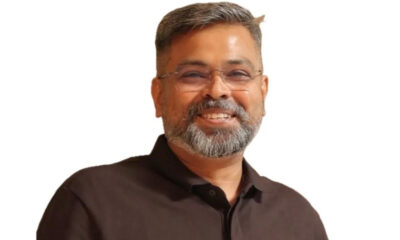
Trying to answer these questions at the CASBAA OTT Summit 2017 were — AltDigital CEO Nachiket Pantvaidya, SonyLiv EVP and digital head Uday Sodhi and GroupM South Asia chief growth officer Lakshmi Narasimhan.
Evaluating the OTT space and enumerating on the best business model, the moderator for the evening — Provocateur Advisory principal Paritosh Joshi — asked the head of the recently launched (soft) AltBalaji app about the mantra to grab maximum eyeballs in the OTT space.

Answering the doubt, Pantvaidya said, “India is a large market and the idea with AltBalaji is to connect with the 50-70 million people which correspond to e-commerce or functional 3G. There is also a market outside India of approximately 70 million people who want content. I think it is a library game. For SVoD to take off, content and habit formation among the people is crucial — our platform has content ranging from sublime to ridiculous. As Sameer (Nair, Balaji Telefims CEO) said, we are here to capture the market space between Narcos and Naagin.”
Taking cue from Pantvaidya’s point, Sodhi added, “The consumer is sorted in its head about what he wants. There is a clear habit formation. They are consuming on the go. There is a difference in the watch-time and they are coming back to watch linearly same shows. Habit formation is happening.”
India’s online video space will predominantly be an advertising led video-on-demand (AVOD) market even though subscription led VoD shows higher growth on a low base. If the digital eco-system becomes a SVoD dominated market, will that mean no business or loss for the advertising agencies? “There has been a pricing mistake in the last three years. The platforms come with a point of view that it will surpass television. The consumers think of these platforms as channels providing content. The players have to price it that way. In the US, OTT outstrips payTV in terms of subscribers but its annual revenues are lower,” added Narasimhan.
Pantvaidya added, “There is lack of development in the appreciable distribution system. It can survive when there is subscription. You can share profits with them if you are a SVoD. With free content comes carriage fees.
Further, Sodhi believes that its early days for everyone and there is no model which has been cast and stoned yet. He segregated the entire process into three phases. The phase one is when you throw content. In the second phase, people start coming to your platform and your focus is o retain them. Money making only comes in the third level. Citing examples of the three existing models in the world, YouTube, which is 100 per cent advertising, Netflix, SVoD based platform and Apple which is transnational pay-per-view platform. “All these platforms are fairly growing, and have reached this point after 15 years. They have come out of their strengths to build a model,” said Sodhi.
Narasimhan opined that the AVoD services in the OTT space have not been explored yet. He also said that data from servers indicate that kids,youth and top-end consumers are moving to digital from TV which clearly shows that the eco-system is evolving in India.
Joshi posted a question at the panelists asking whether they are underestimating the willingness of the consumers to pay for content. Pantvaidya agreed to his point, and said, “Scale and volume is necessary for spending. One should have faith in their content for it to sell.”
Sodhi added, “There is room for so many things. Everything is falling into its right place. The run-away is getting shorter before the take-off.”
OTT services are exploding in India and the business is more likely to be advertising-led in the short term. The OTT sector has clearly become a space to watch out for as the infrastructure continues to improve, devices get smarter and data prices fall. Let’s see what the future holds for these players.