MAM
Hyundai shows how you can #BeTheBetterGuy for road safety
MUMBAI: Hyundai Motor India in association with the Ministry of Road Transport and Highways (MRTH) has released a road safety film aimed at creating a positive change in the society and inspire people to adhere to traffic rules. The film marks phase II of #BeTheBetterGuy road safety initiative by Hyundai since 2016 and draws attention to critical issues pertaining to road safety such as underage driving, don’t drink and drive, usage of mobile phone, over speeding and violation of traffic signal.
Hyundai Motor India managing director and CEO YK Koo says, “Through this campaign, we want to spread the message of road safety and create strong awareness within communities for a positive behaviour change. We want to make this campaign a mass movement in India in association with Ministry of Road Transport and Highways.”
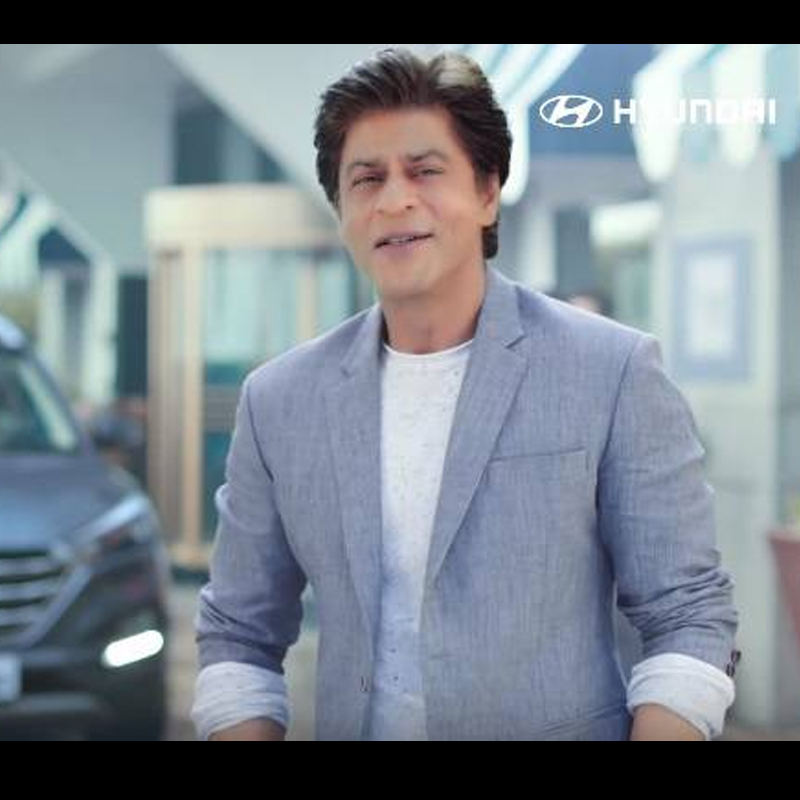
The Safe Move – Road Safety awareness film is unique in nature as it highlights various situations in our day-to-day life and suggests actions which can prevent mishaps. The messages in this film revolve around creating innovative content, emphasising to ‘Be The Better Guy’ in an adverse situation. Safe Move is Hyundai Motor Group’s key CSR initiative across the globe. The film features Hyundai’s corporate brand ambassador Shah Rukh Khan promoting road safety practices.
Phase II of ‘Safe Move – Road safety’ campaign will continue until the end of 2017. The initiative also has an offline road safety activity in association with MRTH at 150 schools in 15 cities and 14 malls in six cities. The campaign will also be promoted in prominent cinema halls in the top 20 cities.
Phase I of Road Safety Campaign #BeTheBetterGuy in 2016 was a big success clocking over 3.84 million views and has won prestigious awards on Road Safety campaign by eminent Indian media. Along with digital films, Hyundai also conducted on-ground Road Safety activities like the school contact program and resident contact program, which covered over 90,000 students in 142 schools and 23,000 residents in 146 resident welfare associations in 10 cities across India.

Digital
Content India 2026 opens with a copro pitch, a spice evangelist and a £10,000 prize for Indian storytelling
Dish TV and C21Media’s three-day summit puts seven ambitious projects before an international jury, and two walk away with serious development money
MUMBAI: India’s content industry gathered in Mumbai this March for Content India 2026, a three-day summit organised by Dish TV in partnership with C21Media, and it wasted no time making a statement. The event opened with a Copro Pitch that put seven scripted and unscripted television concepts before an international panel of judges, and by the end of it, two projects had walked away with £10,000 each in marketing prize money from C21Media to support development and international promotion.
The jury, comprising Frank Spotnitz, Fiona Campbell, Rashmi Bajpai, Bal Samra and Rachel Glaister, evaluated a shortlist that ranged from a dark Mumbai comedy-drama about mental health (Dirty Minds, created by Sundar Aaron) to a Delhi coming-of-age mystery (Djinn Patrol, by Neha Sharma and Kilian Irwin), a techno-thriller about a teenage gaming prodigy (Kanpur X Satori, by Suchita Bhatia), an investigative crime drama blending mythology and modern thriller (The Age of Kali, by Shivani Bhatija), a documentary on India’s spice heritage (The Masala Quest, hosted by Sarina Kamini), a documentary on competitive gaming (Respawn: India’s Esports Revolution, by George Mangala Thomas and Sangram Mawari), and a reality-horror competition merging gaming and immersive fear (Scary Goose, by Samar Iqbal).
The session was hosted by Mayank Shekhar.
The two winners were Djinn Patrol, backed by Miura Kite, formerly of Participant Media and known for Chinatown and Keep Sweet: Pray & Obey, with Jaya Entertainment, producers of Real Kashmir Football Club, also attached; and The Masala Quest, created and hosted by Sarina Kamini, an Indian-Australian cook, author and self-described “spice evangelist.”
The summit also unveiled the Content India Trends Report, whose findings made for bracing reading. Daoud Jackson, senior analyst at OMDIA, set the tone: “By 2030, online video in India will nearly double the revenue of traditional TV, becoming the main driver of growth.” He noted that in 2025, India produced a quarter of all YouTube videos globally, overtaking the United States, while Indians collectively spend 117 years daily on YouTube and 72 years on Instagram. Traditional subscription TV is declining as free TV and connected TV gain ground, forcing broadcasters to innovate. “AI-generated content is just 2 per cent of engagement,” Jackson added, “highlighting the dominance of high-quality human content. The key for Indian media companies is scaling while monetising effectively from day one.”
Hannah Walsh, principal analyst at Ampere Analysis, added hard numbers to the picture. India produced over 24,000 titles in January 2026 alone, with 19,000 available internationally. The country now accounts for 12 per cent of Asia-Pacific content spend, up from 8 per cent in 2021, outpacing both Japan and China. Key exporters include JioStar, Zee Entertainment, Sony India, Amazon and Netflix, delivering over 7,500 Indian-produced titles abroad each year. The top importing markets are Saudi Arabia, the UAE, Egypt, the United States and the Philippines. Scripted content dominates globally at 88 per cent, with crime dramas and children’s and family titles performing particularly strongly.
Manoj Dobhal, chief executive and executive director of Dish TV India, framed the summit’s ambition squarely. “Stories don’t need translation. They need a platform, discovery, and reach, local or global,” he said. “India produces more movies than any country, our streaming platforms compete globally, and our tech and creators win international awards. Yet fragmentation slows growth. Producers, platforms, and tech move in different lanes. We need shared spaces, collaboration, and an ecosystem where ideas, technology, and people meet. That is why we built Content India.”
The data, the pitches and the prize money all pointed to the same conclusion: India is not waiting for the world to discover its stories. It is building the infrastructure to sell them.