MAM
How KBC campaigns ensure focus stays on the common man
MUMBAI: Ever since 2000 when Kaun Banega Crorepati (KBC) first launched, the show has captivated millions not just through its quiz format but also innovative campaigns. The ads are socially relevant yet never boring.
This year, KBC has come up with another endearing campaign titled #KabTakRokoge. “This year we thought that we can stand, support and attribute our viewers and so we came up with #KabTakRokoge campaign. The campaign beautifully highlights three relatable stories with a soul. We often face situations in life that tend to deter us from achieving our goals. Often, we encounter people who discourage our attempts and obstruct our progress. When the odds are against us, one can only stand up to them and ask… #KabTakRokoge?” says Nitesh Tiwari who has created and conceptualised all the brand films for the show since Sony began telecasting the hugely popular show.
The first brand film of this season was launched on Facebook on 23 July and has garnered 746K views till date. Viewers can play the KBC game online, win passes to visit the KBC studio and engage with interactive social applications.
“KBC is a very famous game show. Every year people have loved the game show and have connected with the campaign and came to play the game. This year as well, I want my audience to watch the campaign, get connected to it and come and play the game and make it as famous as they have made KBC in the earlier seasons,” says Dangal director.
All campaigns bear in mind the show’s legacy. The ads appeal to people because they are based on biases encountered in real life, with the victim coming out on top in the end. The show has never relied on a celebrity for any of its campaigns because it is a common man’s game.
Tiwari has been associated with KBC for eight years. The former chief creative officer of Leo Burnett India has directed many ad films, a few being Flipkart, DHFL Home Loans and Star HD. He has written and directed many feature films like Dangal and Chillar Party, but, working for KBC has been more fun as it gave him a chance to work with his childhood idol.
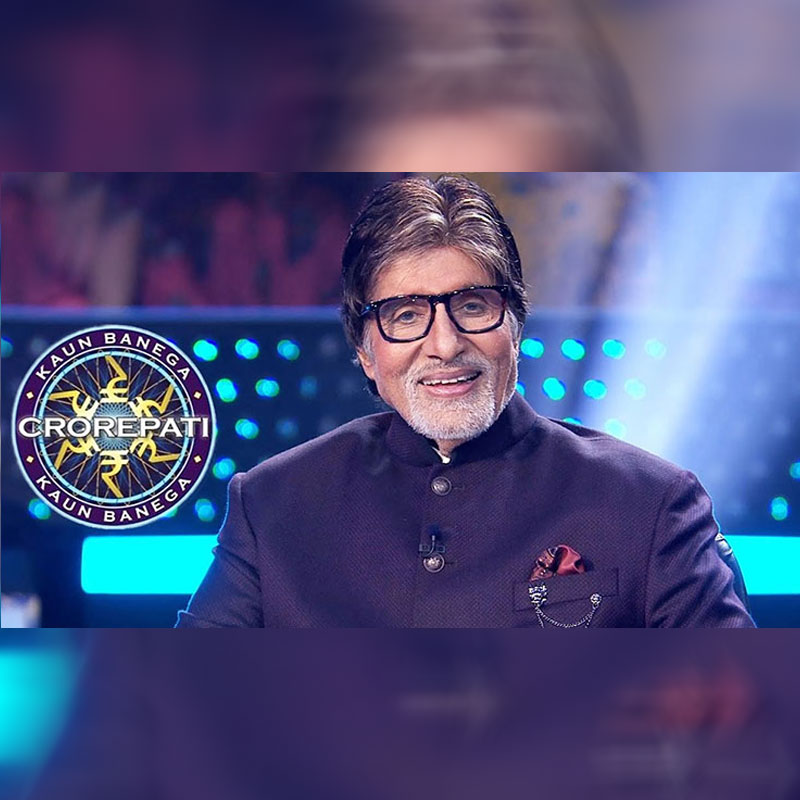
“I am blessed to work with such a big person. I have been admiring him since childhood. It was through KBC that I met Amitabh Bachchan. So, KBC will always remain special to me,” he says.
When Bachchan saw a decline in movies in the 1990s, it was KBC that gave him a boost by bringing him close to millions of Indians by becoming the host. When KBC was launched in 2000 on Star Plus, the show not only changed the fate of reality television, but also helped the broadcaster move up the ratings chart. A decade later, the show ratings started to dwindle and it moved hands to Sony.
The launch campaign on Star was ‘Nau Baj Gaye Kya?’ and when the switch happened, Sony showed that ‘Koi Bhi Sawaal Chota Nahi Hota’ highlighting the thought that knowledge never goes to waste.
Over the years, the campaigns have tried to touch important issues, revolving around the quest for knowledge. From preachy to humorous to inspiring societal changes, the ads have touched them all.
The last season of the 18-year-old show ruled the rating charts throughout its run and broke all previous records. According to Broadcast Audience Research Council, India, in week 35 of season nine, (26 August to 1 September 2017), KBC was at the second position among the top-watched shows in India.
The ninth season of KBC (2017) witnessed the ‘Jawab Dene Ka Waqt Aa Gaya Hai’ campaign, showing that knowledge is a great leveller in life. The campaign depicted various situations where individuals are bogged down by difficult questions of life. Through the campaign, KBC tried to change people’s destiny with the power of knowledge.
Season eight saw the campaign Yahan Sirf Paise Nahi, Dil Bhi Jeete Jate Hain by focusing on the country’s diversity. Rewind back to season three when Shah Rukh Khan took over, the show said ‘koi bhi sawal chota nahi hota’ which was followed by ‘koi bhi insan chota nahi hota’. In 2013, the show changed its core thought towards knowledge by saying ‘seekhna bandh to jeetna bandh’ which was preceded by ‘gyaan hi apko aapka haq dilate hain’ in 2012.
Given the strong legacy that KBC has created over two decades, it surely is a task for creative heads to keep coming up with innovative and engaging ways to get the audience hooked.

Brands
Tessolve lands a semiconductor veteran to drive its next big push
Ravi Kumar Chirugudu, who started his career at ISRO and has spent 35 years building chips and companies, joins the Bengaluru-based firm as president and chief operating officer
BENGALURU: Tessolve has never been shy about its ambitions. The Bengaluru-based engineering services firm already counts 18 of the world’s top 20 semiconductor companies among its clients, employs more than 3,500 engineers across 12 countries, and last year pocketed a $150m investment from TPG. Now it has hired the executive it believes can turn those assets into something bigger. Ravi Kumar Chirugudu, a 35-year semiconductor veteran who once built satellite payloads for ISRO and has since scaled engineering organisations across three continents, joins as president and chief operating officer, effective immediately.
THE MAN AND THE MANDATE
The appointment is, by any measure, a serious hire. Ravi Kumar Chirugudu comes to Tessolve after senior leadership stints at HCL Technologies, Altran and Wipro, where he managed large profit-and-loss portfolios and oversaw cross-regional teams. Over the course of his career, he has been instrumental in bringing more than 1,000 new products to market across the high-tech, energy and manufacturing verticals. Before the private sector claimed him, he began his working life as a scientist at the Indian Space Research Organisation, contributing to research and development in charge-coupled device technology and satellite payloads, a foundation that shaped everything that followed.
In his new role, he will lead Tessolve’s global growth strategy: expanding its engineering capabilities, deepening customer relationships and accelerating innovation across semiconductor and high-performance computing domains. The brief is broad, but the context is specific. Tessolve operates in the $550 billion global semiconductor market, and its recent moves, the acquisition of Germany’s Dream Chip Technologies and the TPG funding round, have sharpened both its reach and its expectations.
Srini Chinamilli, co-founder and chief executive of Tessolve, is characteristically direct about why Ravi Kumar Chirugudu was the choice:
“As we scale our global semiconductor and system engineering capabilities, Ravi’s appointment marks an important step forward. As global semiconductor demand continues to accelerate across industries, it is creating significant opportunities across the semiconductor lifecycle, from design, packaging, validation and systems integration. Ravi’s deep knowledge and leadership in this ecosystem brings the right mix of industry expertise, customer connect and execution capability, which will play a key role in strengthening our position as a trusted global engineering partner and reinforcing our market leadership.”
THE NEW ARRIVAL SPEAKS
Ravi Kumar Chirugudu, for his part, frames the move in terms of timing and culture, two factors that veteran executives tend to weigh as heavily as title or compensation:
“I am happy to join Tessolve at a time when the industry is rapidly evolving towards more complex, AI-driven systems. What stands out to me is its strong people-first culture and its commitment to bringing value to its customers. The strength of its global team, combined with its deep expertise in semiconductor innovation and next-generation product engineering, creates a solid foundation to build differentiated, scalable solutions. I look forward to working closely with the team to drive strategic growth and strengthen its role in shaping the global semiconductor ecosystem.”
The reference to AI-driven systems is not incidental. The semiconductor industry is in the midst of a structural reshaping, driven by the insatiable compute demands of artificial intelligence. For engineering services firms like Tessolve, which offers end-to-end capabilities from silicon design to packaged parts and invests in high-performance computing, high-speed interfaces, photonics and 5G, the moment is both an opportunity and a test. The company says it is well positioned to capture the next wave of industry growth. Ravi Kumar Chirugudu is now the person who has to prove it.
He came in from outer space, literally, and spent three decades learning how the semiconductor industry works from the inside out. Now Tessolve is betting that accumulated knowledge can help it cross the next frontier. In the $550 billion global chip market, the gap between ambition and execution is measured in engineering hours and leadership quality. Tessolve has just gone shopping for both.