iWorld
YouTube carrying out trials for more pre-video ads
MUMBAI: Video streaming service site YouTube has been carrying out trials to add more ads into videos.
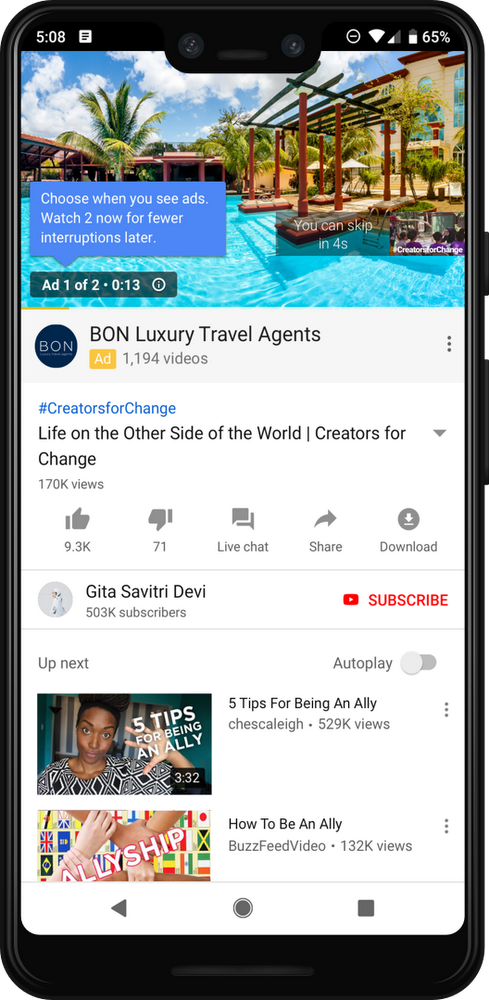
In Google’s new blog post, it explained that interrupting viewers less often with ads correlates to better user metrics. And that is why; it has been carrying out tests which will show viewers two skippable ads back-to-back at the beginning of a video.
Google wrote, “Because when users see two ads in a break, they’re less likely to be interrupted by ads later. In fact, those users will experience up to 40 percent fewer interruptions by ads in the session. Early experiment results also show an 8-11 percent increase in unique reach and a 5-10 percent increase in frequency for advertisers, with no impact to brand lift metrics.”
This new change will first come to YouTube’s desktop experience. Mobile and TV screens will be followed with the new feature in the coming days.
The update on YouTube will look something like this with a message explaining that you can watch two ads now for fewer interruptions later.
Concluding the blog post, it wrote, “In the face of these burgeoning user trends — as well as the next wave, and the next — we’ll continue working to build the ideal video viewing experience, and keep thinking up ways to deliver value for our advertiser partners.”

iWorld
Diljit Dosanjh’s Dil-Luminati tour generates Rs 943 crore impact
EY report says 14 concerts across 13 cities sparked jobs, tourism and spending
MUMBAI: What began as a music tour quickly turned into an economic crescendo. The India leg of Diljit Dosanjh’s Dil-Luminati tour has generated a measurable economic impact of nearly Rs 943 crore, according to a socio-economic impact report prepared by EY.
Spread across two months in late 2024, the tour travelled through 13 cities with 14 performances, drawing more than 3.2 lakh fans and selling out shows in roughly 10 minutes on average.
The concerts began in New Delhi on October 26 and wrapped up with a New Year’s Eve finale in Ludhiana, the singer’s hometown. In between, the Punjabi superstar turned stages across cities such as Mumbai, Bengaluru, Hyderabad, Kolkata and Guwahati into high-energy gatherings where music, fandom and travel blended into a nationwide spectacle.
According to the EY analysis, the tour generated Rs 276 crore in direct revenue for organisers through ticket sales, sponsorships and food and beverage spending at venues. Indirect spending by fans pushed the economic ripple effect even further, contributing an estimated Rs 553 crore through travel, accommodation, tourism and shopping.
Government revenues added another Rs 114 crore, including Rs 111 crore in GST and around Rs 2.5 crore in local permissions and fees.
Ticket sales were the main driver, accounting for about 80 per cent of direct revenue, with prices ranging from Rs 2,499 for silver tickets to as much as Rs 60,000 for premium lounge access. The gold category emerged as the most popular, generating more than half of the ticketing revenue.
The concerts were not just local gatherings. Nearly 38 per cent of attendees travelled from other cities to catch the shows, turning the tour into a travel magnet. Many extended their trips by two to three days, boosting hotel stays, dining and tourism activities in host cities.
Air and rail travel together accounted for around 70 per cent of inter-city travel costs linked to the concerts, while nearly half of travelling fans stayed with friends or family.
Cities hosting the tour also saw noticeable spikes in travel bookings. Flight bookings to Chandigarh, for instance, rose by about 300 per cent year on year around the concert dates, while cities such as Delhi, Ahmedabad and Indore saw booking growth of roughly 100 per cent.
Beyond the stage lights and thumping speakers, the tour also created a significant employment surge. The report estimates that more than 118,000 man-days of work were generated, including about 69,000 direct man-days and over 48,000 indirect man-days across sectors such as security, logistics, hospitality and technical production.
Security, safety and crowd management alone accounted for roughly half of the direct employment created during the concerts, reflecting the scale of operations required to stage such large events.
More than 15 brands partnered with the tour, turning concerts into a playground for creative marketing. From themed merchandise drops to experiential campaigns and exclusive ticket access deals, companies tapped into the singer’s massive fan base to amplify their reach.
The official ticketing platform recorded over 62.5 lakh visitors during the sales window and processed more than 1.2 lakh ticket orders, underscoring the intense demand for live events anchored by home-grown artists.
The tour also doubled as a cultural roadshow. At each stop, Dosanjh embraced local traditions, sampled regional cuisine and showcased India’s diversity through his social media posts and stage interactions, turning concert stops into mini travel diaries.
For the wider entertainment industry, the Dil-Luminati tour is being seen as a marker of how large-scale live concerts can drive economic activity well beyond the stage. The report suggests that India’s live music sector could grow rapidly in the coming years as demand for large events continues to surge.
In other words, the Dil-Luminati tour did more than fill stadiums. It moved crowds, boosted city economies and showed that when live music hits the right note, the ripple travels far beyond the final encore.