News Broadcasting
Disney hoicks Uday Shankar to top job at Fox-Disney combined unit for APAC

MUMBAI – As part of the integration planning for the pending acquisition of Twenty-First Century Fox, Inc. (“21st Century Fox”-NASDAQ: FOXA, FOX), the Direct-to-Consumer & International (DTCI) segment of The Walt Disney Company (NYSE: DIS) today announced plans for the strategic alignment of its consolidated international business units under three key leaders.
“The planned restructuring of our business units outside of the U.S. will result in a stronger, more agile organization, one that is better able to pivot and capitalize on the many opportunities present in today’s fast-changing and increasingly complex global marketplace,” said Kevin Mayer, Chairman of The Walt Disney Company’s Direct-to-Consumer & International segment. “Once the acquisition is complete, all three regions will be led by exceptional, highly experienced executives who will combine the 'best of the best' talent from both organizations. This new structure and the outstanding leadership team we’ve put in place are clear demonstrations of our strong commitment to integrating operations and thoughtfully executing our strategic priorities around the globe.”
The structure will allow for more efficient management of the Company’s portfolio of assets and the optimization of resources applied in support of the Company’s strategic priorities. DTCI’s international operating structure and executive management, effective upon the completion of the acquisition, will include three distinct regions:

· EMEA– Rebecca Campbell, who currently serves as President, The Walt Disney Company EMEA, will maintain oversight of this region and adds oversight of Russia and the Commonwealth of Independent States (CIS)
· Latin America – Diego Lerner, who currently serves as President, The Walt Disney Company Latin America, will maintain oversight of this region
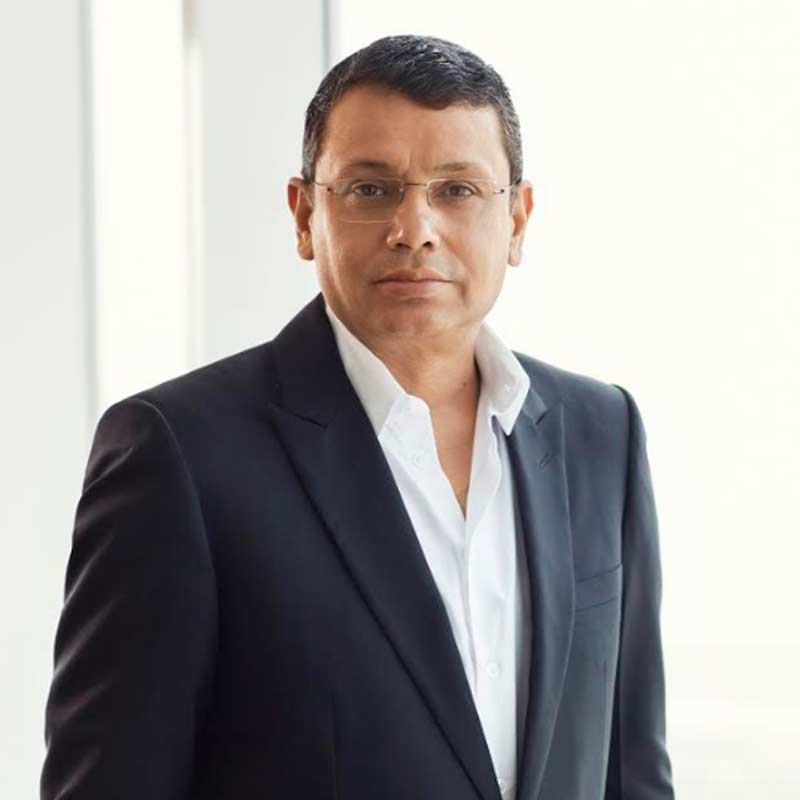
· Asia Pacific – Uday Shankar, who currently serves as President, 21st Century Fox, Asia, and Chairman and CEO of Star India, will become Chairman, Star and Disney India, and President, The Walt Disney Company Asia Pacific
Additionally, Janice Marinelli will serve as President, Global Content Sales and Distribution. Responsible for DTCI’s integrated global content sales organization, she will lead and have oversight of the Company’s programming sales efforts for its combined portfolio of content, as well as the distribution of branded direct-to-consumer apps and services to broadcasters, digital services and other third-party distributors around the world.
Ms. Campbell, Mr. Lerner, Ms. Marinelli and Mr. Shankar will report to Mr. Mayer.
Joining the EMEA leadership team, reporting to Ms. Campbell, are:
· Jan Koeppen, currently President of Fox Networks Group Europe and Africa, who will serve as President, Television and Direct to Consumer, The Walt Disney Company EMEA
· Marina Jigalova-Ozkan, who will continue in her current role as DTCI’s Managing Director, Russia and CIS for The Walt Disney Company CIS LLC
Joining the Latin America leadership team, reporting to Mr. Lerner, is:
· Carlos Martinez, President, Fox Networks Group, Latin America, who will serve as Executive Vice President and General Manager, Media Networks, North and Brazil, The Walt Disney Company Latin America
Reporting to Mr. Shankar as part of the Asia Pacific leadership team will be the following current DTCI executives:
· Luke Kang, Executive Vice President and Managing Director, Greater China, Japan and Korea
· Kylie Watson-Wheeler, Managing Director, Australia and New Zealand
· Chafic Najia, Senior Vice President and Managing Director, Middle East
In the coming weeks, DTCI plans to announce additional executives joining the three regional leadership teams as well as the global sales organization.
Additionally, the following DTCI business leaders will all continue in their previously announced roles, reporting to Mr. Mayer:
· Rita Ferro, President, Disney Advertising Sales
· Aaron LaBerge, Chief Technology Officer
· Michael Paull, President, Disney Streaming Services
· Ricky Strauss, President, Content & Marketing, Disney+
The current leaders of DTCI’s shared services areas, listed below, will continue in their roles:
· Linda Bagley, Deputy General Counsel
· Karen Hobson, Senior Vice President, Communications
· Jim Lygopoulos, Senior Vice President, Human Resources
· Justin Warbrooke, Chief Financial Officer
Disney’s acquisition of 21st Century Fox has received formal approval from shareholders of both companies, and Disney and 21st Century Fox have entered into a consent decree with the U.S. Department of Justice that allows the acquisition to proceed, while requiring the sale of the Fox Sports Regional Networks. The transaction is subject to various international regulatory clearances, a number of which have been obtained, while others remain pending.