MAM
Future of influencer marketing


Influencer marketing is set to become a $10 billion market by 2020 – with recent reports revealing that 63 per cent of marketers intend to increase their influencer marketing spends this year. It would be correct to say that influencer marketing is here to stay – there’s a phenomenal 1500 per cent increase in searches for “influencer marketing” over the last 3 years.
Influencer marketing is rapidly changing with new trends & technologies. Brands across categories are now utilising influencers as a tangible marketing & distribution channel, from a FMCG major such as Marico to retail giant such as Bata – brands are transforming themselves, keeping influencer integrated into their strategy.
Here are a few key trends shaping the market:

Growing significance of micro-influencers:
Brands have come to realise that in the current digital age, advocacy works better than mass-appeal. We are witnessing emphasis on micro-influencers. Brands are able to tie-in authenticity to their campaigns, using micro influencers, since it doesn’t come across as salesy. This is being adopted rapidly as a practice, with brands across industries & categories constantly scaling their micro-influencer marketing spends.
Network approach vs talent-led approach:
At the dawn of influencer marketing, brands were more focussed on utilising the individual brands of influencers – presenting them as the face of the brand, frequent integrations in marketing collaterals, etc. As the market matures, brands are now taking a network-based approach and de-risking themselves by using a network/group of influencers, with whom they are collectively able to target consumers better, than a single large influencer. It also allows brands to localise the content & collaterals – say when launching a new product in Hyderabad,
Rise of CGI Influencers:
With the rapid advancement in technologies accessible to us, CGI influencers are becoming mainstream. Take Miquela for instance, she boasts of 1.6M+ followers, has endorsed luxury brands such as Calvin Klein, Diesel, and Prada – her engagement rate is quite impressive for a Category A influencer, currently tracking at 3.4% : the out-of-ordinary fact about Lil Miquela is that she isn’t made up of tissues & cells, instead, it is just lines of code. K-pop sensation Imma, Bermuda, etc. are all CGI influencers, making a big name for themselves.
Advocacy vs transactional collaborations:
Brands are adopting the shift in collaborations from transaction-based, to long-term advocacy arrangements. Studies conducted to compare the 2 models deliver quite convincing results – using advocates instead of an influencer (on a transactional basis) improves consumer trust in the campaign by as much as 5 times. Influencers who are genuinely interested and invested in the brand help craft a compelling story, as opposed to just another ad splash! Brands also benefit commercially, as the cost per deliverable goes down in case of long-term arrangements.
Stricter guidelines for influencer marketing:
As influencer marketing becomes more mainstream, with more marketing dollars being pumped into campaigns led by influencers, we will witness the regulatory bodies becoming stricter & actively participating in defining the playing field for influencers, through advertising codes & rules, with the end objective of safeguarding consumers.
Birth of nano-influencers:
Within the last year, we have seen the birth of “nano-influencer”, a tier below micro & macro in terms of follower size (less than 5K followers) but higher than any category in terms of engagement and intensity of influencer, per follower. In many cases, nano-influencers have a cult-like following, in the limited audience community they have : for a new brand just launching, this comes across as the perfect way to go about marketing, since they not only help spread the word, but allow brands access to sample set of end-consumers, with whom they can experiment & get feedback.
Increased importance of Video:
With digitisation happening at a rapid pace, along with advancements in internet technologies, consumption of content by the users has changed. It is gradually tilting towards higher video consumption – Mary Meeker, in her 2019 Internet Trends Report, re-iterated this trend mentioning that brands who leverage videos ads properly, will win-big. A good video ad shouldn’t come across as an ad – this create a large value creation scope for influencer marketing; influencer can craft real, authentic looking video stories for brands & help them distribute it through their channels.
Being an influencer is now a career option:
Increasingly, socially active millennials & “Gen Z”-ers are making careers in the domain of influencer marketing. What was earlier restricted to only ‘good-to-have’ branding efforts is now becoming mainstream in facilitating commerce; China already has influencers who sell products worth millions of dollars in a single day , India is slowly catching up to that trend. The study of how to become an influencer, ways to leverage content, content production techniques, etc. are all going to be very relevant & important in the time to come, as influencer marketing becomes a tangible marketing channel, something that’s concrete & here to stay!
(the author is One Impression vice president. The views expressed are his own and Indian television.com may not subscribe to them)







MAM
VML India lands two finalist spots at Cairns Hatchlings 2026
The Mumbai agency is back in Australia with two teams, a UN brief and 24 hours to impress

MUMBAI: VML India is heading to Australia again. The Mumbai-based creative agency has secured two finalist spots at the Cairns Hatchlings 2026 competition, one in the Audio category and one in Design, making it the only Indian agency to have reached the finals in both editions of the contest since its launch in 2025.
Four people will make the trip. Senior copywriter Shilpi Dey and senior art director Raj Thakkar will compete in Audio. Art directors Shabbir and Shruti Negi will go head-to-head with the world’s best in Design. The finals take place at the Cairns Convention Centre from 13th May, culminating in an awards ceremony on 15th May.
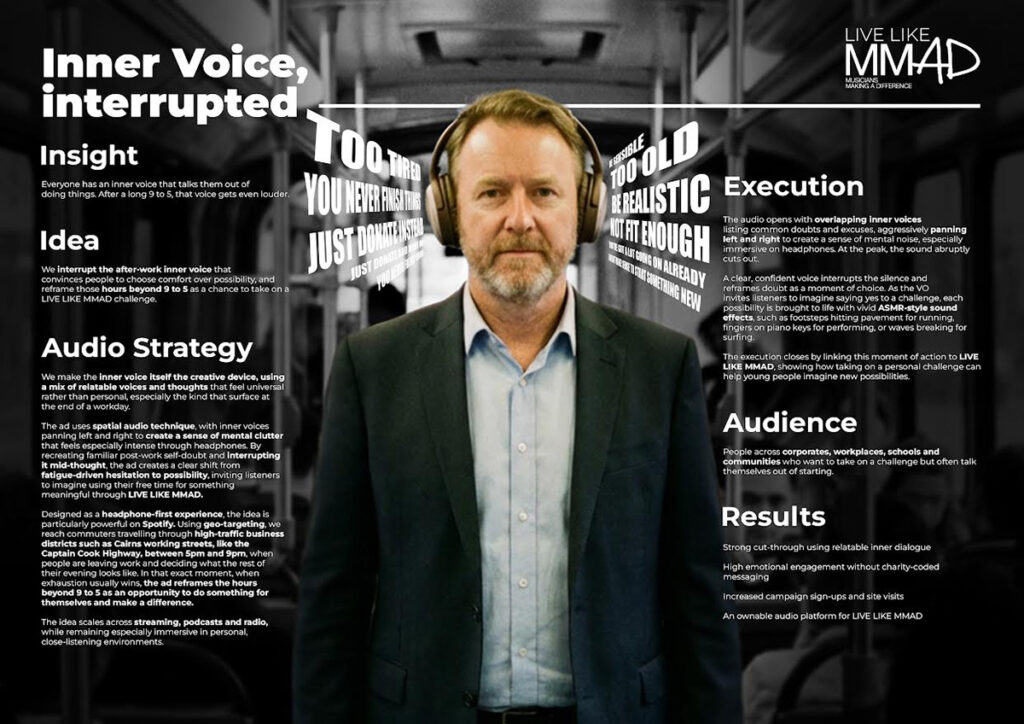
The work that got them there is worth examining. For the Audio category, Dey and Thakkar tackled a brief for LIVE LIKE MMAD with a campaign called Inner Voice, Interrupted. Using spatial audio techniques, the campaign recreates the overwhelming self-doubt that descends after a long workday, physically panning negative thoughts left and right before cutting the noise entirely to reveal a confident inner voice. Strategically targeted at commuters via Spotify during evening rush hours, the campaign reframes the hours after work as an opportunity for personal growth and charitable action.
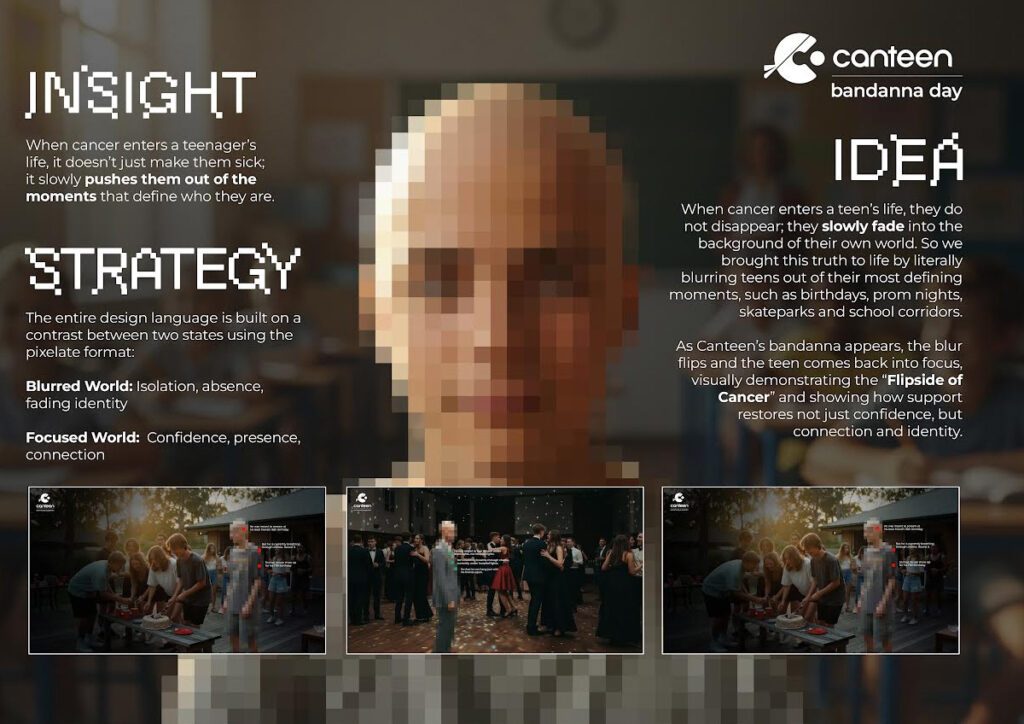
For the Design category, Shabbir and Negi worked on a brief for Canteen’s Bandanna Day, a campaign highlighting how cancer pushes teenagers out of their own defining moments. Using a pixelated design language to create stark contrast between a blurred world of isolation and a focused world of connection, the campaign, titled The Flipside of Cancer, shows teenagers fading into the background of birthdays, skateparks and school proms. As a Canteen bandanna appears, the blur flips and the teenager snaps back into sharp focus.
Kalpesh Patankar, group chief creative officer of VML India, made no attempt to disguise his satisfaction. “We are immensely proud to see our teams consistently excel on the Cairns Hatchlings platform since its inception,” he said. “They have masterfully tackled challenging briefs across diverse categories, demonstrating both layered storytelling and a unique creative approach. This exceptional teamwork is truly inspiring.”
Dey and Thakkar, returning to the finals after last year’s run, were candid about the demands of the audio medium. “It’s one of the most demanding mediums, where we only have a few seconds to capture a listener’s world with sound alone, so absolute clarity is essential,” they said. “The true measure of creative work is its ability to create positive change, and our audio submission was made to help those who need it most while encouraging people to silence the inner voices that hold them back.”
Shabbir and Negi, competing in Design for the first time, described the experience as “a completely different beast.” “We see it as an opportunity to showcase our expertise, raise the bar, and challenge ourselves in new ways, while also learning from creative minds from across the globe,” they said.
In Australia, the four finalists will face a live 24-hour brief from the United Nations before presenting in a live pitch session. Twenty-four hours, one brief, one shot. VML India has been here before. It knows exactly what is at stake.