iWorld
Social media influencers redefine power in Bharat Dialogues’ 2024 Top 100

MUMBAI: Who holds power in India today? Politicians, business tycoons, and cinema stars may still dominate the limelight, but the rise of digital creators is rewriting the playbook of influence.
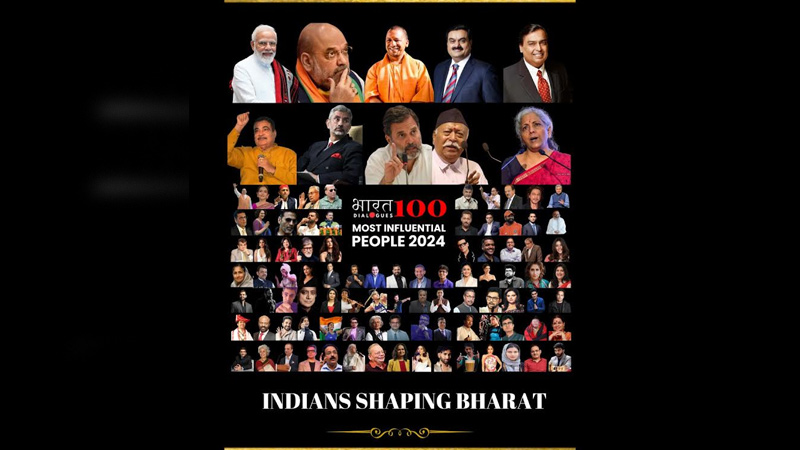
The Bharat Dialogues’ 2024 List of the 100 Most Influential People has brought this shift into sharp focus, featuring 16 social media influencers alongside the likes of prime minister Narendra Modi, Indian cinema icon Shah Rukh Khan, and business mogul Gautam Adani.
This evolution, driven by the Rs 12,000 crore creator economy and India’s insatiable appetite for digital content, reflects a new era where relatability often trumps legacy. The list, compiled from insights of 30,790 respondents and deliberations by an esteemed jury, celebrates individuals across politics, entertainment, business, startups, and more, offering a vivid snapshot of India’s changing influence landscape.

The 2024 Bharat Dialogues List signals a seismic shift. Where once influence rested solely in the hands of politicians (24 on the list), industrialists (18), and cinema stars (12), creators like Ankur Warikoo, Raj Shamani, and Urfi Javed now share the spotlight.
“These creators don’t just entertain,” said Bharat Dialogues co-founder Vivek Satya Mitram, “they connect deeply with audiences, shattering traditional hierarchies of power.”
Take Ranvir Allahabadia, a fitness entrepreneur turned motivational force, or Dolly Chaiwala, whose satirical commentary draws a massive 10-million-strong following. They don’t merely inspire; they engage, offering something legacy figures often struggle to match: authenticity.
Creators vs Titans
The list paints an intriguing juxtaposition:
. Politicians: With Narendra Modi and Yogi Adityanath dominating governance, their influence stems from shaping policy and public narratives. But creators bring a fresh voice to grassroots issues, connecting directly with audiences often underserved by traditional media.
. Business leaders: Industrialists like Gautam Adani and Falguni Nayar continue to drive economic innovation. Yet influencers like Ashneer Grover blend entrepreneurial grit with digital savvy, reaching millions through bold, relatable content.
. Cinema celebrities: While Shah Rukh Khan and Deepika Padukone command cultural clout, influencers like Urfi Javed redefine stardom by shunning convention and celebrating individuality.
Digital creators thrive in a space where relatability trumps wealth or authority. Platforms like YouTube and Instagram have removed gatekeepers, empowering figures like Acharya Dhirendra Shastri to merge spirituality with digital innovation, or Ankur Warikoo to transform financial literacy into an engaging digital movement.
“Influence has shifted from boardrooms and red carpets to smartphones and social feeds,” observed Bharat Dialogues co-founder Pooja Priyamvada.
By the numbers:
. India’s creator economy grew by 25 per cent in 2024, reaching a staggering Rs 12,000 crore.
. Social media advertising now accounts for 35 per cent of India’s total ad spend, reflecting brands’ increasing reliance on influencers.
. Influencers generate 60 per cent higher engagement than traditional celebrity endorsements.
As digital consumption surges, this trend shows no signs of slowing. With younger generations driving content trends, creators like Raj Shamani-a voice for entrepreneurial aspirations—are not just reshaping influence; they’re redefining it entirely.
“Creators are more than disruptors,” said Vivek. “They’re the architects of a cultural shift that will continue to reshape India’s socio-economic fabric.”
As India stands on the cusp of this transformation, Bharat Dialogues’ 2024 list offers more than a snapshot—it captures a nation in transition, where influence is no longer inherited but earned in the hearts of millions.
Explore the full list here: Bharat Dialogues Top 100