Connect with us

Brands

Rural India tightens purse strings, but swipes right on digital

Published

on

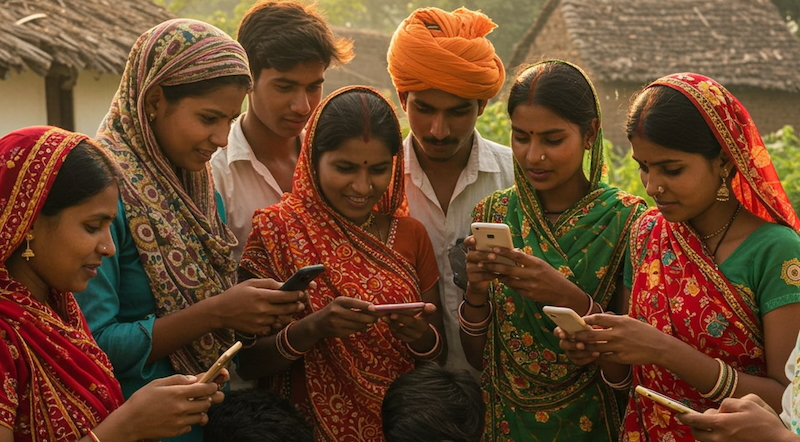
MUMBAI: Rural India, it seems, is having a bit of a digital dance while keeping a tight grip on its wallet. GroupM and Kantar’s Rural Barometer Report 2025 reveals a nation grappling with the ‘pinch-penny’ reality of rising expenses, yet diving headfirst into the digital deep end.

Forget the quaint image of the village square; rural India is now scrolling, streaming, and swiping with gusto. Seven in ten rural consumers are now online, a whopping 28 per cent jump since 2022. Social media, video content, and instant messaging? They’re the new village gossip, especially among the young and the loaded. But hold your horses, television and newspapers still hold sway with the older crowd, proving that old habits die hard.

Financial anxieties are playing a havoc with household budgets. Three out of four rural Indians are fretting about their finances. Younger, flashier spenders are cutting back on the big toys—durables and vehicles—while the older, thriftier lot are keeping things steady. Personal loans are on the up, suggesting a ‘bit of a pickle’ as folks juggle their cash. But, there’s a glimmer of sunshine; job security optimism is bouncing back..

Advertisement

The government’s PM Garib Kalyan Yojana, especially the free rations, is a ‘real life-saver’, proving that a bit of state-sponsored generosity goes a long way.

GroupM India managing director -OOH solutions Ajay Mehta said: “The Rural Barometer Report is a strategic compass for brands navigating this dynamic landscape. As media habits evolve and digital adoption deepens even in the heartlands, it’s clear that a dual-channel strategy blending the scale of traditional with the precision of digital is essential. At GroupM, we see this as an opportunity for marketers to go beyond surface-level reach and build meaningful, hyper-local engagement. This report not only helps decode rural mindsets but also empowers businesses to craft smarter, more inclusive growth strategies for Bharat’s next chapter.”

Kantar director- specialist businesses, insights division Puneet Avasthi  added, “As rural India  becomes more connected and conscious, brands must rethink how they engage with this  audience. The new rural consumer demands relevance, value, and authenticity. Marketers must  move beyond a one-size-fits-all approach to adopt hyper-local, digitally powered strategies,  while still leveraging the trust and familiarity of traditional media.”

Advertisement

Brands must ditch the ‘one-size-fits-all’ claptrap. Rural India wants it real, relevant, and authentic. Go hyper-local, go digital, but don’t forget the old favourites.”

In essence, rural India is a ‘right proper’ mix of caution and connectivity, a ‘digital dynamo’ with a keen eye on the price tag. Brands, take note: it’s time to get your digital act together, whilst still paying homage to the traditional.


Advertisement
Click to comment

Leave a Reply

Your email address will not be published. Required fields are marked *

Brands

33 per cent of women believe the salary scale is rigged: Naukri report

Voices @ Work study finds rising calls for equal pay audits and lingering bias

Published

on

MUMBAI: Progress may be visible in India’s workplaces, but many women still feel the need to tread carefully. A new report by Naukri reveals that one in two women hesitate to disclose marriage or maternity plans during job interviews, worried that such information could influence hiring decisions.

The findings come from the second edition of Naukri’s annual Voices @ Work International Women’s Day report, titled “What Women Professionals Want.” Drawing insights from more than 50,000 women across over 50 industries, the survey sheds light on evolving workplace aspirations alongside the biases that continue to hold women back.

One of the report’s most striking insights is the growing demand for equal pay audits. The share of women calling for regular pay parity checks has climbed to 27 per cent this year, up from 19 per cent a year ago. The demand now stands alongside menstrual leave as the most sought after workplace policy.

Advertisement

Interestingly, the call for pay transparency grows louder higher up the income ladder. Nearly half of women earning between Rs 50 lakh and Rs 1 crore annually say equal pay audits are a priority, suggesting that pay gaps become more visible as women move up the career ladder.

At the same time, confidence and ambition appear to be rising. About 83 per cent of women say they feel encouraged to pursue leadership roles, a significant jump from 66 per cent last year. Cities in southern India appear particularly supportive, with Hyderabad leading the way as 86 per cent of respondents there reported encouragement to step into leadership positions. The education sector recorded the highest sense of encouragement at 87 per cent.

Yet the report also highlights a growing trust deficit around pay equity. Nearly one in three women, or 33 per cent, say they do not believe men and women are paid equally at their workplace. That figure has risen from 25 per cent last year, pointing to widening perceptions of disparity as careers progress.

Advertisement

Bias in hiring and promotions continues to be the biggest hurdle. About 42 per cent of respondents say workplace bias is the main challenge for women from diverse backgrounds. The concern is consistent across major metros, with Chennai and Delhi NCR reporting similar levels.

Reluctance to discuss personal milestones during hiring processes is also widespread. While 34 per cent overall said they hesitate to share marriage or maternity plans in interviews, the anxiety increases with experience. Among professionals with 10 to 15 years of work experience, the figure rises to 40 per cent.

Info Edge group CMO Sumeet Singh, said the data reflects both progress and unfinished work. “Behind every data point in this report is a woman who is ambitious. The fact that 83 per cent feel encouraged to lead is something to celebrate. However, the fact that one in two still hide their marriage or maternity plans in interviews tells us the work is far from done. As India’s leading career platform, it felt not just important but necessary for us to shine a light on these gaps through the second edition of our report,” he said.

Advertisement

The report suggests that while ambition among women professionals is growing, structural changes around pay transparency, fair hiring and supportive policies will be key if workplaces hope to keep pace.

Continue Reading

Advertisement News18
Advertisement All three Media
Advertisement Whtasapp
Advertisement Year Enders

Copyright © 2026 Indian Television Dot Com PVT LTD

This will close in 20 seconds