Connect with us

MAM

Pocket Entertainment names Umesh Bude as CTO to lead AI-powered storytelling revolution

Published

on

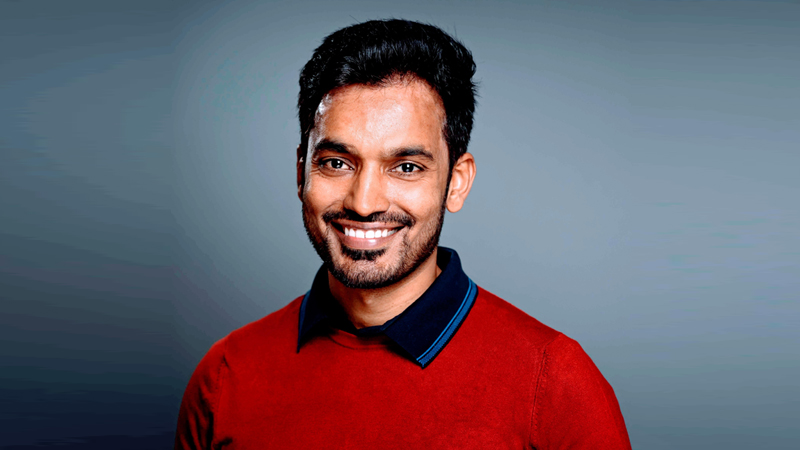
MUMBAI: In the world of audio-led content, Pocket Entertainment just rewrote the tech playbook. The company has elevated Umesh Bude to chief technology officer (CTO), tasking him with steering its ambitious journey into the future of AI-powered storytelling.

The move places Bude at the helm of the company’s end-to-end technology strategy across all platforms—Pocket FM, Pocket Toons, and Pocket Novel. As CTO, he will lead efforts to craft intelligent, emotionally attuned user experiences by blending generative AI with scalable product design.

“It’s a privilege to take on this responsibility at such an exciting time for Pocket Entertainment. I look forward to driving the next wave of innovation, where technology and AI are not just enablers, but storytellers in their own right”, said Bude.

Advertisement

With nearly 20 years of experience across engineering, platform security, and data science, Bude has played a key role in scaling Pocket Entertainment’s tech infrastructure from scratch. His elevation underscores the company’s ambition to lead at the intersection of entertainment and machine intelligence.

“We are at a pivotal moment in our journey where technology and creativity are deeply intertwined. As we reimagine storytelling for the AI era, technology is the foundation”, said Pocket Entertainment co-founder Prateek Dixit. “Umesh’s elevation is a reflection of our ambition to lead this transformation from the front. His leadership will be central to creating intelligent, emotionally aware experiences that push the boundaries of what storytelling can be”.

Bude will continue reporting to Dixit as he leads initiatives to strengthen the company’s generative AI muscle, ensure seamless cross-platform integration, and pioneer tools that empower storytellers and users alike. With this shift, Pocket Entertainment reaffirms its commitment to turning code into creativity—one line, one story at a time.


Advertisement
Click to comment

Leave a Reply

Your email address will not be published. Required fields are marked *

MAM

How Risk and Return Are Linked in Mutual Funds

Published

on

Risk and return maintain inverse proportionality within mutual funds – higher potential rewards accompany elevated volatility, while stability demands lower expectations. SEBI’s Riskometer (1-5 scale) standardizes visualization, but quantitative metrics reveal nuanced relationships across categories and market cycles.

Fundamental Risk-Return Relationship

Equity funds (Riskometer 4-5) deliver historical 12-16% CAGR alongside 18-25% standard deviation—large-cap 15% volatility, small-cap 30%+. Debt funds (1-2) yield 6-8% with 2-6% volatility. Hybrids (3) average 9-12% returns, 10-14% volatility.

Advertisement

Sharpe ratio measures return per risk unit – equity 0.7-0.9, debt 0.5-0.7 over complete cycles. Higher risk categories compensate through return premium capturing economic growth.

Volatility Metrics Explained

Standard Deviation: Annual NAV return dispersion—equity 18-22%, debt 4-6%. 

Advertisement

Maximum Drawdown: Peak-to-trough losses – equity 50%+ (2008), debt 8-12%. 

Beta: Market sensitivity – equity 0.9-1.1, debt 0.1-0.3.

Sortino Ratio focuses downside volatility—equity 1.0-1.3 favoring recoveries. 

Advertisement

Value at Risk (VaR) estimates 95% confidence, worst 1-month loss: equity 10-15%, debt 1-2%.

Category Risk-Return Profiles

Large-cap equity: 12-14% CAGR, 15% volatility, Sharpe 0.8. 

Advertisement

Mid/small-cap: 15-18%, 22-30% volatility, Sharpe 0.7. 

Corporate bond debt: 7-8%, 4% volatility, Sharpe 0.6.

Liquid funds: 6.5%, <1% volatility—capital preservation. 

Advertisement

Credit risk debt: 8.5%, 6% volatility—yield pickup. 

Hybrids: 10-12%, 12% volatility—balanced exposure.

Review types of mutual funds specifications confirming mandated asset allocations driving profiles.

Advertisement

Historical Risk-Return Tradeoffs (2000-2025)

Complete cycles: Equity 14% CAGR/18% volatility; 60/40 equity/debt 11%/11% volatility; debt 7.5%/5% volatility. Bull phases (2013-2021): equity 18%, debt 8%. Bear markets (2008, 2020): equity -50%/+80% swings, debt -10%/+10%.

Inflation-adjusted: Equity 8% real CAGR; debt 1.5% real—growth funding requires equity allocation.

Advertisement

Risk Capacity Assessment Framework

Short-term goals (1-3 years): Riskometer 1-2 (liquid/debt), 2-4% real returns. Medium-term (5-7 years): Level 3 (hybrid), 4-6% real. Long-term (10+ years): Level 4-5 (equity), 6-9% real.

Personal factors: Age (younger = higher risk), income stability, emergency fund coverage, other assets. Drawdown tolerance—20% comfortable vs 40% discomfort signals capacity limits.

Advertisement

Portfolio Construction Principles

Diversification: 60/40 equity/debt reduces volatility 40% versus equity-only while capturing 80% returns. 

Correlation: Equity/debt 0.3 average enables smoothing.

Advertisement

Rebalancing: Annual drift correction sells outperformers (equity +25%), buys underperformers (debt -5%). 

Style balance: Large-cap stability offsets mid-cap growth volatility.

Quantitative Risk Management Tools

Advertisement

Sharpe Ratio: >1.0 indicates efficient risk-taking. 

Information Ratio: Alpha per tracking error. 

Downside Deviation: Focuses losses only.

Advertisement

Stress Testing: 2008 scenario simulations reveal portfolio behavior extremes.

Conclusion

Higher mutual fund risk levels correlate with elevated return potential – equity 12-16% amid 18-25% volatility versus debt 6-8%/4-6%. Risk capacity matching, category diversification, rebalancing discipline, and quantitative metric interpretation align portfolios with personal tolerance across economic cycles.

Advertisement

Disclaimer: Investments in the securities market are subject to market risk, read all related documents carefully before investing.

Continue Reading

Advertisement News18
Advertisement
Advertisement Whtasapp
Advertisement Year Enders

Indian Television Dot Com Pvt Ltd

Signup for news and special offers!

Copyright © 2026 Indian Television Dot Com PVT LTD