Connect with us

Hindi

Surat gets the big picture as Rajhans rolls out city’s first Imax screen

Published

on

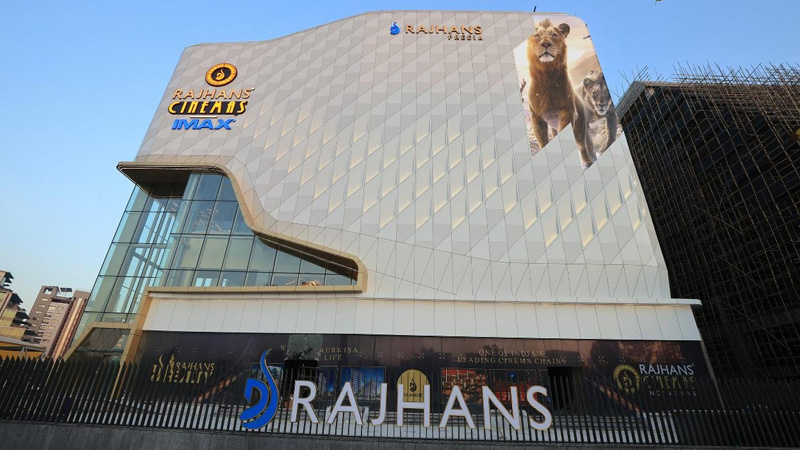
MUMBAI: Surat’s moviegoers no longer need to pack a bag for a big-screen pilgrimage to Mumbai or Ahmedabad, the Imax revolution has finally arrived at home. Rajhans Cinemas has unveiled Gujarat’s latest cinematic crown jewel: an Imax auditorium inside Rajhans Cinemas Precia, one of India’s largest multiplexes.

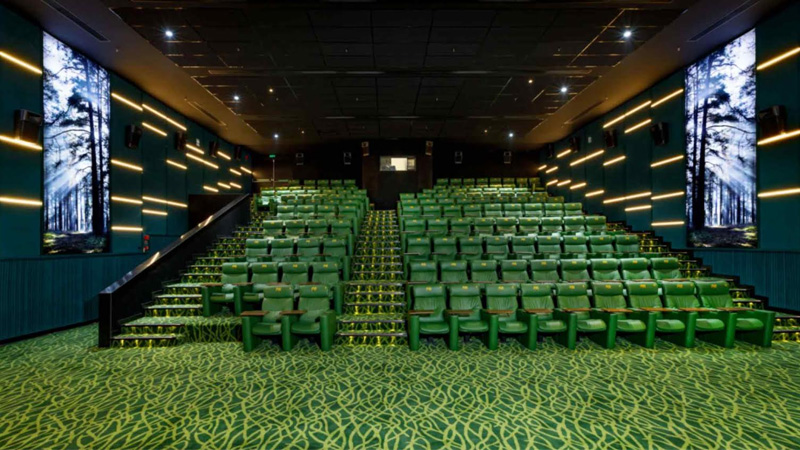
The numbers are as grand as the screen itself. Precia houses 14 screens, more than 3,000 seats, and now a 400-seat Imax hall boasting a massive curved display, ultra-crisp laser projection, and immersive Imax 3D. The upgrade is designed to pull audiences into the action with eye-popping visuals and seat-rumbling sound, a far cry from the flat fare of regular screens.

Imax has long been the preserve of India’s metros, with installations in Mumbai, Delhi, Bangalore and Ahmedabad. For Surat cinephiles, it often meant long trips just to catch a blockbuster in its biggest form. That’s changing fast since launch, Rajhans’ Imax shows have been sold out, fuelled by repeat visits and glowing word-of-mouth.

Advertisement

Rajhans Cinemas isn’t stopping there. With 160 screens already operating nationwide, the chain has 65 more under development across 15 cities, from Noida and Gurgaon to Vizag and Hyderabad, all set to open by mid-2026.

“This isn’t just a new screen, it’s a landmark in Surat’s cinematic journey,” says Rajhans Group chairman Jayesh Desai. “We’re not just elevating the movie experience; we’re introducing a new era of storytelling that engages all the senses.”

For India’s fast-growing regional cities, the message is clear: the days of settling for “good enough” entertainment are over. With premium formats like IMAX moving beyond metros, the blockbuster experience is becoming a hometown affair.

Advertisement
Click to comment

Leave a Reply

Your email address will not be published. Required fields are marked *

Hindi

Remembering Gyan Sahay, the lens behind film, television and advertising

From a puppet rabbit selling poppadums to Hindi cinema, he framed it all.

Published

on

MUMBAI: There are careers, and then there are canvases. Gyan Sahay, the veteran cinematographer, director, and producer who passed away on 10 March 2026 in Mumbai, had one of the latter. Over several decades in the Indian film and television industry, he turned lenses, lights, and the occasional puppet rabbit into something approaching art.

A graduate of the Film and Television Institute of India (FTII) in Pune, Sahay built his reputation as a director of photography across a career that stretched from the early 1970s all the way to the digital age. He was the kind of craftsman who understood that a well-composed shot is not merely a technical achievement but a quiet act of storytelling.

For most Indians of a certain age, however, Sahay will forever be the man behind the rabbit. His direction of the iconic long-running television commercial for Lijjat Papad, featuring its now-legendary puppet bunny, gave the country one of its most cheerfully persistent advertising images. It was the sort of work that sneaks into the national subconscious and takes up permanent residence.

Advertisement

His big-screen credits as cinematographer include Anokhi Pehchan (1972), Pagli (1974), Pas de Deux (1981), and Hum Farishte Nahin (1988). In 1999, he stepped behind a different kind of camera altogether, making his directorial debut with Sar Ankhon Par, a drama that featured Vikas Bhalla and Shruti Ulfat, with a cameo by Shah Rukh Khan for good measure.

On television, Sahay was particularly prized for his command of multi-camera production setups, a skill that made him a go-to technician for large-scale shows and reality programmes. In an industry that has never been especially patient with complexity, he was the calm hand on the rig.

In later life, Sahay turned teacher. He participated regularly in masterclasses and Digi-Talks, often hosted by organisations such as Bharatiya Chitra Sadhna, sharing hard-won wisdom on cinematography, the comedy of timing in a shot, and the sweeping changes brought by the shift from celluloid to digital. He was also said to have been involved in a project concerning a biographical film on Infosys co-founder N.R. Narayana Murthy.

Advertisement

Tributes from the film industry poured in following the news of his passing, with colleagues remembering him as a senior cameraman who served as a rare bridge between two entirely different eras of Indian cinema. That is, perhaps, the finest thing one can say of any craftsman: he kept up, and he brought others along with him.

Continue Reading

Advertisement News18
Advertisement All three Media
Advertisement Whtasapp
Advertisement Year Enders

Copyright © 2026 Indian Television Dot Com PVT LTD

This will close in 10 seconds