Digital
AI transforms storytelling as FICCI FRAMES sparks a creative dialogue


MUMBAI: Artificial intelligence didn’t just enter the chat, it rewrote the entire script. At FicciFrames 2025, the session The AI-Powered Media Revolution brought together some of the sharpest minds shaping India’s digital future. What unfolded was not just a tech talk, but a lively, layered dialogue on how AI is blurring the lines between human creativity and machine intelligence.
Moderated by NDTV’s Abira Dhar, the panel featured Kamolika Gupta Peres, vice president at Autodesk; Shweta Bajpai, director of global business group at Meta India; Bharath Ram, CEO of JioStar; and Siddharth Shekhar, director of Youtube and partnerships at Google India. Together, they painted a compelling portrait of an industry in flux, one that’s shifting from “lights, camera, action” to “data, algorithm, imagination.”
Bharath Ram opened with a distinctly Indian optimism. “India doesn’t just adopt technology, it adapts it,” he said, highlighting how JioStar’s AI innovation is home-grown and hyperlocal. “Our teams think in Hinglish, dream in code, and build for Bharat.” With AI now powering recommendation engines, dubbing tools, and predictive analytics, he said the focus is on making tech intuitive for every kind of viewer from rural smartphone users to urban binge-watchers.

Meta’s Shweta Bajpai brought the creator’s perspective, describing AI as “the invisible hand that now guides discovery.” Over 50 per cent of what users see on Instagram today is AI-recommended, she shared, adding that engagement time is up by 7 per cent on Instagram and 6 per cent on Facebook. “It’s not just about clicks anymore,” Bajpai said. “It’s about chemistry between people and the content they didn’t even know they wanted.” She noted that thanks to AI, small-town entrepreneurs and regional creators are finding audiences that once felt unreachable. “Creators from Surat, Kochi, and Indore are building national fandoms powered by algorithms that understand local flavour.”
Google India’s Siddharth Shekhar widened the lens, calling AI “the great equaliser” for India’s next billion users. “Technology can’t just be smart, it must be inclusive,” he said. Google’s partnership with the Maharashtra government, using AI to improve agriculture, education, and healthcare outcomes, exemplifies that mission. He also revealed that YouTube has paid Indian creators over Rs 21,000 crore in the past three years, a staggering indicator of how the creator economy has matured. “Every vlogger, musician and stand-up comic is now a micro-entrepreneur,” he said.
Autodesk’s Kamolika Gupta Peres brought an artist’s insight into the mix, describing how AI is democratising design. “Today, a student in Nashik with a laptop can create visuals that once needed an entire studio,” she said. AI tools, she explained, are not replacing artists but accelerating their ideas. “It’s like having an assistant who never sleeps and never runs out of coffee.”
But amid all the tech euphoria, the panel didn’t ignore the elephant in the algorithm ethics. Deepfakes, misinformation and bias in machine learning models were hot topics. Shekhar noted that Google’s SynthID watermark system helps label synthetic or AI-generated content, a key step towards building public trust. Bajpai added that Meta now tags AI-generated posts and allows users to flag potential fakes, a move designed to balance creativity with accountability.
As the discussion veered towards the emotional limits of AI, Bajpai dropped a memorable line: “AI understands patterns; humans understand irony.” The audience chuckled, but the point stuck creativity still needs a pulse. Peres echoed that sentiment, reminding the room that technology is a tool, not the tale. “AI can help tell stories faster, but the human imagination still gives those stories heart,” she said.
The conversation turned lively again when Dhar jokingly asked whether AI might someday win a Filmfare Award. Ram was quick to reply, “Only if it learns how to deal with Indian censorship!” Laughter rippled through the room, but behind the humour lay a serious undertone the growing need to rethink content regulation in the AI era.
As Ficci Frames marked its 25th year, the panel felt symbolic, a moment where India’s creative and tech powerhouses came together to imagine the next quarter-century. From scriptwriting bots to personalised ad targeting and real-time dubbing, AI is already changing how entertainment is produced and consumed.
Still, as Shekhar concluded, “The future of storytelling will be co-written part human, part machine.” Or as Dhar signed off wryly, “If my phone starts recommending my next question, I’ll know AI has truly taken over.”
From boardrooms to bedrooms, algorithms are now the new auteurs. And if FICCI Frames 2025 proved anything, it’s that the story of Indian media’s future just like AI itself has only begun to write its first draft.







Digital
OpenAI’s Stargate lead Peter Hoeschele exits with two senior leaders
Trio behind compute push set to join new startup amid leadership reshuffle
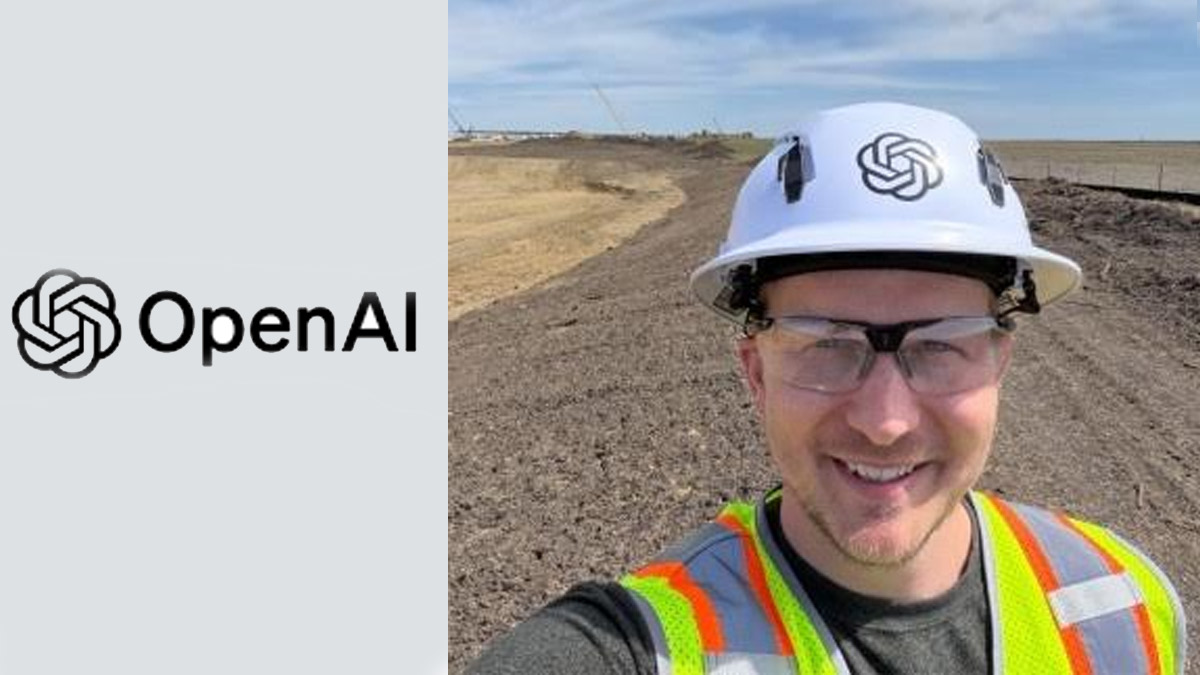
SAN FRANCISCO: Peter Hoeschele, a key figure behind OpenAI’s early Stargate data centre initiative, has exited the company, according to a report by The Information.
The departure is part of a broader leadership shift, with two other senior executives, Shamez Hemani and Anuj Saharan, also set to leave in the coming days. All three are expected to join the same new startup, although details about the venture remain under wraps.
The trio played a central role in OpenAI’s Stargate effort, an initiative aimed at building large-scale data centre capacity in-house to reduce reliance on external infrastructure providers. Their exits mark a notable moment for the company’s compute strategy as it continues to scale rapidly.
OpenAI spokesperson said in a statement to The Information, “We’re grateful for the contributions Peter, Shamez, and Anuj have made to OpenAI and wish them the very best in what comes next.” The company also pointed to the recent appointment of Sachin Katti to lead its industrial compute organisation, signalling continuity in its infrastructure roadmap.
OpenAI has indicated that it does not plan to directly replace Hoeschele’s role, suggesting a possible restructuring of responsibilities within the team.
As competition intensifies in the race to build next-generation AI systems, leadership changes in core infrastructure teams are likely to draw close attention. For now, the spotlight shifts to what this departing trio builds next, and how OpenAI adapts as it scales its ambitions.







