MAM
77% consumers prepared to invest in companies that do good: Kantar

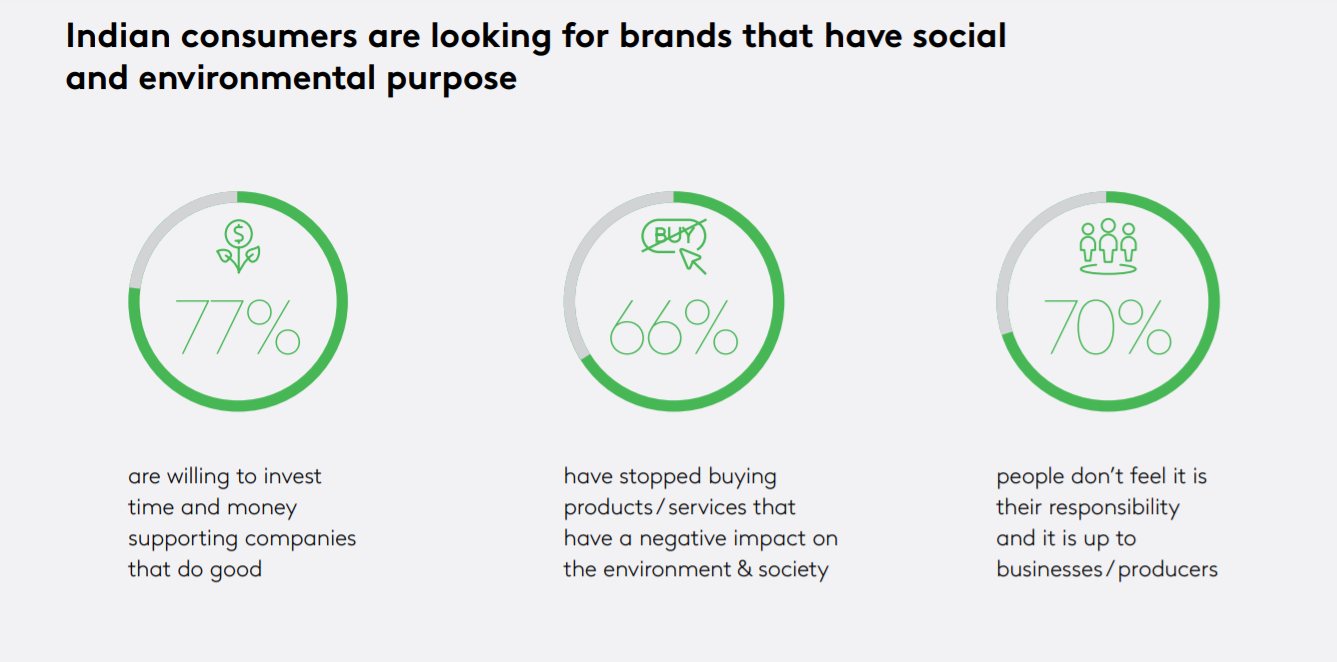
MUMBAI: The last eighteen months of the pandemic have forced the world to press the reset button and reflect on the direction it’s headed in. In a reflection of that trend, a substantial 77 per cent of Indian consumers are prepared to invest time and money supporting companies that do good, according to the latest study conducted by Kantar.
As part of the ‘Asia Sustainability Foundational Study’, the data-driven analytics and brand consulting company interviewed over 10,000 consumers across nine countries in the region, including India, to understand their concerns and priorities.
According to the report, a significant 66 per cent have stopped buying products & services that have a negative impact on the environment and society. On the flip side, however, 70 per cent of them do not feel sustainability is their responsibility, believing it is up to the companies or producers.
 The study also shares insights for marketers to understand the views of the consumers and their expectations from brands. In India, it says, the key concerns are issues that have a direct impact on the consumers’ daily lives such as water pollution, poverty and hunger, deforestation, lack of access to healthcare and vaccinations and air pollution.
The Kantar team interviewed 1,026 consumers in India in May 2021, covering six major cities – Delhi, Mumbai, Kolkata, Chennai, Bengaluru and Hyderabad. Unsurprisingly, in a country faced with numerous socio-economic issues, resource scarcity and environmental challenges, the issues closest to home take precedence for consumers. However, the intent does not always translate into action, the report found. While 48 per cent of consumers in India are active and engaged on sustainability issues with 77 per cent saying they are prepared to support companies that try to do good, nearly 84 per cent of consumers still prioritise saving money over saving the planet when it comes to their real-world actions!
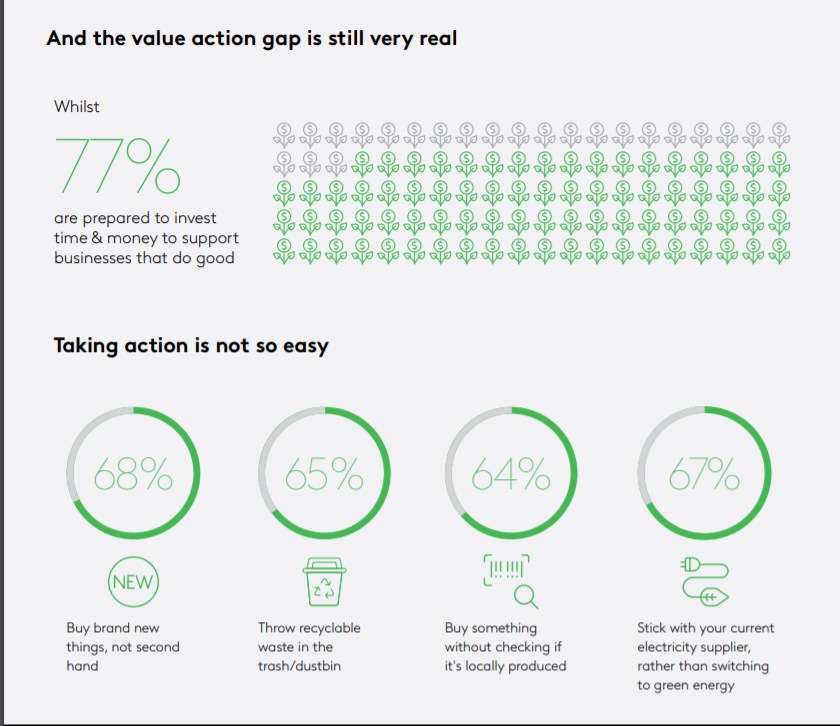 The Value Action Gap
Though most Indians are conscious of the impact of their own choices, the Value-Action Gap is still significant, with consumers often failing to act on these good intentions. For example, 65 per cent of consumers report that they throw recyclable waste in the trash or dustbin.
Further, the study measures the three factors persistently undermining sustainable consumer behaviour: Cost, Comfort and Convenience. At least 76 per cent say they do not have enough information to choose sustainable options and 72 per cent say they tend to forget about sustainability in their busy day-to-day lives.
According to the report, consumers’ concerns also vary depending on the category in question, so brands developing their sustainability strategy need to understand this in order to focus their efforts. For example, consumers expect food brands to avoid over packaging and to discourage wastage.
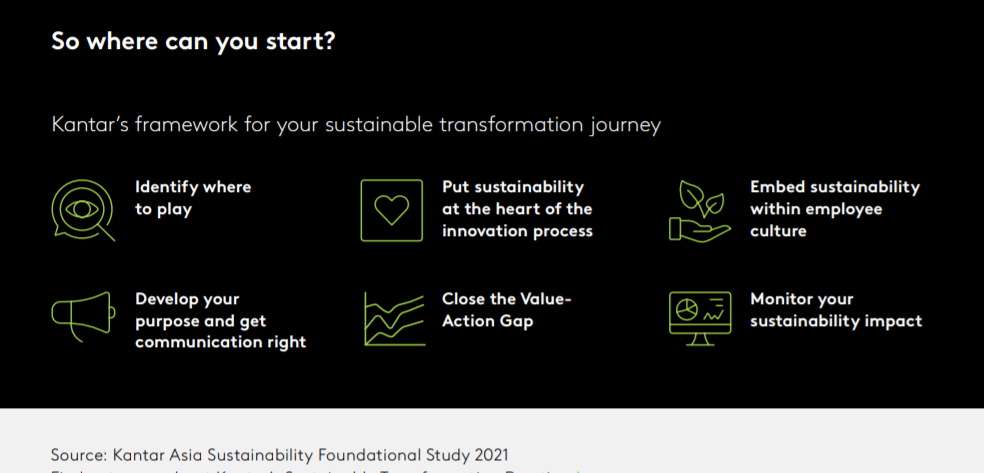
The research additionally introduces Kantar’s Sustainability Framework which businesses can use to build a consumer-centric strategy for success. This leverages a ‘Sword and Shield’ approach to better understand how brands in different categories can responsibly navigate sustainability issues by identifying where to focus their attention, how to localise their brand purpose to address local consumer tensions, and how to innovate to overcome the Value-Action-Gap.
 “India’s stage of growth and increasing consumer consciousness regarding sustainability gives it huge potential to create commercial value and address environmental and social issues. Consumers are looking for brands that have social and environmental purpose, so from a marketing standpoint, purpose is imperative, and sustainability will potentially drive consumer choice,” said Kantar’s head of Sustainable Transformation Practice, India, Paru Minocha. “Our research illustrates the importance of taking a local approach to sustainability issues. While a company purpose could be a global constant, translating that into action needs to take into consideration the tensions that exist in each market.
According to Minocha, for the first time, the team has been able to identify which sustainability issues consumers care about most and how that should translate to action depending on the consumer category. The immediate task ahead is to find levers to unlock this behaviour change, she added.
Kantar Sustainable Transformation Practice managing partner, Jonathan Hall said, the study uniquely identifies the social and environmental issues that are relevant for consumers on a sector-by-sector basis in India and across the world. “Brands have the opportunity to apply the lens of their purpose to understand where to play in the space and to create interventions that are meaningful for different consumer segments. In this way, brands can help people align their actions with their sustainable beliefs and close the Value-Action Gap,” he said.