News Broadcasting
“India is amongst the largest content hub”: Ficci DG Arun Chawla

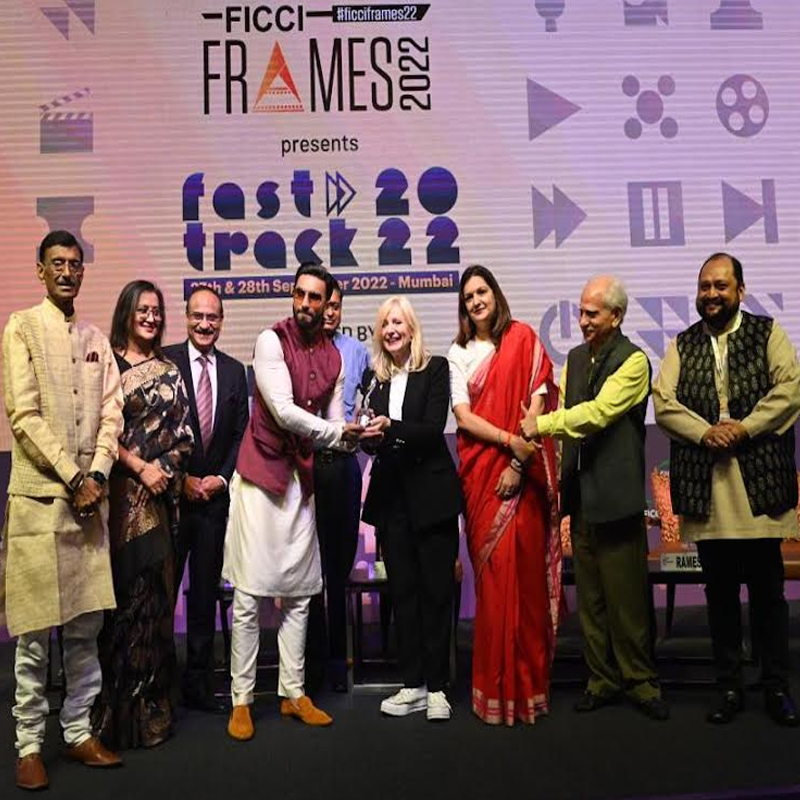
Mumbai: Ficci Frames is back in 2022. The two-day convention kicked off on 27 September at the Westin in Mumbai. The event focused on creating content and its consumption by eminent media and entertainment industry leaders.
Ficci Frames Fast Track had plenary and parallel sessions along with workshops and master-classes on issues and topics covering the entire gamut of media and entertainment like films, broadcast (TV & radio), digital entertainment, animation, gaming, visual effects, etc. over a period of two days.
While giving a welcome address, Ficci director general Arun Chawla remarked that the media has shown resilience and will continue to grow. He said, “According to the Ficci report, India’s M&E industry will grow 17 per cent this year (to $25.2 billion) and try to recover its level from the 2019 pre-pandemic level and maintain a CAGR of 11 per cent. The industry is trying to reach $30.9 billion. This indicates a strong growth rate. India is amongst the largest content producers. Approximately 1,50, 000 hours of TV content, 2,500 hours of premium OTT content, and 2,000 hours of filmed content will be produced in 2021.”

In his opening remarks, Chawla discussed how the media and entertainment industries not only survived but also kept the country’s morale high by providing entertainment while the rest of the world was suffering from the pandemic.
He said, “India’s media and entertainment market is one of the most vibrant and diverse groups. Media and entertainment industries have come a long way and are contributing to the GDP of this country. We have over 900 TV channels, more than 1,44,000 print publications, and more than 385 private radio stations. Showing immense resilience, the industry is back on its feet but still must overcome its pre-pandemic level.”
Chawla further added, “We are all aware of India’s digital transformation. It has caused the number and importance of online media platforms to rise dramatically. The government has actively supported the M&E industry, particularly through several initiatives to increase digitization and the creation of digital communication infrastructure.
The ministry of information & broadcasting secretary Apurva Chandra, said that the media and entertainment industry in India is about $23 billion. He also talked about setting up a film facilitation office and working with Invest India to build a single-window portal for opening theatres. We were also informed about proposed amends to the Cinematograph Act.
Actor Ranveer Singh, who enthralled the audience with his infectious energy, was awarded the ‘Frames Achiever of the Year’ at the event.
On receiving the award, Singh stated, “Collectively coming out of a very difficult time, I hope that we crack great ideas at Ficci Fast Track in the rapidly changing hyper-dynamic world. I deliberately say the hyper-dynamic landscape of Indian entertainment that we are going to see because it is so.”
Speaking at the event, West Yorkshire mayor Tracy Brabin said, “We want to work with the talented and creative people to champion sustainability in the creative industries and the film industry, through investment and support. We are open for business. We would like to invite you to get involved in our cultural festivals; to attend, but also to partner in the exciting programmes of activity.”
“With the strength of the sector in the region, there are huge opportunities for companies from India to partner with our leading companies and invest in the region. The rewards are there for the taking, and we will support you every step of the way. We want to deepen our relationship with creative India, attracting more investment from production companies, studios, post-production houses, and VFX companies,” added Brabin.
Film director Ramesh Sippy reflected upon the changes that happened during the pandemic. He said, “As much as the pandemic has affected us, it has also brought in some changes. OTT is certainly getting a big boom. Both cinema and small platforms will perform jointly as they used to, but in a much bigger way.”
The session on the topic “M&E Consumption: Evolving Trends Across Segments” received a good response from the audience where panellists from various TV and OTT platforms explored trends such as short vs. long vs episodic video, the resilience of radio, the rise of regional and vernacular media, etc.
A parliamentary representative participated in an engaging discussion on the “Role of M&E in Building the Social Fabric of the Nation” and spoke on the importance of the media in fostering critical and proper public awareness of planners’ goals and limitations.
On the first day, the event saw actor Ranveer Singh, director Ramesh Sippy, MIB secretary Apurva Chandra, West Yorkshire (UK) mayor Tracy Brabin, and members of parliament (MP) like Sumalatha Ambareesh, Priyanka Chaturvedi & Sanjay Seth.
The two-day convention saw sessions with renowned names of the industry like Nikhil Advani, Divya Dutta, Madhur Bhandarkar, Paresh Rawal, Tannishtha Chatterjee, Adil Hussain, Revathy, Tamanna Bhatia, Raj Nidimoru, Krishna DK, Sohum Shah, Karan Johar, Ayan Mukherjee, Imtiaz Ali, Anees Bazmi, Abhishek Sharma, Nitesh Tiwary, Ashutosh Gowarikar, to name a few, along with studio heads. They talked about the gamut of media & entertainment like films, television, digital entertainment, radio, animation, gaming, visual effects, film tourism, IP rights, and film incentives.