Brands
From waste to wardrobe: Circular fashion finds a new thread in India
Fireside chat highlights how culture, communities and conscious consumption can drive textile circularity

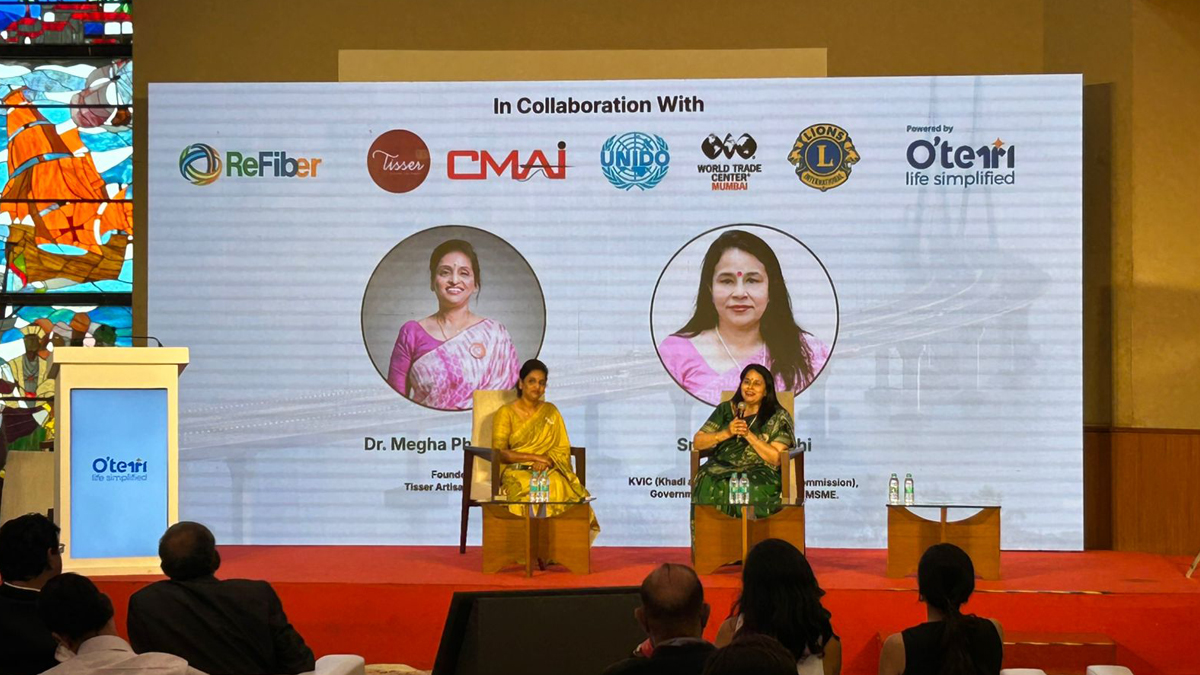
MUMBAI: Textile waste may be piling up, but the conversation around it is beginning to unravel some fresh ideas. At a fireside chat titled Beyond CSR: NGOs, Corporates and Communities Partnering for a Zero-Waste Textile Future, speakers argued that the future of sustainability will depend as much on changing mindsets as on changing materials.
Held during the launch of Mumbai’s Mega Post-Consumer Textile Waste Collection & Upcycling Initiative by ReFiber, powered by OterRi, the discussion featured Tisser Artisans Trust, founder, Megha Phansalkar and Government of India, Ministry of MSME, Khadi and Village Industries Commission (KVIC), chief executive officer, Roop Rashi. The conversation formed part of the World Environment Day programme focused on advancing textile circularity and sustainable consumption.
The conversation moved well beyond recycling bins and waste collection drives. Instead, it focused on a larger cultural shift needed to make circularity part of everyday life. A central theme was that textiles should not be viewed as waste but as resources that still hold value long after their first use.
The discussion highlighted how India’s long tradition of reusing, repairing and passing down clothing offers lessons for the modern sustainability movement. Practices that were once considered ordinary household habits are now being recognised as powerful tools for reducing waste and extending the life of textiles.
A strong case was made for changing consumer behaviour through awareness and advocacy. The speakers suggested that younger generations are increasingly willing to support sustainable products, provided they trust the claims behind them. Greater transparency, traceability and clear information about how products are made could help consumers make more responsible choices.
The conversation also explored the growing importance of making sustainability aspirational. Rather than positioning environmentally responsible products as sacrifices, participants argued that sustainable fashion must become desirable, stylish and culturally relevant. If sustainability becomes fashionable, they noted, consumers will be far more willing to embrace it.
Khadi and traditional textiles emerged as examples of production systems that naturally align with sustainability goals. Their lower energy requirements, reduced resource consumption and strong links to local livelihoods were presented as models that can coexist alongside modern manufacturing rather than compete with it.
The role of artisans and village industries featured prominently throughout the discussion. Participants stressed that artisan-led production should not be viewed through a charitable lens but recognised for its skill, creativity and economic value. Elevating the status of artisans, creating pride around handmade products and showcasing the craftsmanship behind them were seen as important steps towards building stronger markets for sustainable goods.
Another key issue was decentralisation. Rather than transporting textile waste across long distances, speakers argued that cities should take greater responsibility for managing their own discarded textiles. Localised collection, sorting, upcycling and recycling systems could help create jobs, reduce transport-related emissions and keep valuable materials within local economies.
The conversation also touched on the potential for textile recycling to generate employment, particularly for women and rural communities. Distributed production models, training programmes and small-scale enterprises were identified as effective ways to combine sustainability with inclusive economic growth.
Participants pointed to examples from both India and abroad where cultural identity, local production and sustainable consumption have become closely linked. Building pride around locally produced and responsibly made products, they suggested, could help drive a similar shift in India.
The discussion further highlighted the need for responsible manufacturing practices. Rather than encouraging consumers to simply buy less, the emphasis was placed on producing goods more responsibly, improving labelling and traceability, and giving buyers better information about the environmental impact of their purchases.
Partnership emerged as the defining word of the session. Governments, businesses, community groups, artisans, startups and consumers all have a role to play in building a circular textile ecosystem. The challenge, speakers noted, is too large for any single stakeholder to tackle alone.
As India grapples with rising textile consumption and mounting waste volumes, the message from the fireside chat was clear: sustainability is not just about what happens after a garment is discarded. It begins with how products are designed, made, valued and used. If waste can be seen as a resource and tradition can be made fashionable again, India’s textile circularity story may be only just beginning.