Brands
ReFiber launches Mumbai’s biggest textile waste drive with 50 collection points
World Environment Day initiative aims to turn discarded clothes into rewards and resources


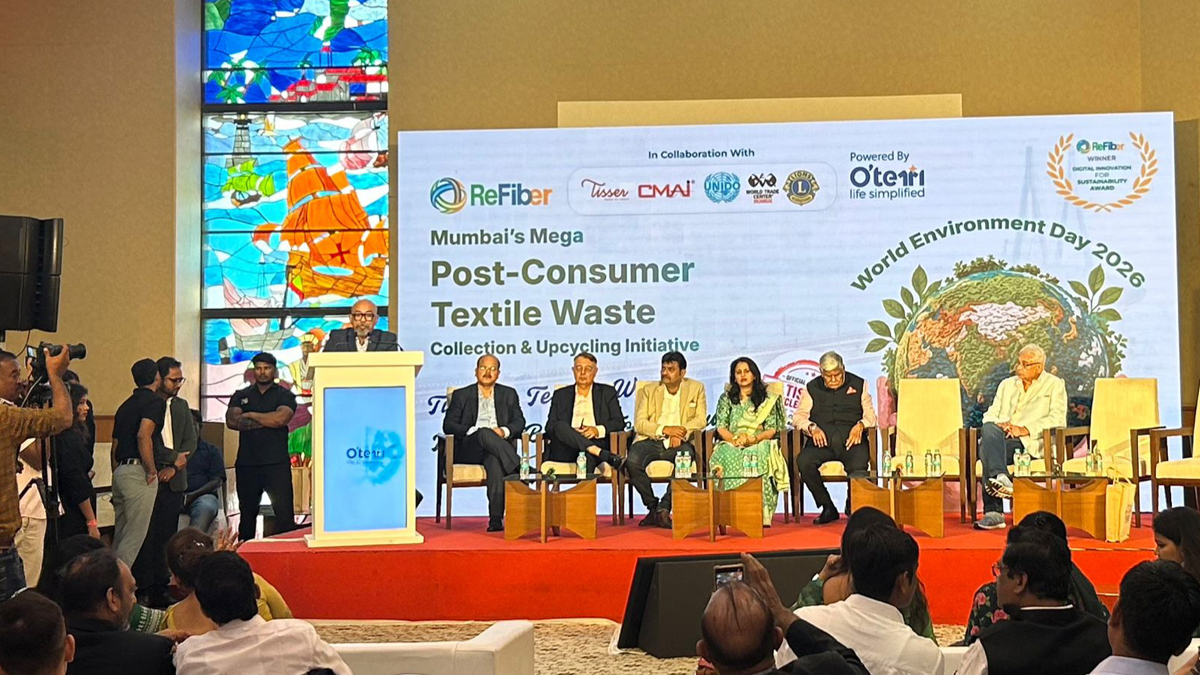
MUMBAI: One person’s old shirt could soon become another person’s new start. Marking World Environment Day, ReFiber, powered by OterRi, launched what it describes as Mumbai’s first mega post-consumer textile waste collection and circular recovery initiative, setting out an ambitious plan to keep unwanted garments out of landfills and back in circulation.
Unveiled at the World Trade Center Mumbai in Cuffe Parade, the programme aims to tackle one of the fashion industry’s least-discussed challenges: what happens to clothes after they are no longer wanted. The initiative brings together partners including Tisser, Clothing Manufacturers Association of India, United Nations Industrial Development Organization, World Trade Center Mumbai and Lions Clubs International.
Opening the event, ReFiber, OterRi, chief operating officer Manoj Wanwari described the launch as far more than a waste collection campaign.
“Today is more than a launch of a campaign. It is the beginning of a collective movement towards a more responsible, sustainable and circular future for our city and for our country,” said Wanwari.
Wanwari highlighted India’s position as one of the world’s largest producers and consumers of textiles, noting that vast quantities of clothing reach the end of their useful life every year without entering any formal recovery or recycling system.
According to him, the challenge extends beyond waste management. It requires a shift from the traditional “take, make and dispose” model towards a circular economy where materials remain in use for as long as possible. He stressed that governments, businesses, institutions and citizens must all play a role in making that transition happen.
At the centre of the initiative is the ReFiber mobile app, designed to make textile recycling as easy as booking a household service. Users can schedule a pick-up by entering the number and weight of garments they wish to discard and selecting a participating laundry partner.
The idea emerged from conversations with laundry operators in the OterRi ecosystem, who frequently encountered unclaimed clothes left behind by customers for months. Seeking a practical solution, the company introduced a “Recycle and Earn” feature that rewarded consumers with discounts when unwanted garments were responsibly disposed of.
That experiment eventually evolved into ReFiber, a dedicated platform focused entirely on post-consumer textile waste.
Wanwari explained that collected garments will be channelled into an upcycling ecosystem, giving old fabrics a second life instead of sending them to landfill. Products created from recovered textiles were showcased at the launch venue, offering a glimpse of how discarded clothing can be transformed into new consumer goods.
In a move that closes the loop even further, ReFiber also unveiled a dedicated marketplace within its app for upcycled products. Consumers who hand over unwanted clothes can later purchase products made from reclaimed textiles, effectively turning yesterday’s wardrobe into tomorrow’s purchase.
“The future of textiles is not linear. The future of textiles is circular and that initiative begins today,” said Manoj Wanwari.
The company has already established 50 textile collection points across Mumbai, supported by a technology-led backend system designed to manage collection and recovery operations efficiently. Wanwari urged residents to download the app and contribute garments that might otherwise remain unused in cupboards.
As fashion faces growing pressure to clean up its environmental footprint, ReFiber’s bet is simple: if recycling clothes can be made convenient, rewarding and visible, more consumers will join the circular economy. For Mumbai, that could mean giving old garments a fresh stitch in time rather than letting them become waste.