Brands
EcoMedia’s Rumjhum Gupta is making green the new gold
The former Nestlé spokesperson turned sustainability entrepreneur is shaking up the advertising world, one carbon footprint at a time


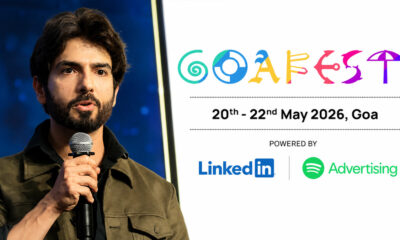
MUMBAI: When Rumjhum Gupta walked into the ABBY Awards at Goafest 2026, she was not exactly the loudest name in the room. Her company, EcoMedia Solutions, does not splash its logo across the campaigns it powers. Yet by the end of the night, the gold and silver trophies were quietly, unmistakably, pointing in her direction.
“You will not see EcoMS wins,” she says. “You will see Tribes, or our client Wonder Cement or Nivea.” The awards go to the brands, the agencies, the headline names. EcoMedia, as Gupta puts it, is the engine quietly humming underneath all of it. And business, it seems, is rather good.
EcoMedia Solutions secured five metals at the ABBY Awards at Goafest 2026, including one gold, two silver and two bronze awards.
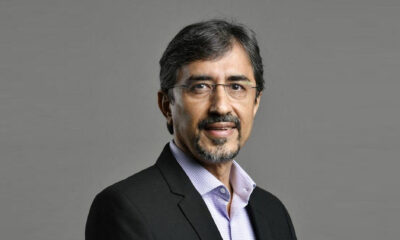
Rumjhum Gupta is the founder and chief executive of EcoMedia Solutions, a sustainability consultancy with a tech platform at its core, helping businesses measure, manage, and communicate their environmental impact in ways that actually hold up to scrutiny.
Getting here, however, was anything but a straight line.
Gupta’s route to sustainability entrepreneurship is the kind that zigzags through journalism, PR, corporate communications, and eventually all the way to Switzerland, where she served as a global spokesperson for Nestlé, one of the most scrutinised food companies on the planet.
It was there, around 2017 and 2018, that something clicked.
“The major FMCG companies, one after the other, started issuing press releases,” she recalls. “‘By 2025, we will put an end to single-use plastic, mineral water bottles, packaging, blah blah blah.'” Fine words, she thought. But when she spoke to colleagues in manufacturing, R&D, and across different divisions, she found a more complicated picture.
“People had the intent,” she says. “But there are various factors. There are several roadblocks.”
The gap she spotted was not between good intentions and bad companies. It was between wanting to say the right thing and actually having the proof to back it up.
“From a communications perspective, there is a gap,” she says. “People want to talk, but for various reasons, they are not able to. How can I be authentic and have authentic proof points to support what I’m saying?”
That question, as it turned out, would eventually become a company. But not before life intervened in the way it tends to, spectacularly and without warning.
In 2020, COVID hit. Gupta left Switzerland, moved to Canada with her husband, and found herself, as she puts it, “pretty much sitting idle.” A new country, work permit restrictions, and a career that had suddenly lost its footing.
“I didn’t know what to do,” she says. “I was pretty much stuck in my career journey.”
What followed was something that may well become a template for accidental entrepreneurship: a great deal of thinking, a lot of research, and the discovery of a one-year programme at MIT in Boston.
“I enrolled thinking only from a communications perspective,” she says. What she found, however, was something far more technically demanding. Assignment after assignment revealed the same problem: when you trace a product’s journey from creation to disposal, there are gaps, and you are not able to measure many things.
She arrived at the programme as a communications expert. She left it convinced that plain communication would never be enough.
“It has to be backed by data,” she says. “Assessment is very important. And there also has to be a tech angle to it.”
She was also embedded in a start-up community in Canada through the start-up visa programme, attending angel investor meetings, listening to people talk about scalable solutions and what the market actually needed. The pieces, she says, simply came together.
“Tech, sustainability, solution, need of the hour, innovative product, that’s how the idea actually came together.”
The product that emerged from all that thinking is Ecometer, the heart of EcoMedia Solutions, a platform designed specifically for the advertising and media industry. In an industry that runs on campaigns, billboards, printed materials, digital screens, and experiential events, sustainability has historically been an afterthought at best and a convenient fiction at worst. Ecometer sets out to change that.
The platform lets brands, agencies, and event organisers measure, manage, and report on the environmental performance of their campaigns, covering outdoor, digital out-of-home, print, digital, and experiential activity, all in one place, from the planning stage through to what Gupta calls “post-campaign recovery.”
“We are buying, we are saying that you source the material, then you put it to use, then you can upcycle, recycle,” she explains. “We are calculating the entire journey. Don’t let it go into the landfill. We will create some new product that gives it a new lease of life. So that’s the entire process.”
The company has filed for a patent. In her own words, Ecometer is “one of its kind in the industry, especially for outdoor solutions.”
“We are disrupting an established system that has been running for ages,” she says. “When distinguished jury members recognise and acknowledge that, we know we have moved the needle. That is what excites me.”
If you want to understand just how deeply she believes that sustainability is not some rarefied corporate concept but something far more instinctive and human, ask her whether creativity and sustainability can ever truly belong in the same sentence. She will not only say yes, she will tell you about her father buying fish at the market in Calcutta.
“As a kid, when we were growing up, we didn’t have these plastic water bottles,” she says. “We either had glass bottles or jars, or steel bottles.” Her father, she recalls, always carried a cloth bag. “Now you get tote bags and you’re paying X amount of money to buy them. Back then, those were just easily available.”
Her point is a rather elegant one: sustainability is not a new concept dressed up in expensive packaging. It is, for many Indians of a certain generation, simply the way things were done. “The use-and-throw culture did not exist for Indians,” she says. “We have always been recycling and reusing dabbas. A lot of traditional practices are actually more sustainable than what we use currently.”
When she turns to the relationship between sustainability and creativity, she offers a distinction worth sitting with. “Creativity is an approach to a solution. It is not the solution itself. Sustainability is the solution. Creativity is simply the approach.”
The story of what a company is doing for the environment is one thing. How that story gets told is another entirely. “So sustainability is about whatever activity you are doing with your glass or bottle. But how are you narrating that story? That is the creative part.”
The Wonder Cement film that won gold, she says, was not a complex piece of filmmaking. “It’s a very basic film with simple storytelling”.
Which brings up the question that hovers over every sustainability conversation: are companies genuinely committed to any of this, or are they simply performing commitment for an audience that increasingly expects it?
Gupta’s answer is practical rather than cynical. “Brands genuinely know they have to do something,” she says. “The intent to act is genuine. There are no two ways about it.”
The pressure, she points out, is not coming purely from conscience. It is coming from governments, from international compliance standards, and from the rules governing what can and cannot be exported to certain markets.
“If you are exporting a product from India to another country, Indian norms might be different. But to import or export that product, you still have to follow those rules.”
Where the real tension lies, she admits, is in the difference between what is mandatory and what is merely aspirational. “Brand managers may still see Ecometer as a good-to-have, not a must-have.” But the regulatory tide is turning, and faster than many of them realise. Extended producer responsibility, BRSR reporting obligations, Scope 3 emissions disclosures: the list of non-negotiable requirements is growing.
“You can evade it for some time,” she says of companies reluctant to act, “but it will come back to you in different ways.”
On the question of what success looks like when you are running a business and trying to change the world at the same time, Gupta is direct.
“I am here to change the world, but I also want to make money,” she says. “I can donate only if I have money. Even to sustain an NGO, I would have to raise funds.”
The short-term goal, she says, is awareness. “That is not even a short-term goal anymore. It is about creating more and more awareness, starting now.” The longer-term goal is growth, and not just within the media industry.
EcoMedia’s next product, due to launch in September or October, focuses on supply chain management, a space that cuts across automotive, manufacturing, retail, and more. The platform will focus on Scope 3 emissions, the indirect emissions that occur across a company’s entire value chain, an area that is, as she puts it, “mandatory to some extent and voluntary to some extent. But over the years, that is going to change very quickly.”
The MIT programme, she recalls, taught students to ask one question about any business decision: what will the impact of this action be twenty years from now? It is the kind of long view that tends to get crowded out by quarterly targets and campaign deadlines. Gupta is making it her business, quite literally, to keep it in the room.
“It has both short-term and long-term impact,” she says. “The long-term goal is that it should help the environment.”
A company that began with a journalist’s instinct for a good story, a communications expert’s eye for a gap in the market, and a very long flight of thought during lockdown, is now filing patents, winning gold awards, and preparing to expand well beyond the industry where it started.
Not bad for a chance entrepreneur with a cloth bag and a very good question.