MAM
Catch launches TVC for iodised pink rock salt push
DS Group expands beyond spices with campaign going live April 20
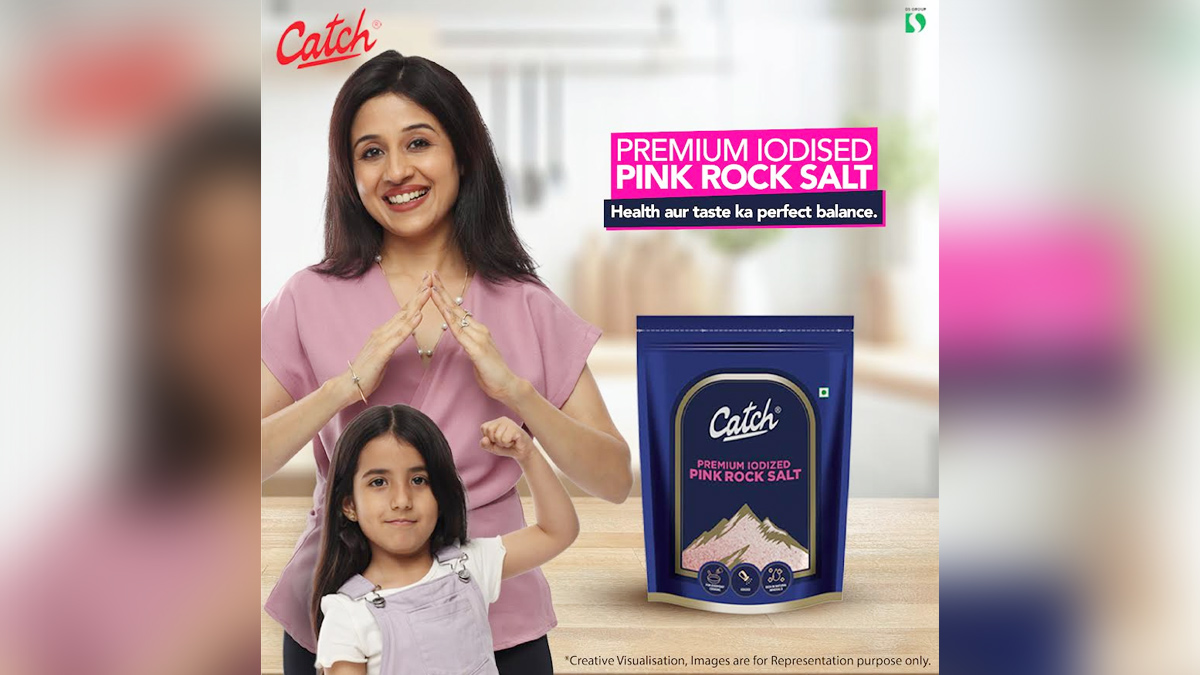
MUMBAI: A pinch of salt just got a personality and a prime-time slot to match. Catch Salt & Spices, part of the Dharampal Satyapal Group, has rolled out its first television campaign for Catch Premium Iodised Pink Rock Salt, signalling a clear step beyond its core spices and sprinklers play. Conceptualised by Dentsu Creative Webchutney, the campaign leans into a product-led narrative, aiming to build awareness in the relatively less-explored salt segment. The film goes live from April 20 across television and digital platforms, including social media and OTT, as the brand seeks scale and visibility.
Set in a neighbourhood play area, the TVC swaps hard selling for a slice-of-life moment. Two mothers chat while their children hover nearby until a young girl takes centre stage, confidently breaking down the origins and benefits of pink rock salt. The message lands softly but clearly: even everyday ingredients now come with a story.
The creative pivot reflects a broader shift in consumer behaviour. Salt, long treated as a commodity, is being reframed as a conscious choice part health cue, part lifestyle signal. By placing a child at the centre of the narrative, the film plays on the idea that awareness is no longer confined to adults; it’s trickling down, reshaping household decisions.
For DS Group, the campaign marks more than a product launch, it’s a category expansion. With Catch already established in spices, the move into salt positions the brand to tap into adjacent kitchen essentials, while reinforcing its long-standing thought that food is more than just fuel.
In a market where differentiation is often hard to sprinkle in, Catch is betting that storytelling and a dash of everyday relatability can do the heavy lifting.

Brands
Hyundai and TVS Motor partner to develop electric three wheelers
Joint development pact targets last mile mobility with localisation push
MUMBAI: Three wheels, one big ambition and a charge towards the future. Hyundai Motor Company and TVS Motor Company have signed a joint development agreement to co-create electric three-wheelers (E3Ws), aiming to crack India’s complex last-mile mobility puzzle. The collaboration moves beyond concept talk into execution mode, building on the E3W prototype first showcased at the Bharat Mobility Global Expo 2025. The goal now is clear, design, develop and commercialise a purpose-built vehicle tailored to Indian roads, riders and realities.
Under the agreement, Hyundai will lead design and co-development, bringing its global R&D muscle and human-centric engineering approach to the table. TVS Motor, meanwhile, will anchor the product on its electric platform, leveraging deep three-wheeler expertise and local market insight. It will also handle manufacturing and sales in India, with an eye on exports down the line.
The timing is strategic. India remains the world’s largest three-wheeler market, where affordability, durability and adaptability often outweigh sheer innovation. The upcoming E3W aims to strike that balance combining advanced technology with practical features such as adaptive ground clearance for monsoon-hit roads, improved thermal management for tropical climates, and flexible interiors suited for passengers, cargo or emergency use.
A key pillar of the partnership is localisation. Major components will be sourced and manufactured within India, a move expected to strengthen the domestic supply chain, create jobs, lower costs and improve after-sales support.
The shift from prototype to production will involve rigorous testing, certification and refinement to meet regulatory standards and consumer expectations. Dedicated cross-functional teams from both companies are already in place to accelerate timelines.
At a broader level, the tie-up reflects a growing trend in mobility, global players partnering with local specialists to navigate emerging markets. For Hyundai and TVS, the bet is that combining scale with street-level insight could unlock a new chapter in sustainable urban transport, one that runs not just on electricity, but on relevance.