Connect with us

MAM

Middle East conflict casts shadow on IPL advertising, may deter investments in India

Gulf tensions rattle marketers as oil spikes, airspace shuts and brands pause

Published

on

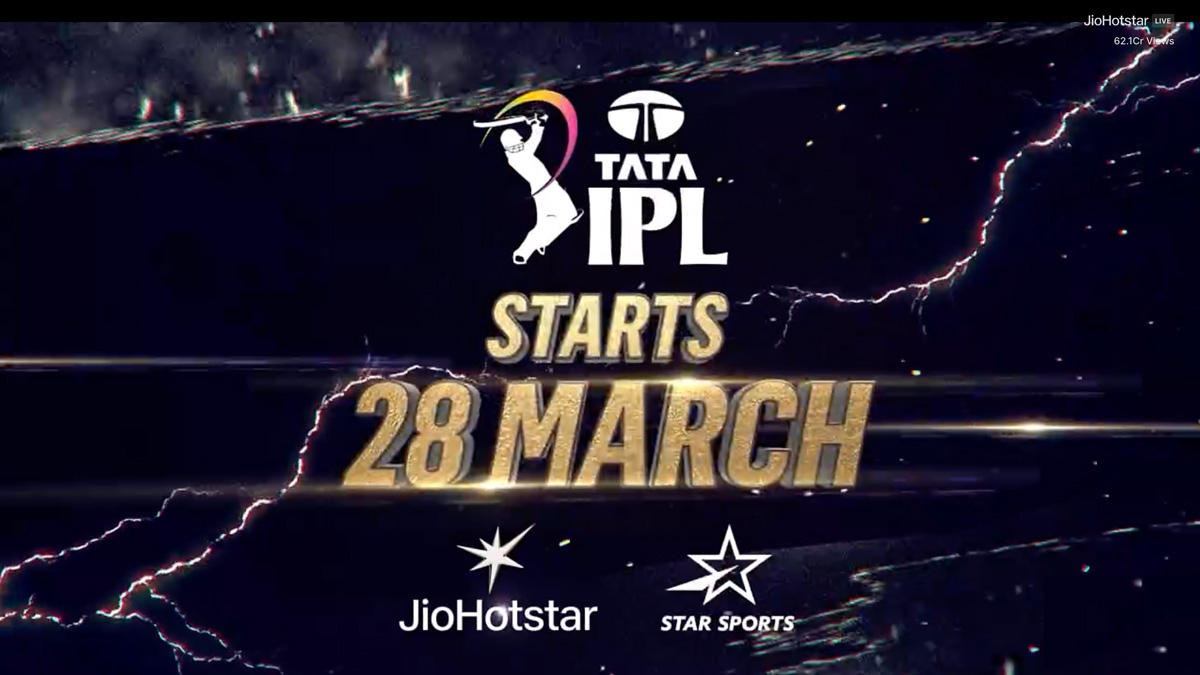
MUMBAI: The Indian Premier League has long attracted Middle Eastern brands eager to tap India’s vast television and digital audience. But this year, the conflict in West Asia is casting a shadow over that advertising push.

Over recent seasons, Gulf-based real estate firms, airlines, tourism boards, oil majors, logistics companies and retailers have steadily increased their presence during the tournament, drawn by the IPL’s massive reach.

Now, however, escalating tensions in the Middle East have put many of those plans on hold. Following joint US and Israeli strikes on Iran on February 28, and Iran’s retaliatory drone and missile attacks across the region, have heightened security concerns across Gulf nations. Airspace in countries such as the UAE, Qatar and Kuwait has been temporarily shut, while cities like Dubai and Abu Dhabi have also been rattled by the exchanges.

Advertisement

With the IPL scheduled to begin on March 26, uncertainty is beginning to ripple through India’s advertising ecosystem.

According to industry estimates, the crisis could wipe out between Rs 200 crore and Rs 250 crore in ad spending from Middle Eastern advertisers. IPL 2026 is projected to generate around Rs 4,900 crore in total advertising revenue.

According to media reports, several Gulf-based brands are likely to adopt a wait-and-watch approach before committing to campaigns. The impact is expected to be temporary, with broadcasters possibly facing some losses in the initial days. However, given the IPL’s massive reach and marketing potential, these brands are unlikely to stay away from the tournament for long.

Advertisement

The wider economic uncertainty triggered by the conflict is also weighing on corporate decision-making.

Fitch Group company BMI warned that escalating geopolitical tensions in West Asia could dampen investment flows into India and blunt the economic gains expected from upcoming trade deals with the European Union and the United States.

“From March onwards, we expect uncertainty to increase sharply due to the ongoing conflict in the Middle East. We believe this will discourage investment in India, offsetting the (EU and US) trade deals’ positive effects on GDP,” BMI said in its latest India outlook report, according to PTI.

Advertisement

While BMI maintained its FY2026-27 GDP growth projection for India at 7 per cent, it flagged rising geopolitical risks as a key downside factor.

One of the biggest concerns is energy.

The firm warned that a full closure of the Strait of Hormuz, the 33 kilometre wide shipping corridor linking the Persian Gulf to the Arabian Sea, could shave up to 0.5 percentage points off India’s GDP because of surging energy costs.

Advertisement

Following the strikes on Iranian military, government and nuclear facilities, Iran warned ships away from the strait while insurers withdrew coverage, effectively halting tanker movements.

For India, which imports roughly 88 per cent of its crude oil needs, any sustained spike in oil prices could sharply increase the country’s import bill and fuel inflationary pressures.

The early signs are already visible. Crude prices surged nearly 10 per cent within 48 hours of the escalation, often the first signal of economic stress.

Advertisement

At the same time, disruptions across Gulf airspace have stranded travellers and complicated global travel routes after several key aviation hubs, including the UAE, Oman, Bahrain and Saudi Arabia, temporarily closed their skies.

The uncertainty is spilling into marketing budgets as well.

Several advertisers have asked agencies to temporarily pause ongoing and upcoming campaigns while the situation unfolds.

Advertisement

After a sluggish FY25 and a sharp market correction, India’s media and advertising sector is now facing fresh turbulence just as it was preparing for its biggest annual spectacle.

For now, the IPL’s commercial juggernaut appears unlikely to stall completely. But if tensions continue to escalate in West Asia, the tournament’s advertising innings could begin this season on a cautious note.


Advertisement
Click to comment

Leave a Reply

Your email address will not be published. Required fields are marked *

MAM

Brands push beyond compliance as trust takes centre stage

ASCI AdTrust Summit 2026 spotlights shift from legal checks to credibility.

Published

on

MUMBAI: In a world where a disclaimer can be legally sound yet socially suspect, brands are learning that compliance may tick boxes but trust wins markets. At the inaugural ASCI AdTrust Summit 2026, a panel on “Beyond Compliance: The New Currency of Trust” unpacked a growing industry reality: the gap between what the law permits and what consumers accept is widening and fast.

Moderated by Meenakshi Ramkumar of National Law School of India University, the discussion brought together leaders across law, marketing and academia to examine how brands must evolve in a digital ecosystem increasingly shaped by scrutiny, scepticism and speed.

Ramkumar set the tone by highlighting a critical shift, advertising today operates in the same digital space that fuels misinformation, scams and fake news, making credibility harder to establish. “The challenge is not just about what brands do, but the broader context of low institutional trust,” she noted, adding that when violations go unchecked, trust erodes not just in brands but in the regulatory system itself.

Advertisement

This vacuum, she said, has given rise to consumer activism from boycotts to social media backlash as a parallel accountability mechanism.

For Amit Bhasin, Chief Legal Officer at Marico, the distinction was clear, legal compliance is non negotiable, but insufficient. “Compliance is the minimum threshold. The real challenge is staying aligned with changing consumer expectations,” he said.

He pointed to how advertising narratives have evolved from traditional depictions of gender roles to more shared responsibilities reflecting a broader societal shift. “Earlier, it was fine to show one person doing the household work. Today, that may not land well. Consumers expect brands to reflect reality,” Bhasin observed.

Advertisement

He also highlighted internal debates where campaigns that may be legally permissible are still rejected for being culturally insensitive, noting that responsible advertising often requires asking uncomfortable questions before the public does.

If compliance is the baseline, reputation is the battlefield.

Bhasin noted that reputational risk has become a far greater concern than legal exposure, particularly in an era where campaigns can be dissected within hours online. “Earlier, a controversial ad might invite a newspaper editorial. Today, within hours, you’re at the centre of a storm,” he said.

Advertisement

Brands, he added, now evaluate campaigns through a dual lens legal viability and reputational vulnerability with the latter often proving more decisive.

From a healthcare perspective, Satish Sahoo of Cipla Health underscored the complexity of operating within fragmented yet stringent regulatory frameworks, spanning drugs, food, cosmetics and Ayush. “Anything under a drug licence is the most tightly regulated,” he said, adding that this necessitates proactive, not reactive, compliance.

He shared an example from the oral rehydration salts (ORS) category, where Cipla resisted the temptation to position products aggressively despite competitive pressure. “Our product is WHO compliant, and our communication reflects that. We chose not to blur the lines, even if others did,” he noted.

Advertisement

The long term payoff, he suggested, lies in credibility built over consistency, not quick wins.

Yet, as Harsha N of National Law School of India University pointed out, even perfect compliance does not guarantee trust. Drawing from historical and modern examples from exaggerated product claims in the 1800s to contemporary environmental and health advertising, he argued that legal frameworks often lag behind consumer expectations. “A brand can be fully compliant and still be perceived as misleading,” he said, citing instances where fine print disclosures fail to reach or convince the average consumer. He added that larger companies carry a disproportionate responsibility to set ethical benchmarks, even in areas where the law remains silent.

The conversation also turned to digital advertising, where the challenge extends beyond content to how ads are experienced. From algorithmic targeting to personalised messaging, brands now operate in an environment where regulation struggles to keep pace with technology.

Advertisement

Sahoo noted that social media has amplified awareness, with influencers and consumers increasingly scrutinising product claims and calling out inconsistencies. “Awareness has gone up dramatically. People are questioning what goes into products and what brands are saying,” he said.

The role of self regulatory bodies such as Advertising Standards Council of India also came under the spotlight.

Harsha acknowledged that while SROs play a crucial role, they are not immune to criticism, particularly around perceived conflicts of interest and enforcement gaps. “SROs have a higher threshold of responsibility not just to interpret the law, but to anticipate societal expectations,” he said.

Advertisement

He added that failures in self regulation often push the burden back onto government intervention, underscoring the need for stronger, more proactive oversight.

One of the more nuanced debates centred on whether building trust comes at a cost. While Sahoo acknowledged that quality and compliance can increase costs, he argued that companies must absorb them as part of their long term strategy.

Bhasin, however, framed the challenge differently not as cost, but as competitiveness in a market where not all players play by the same rules. “The real tension is when others cut corners and you choose not to,” he said.

Advertisement

The panel concluded with a call to embed trust into business metrics.

Sahoo suggested that organisations must go beyond revenue targets to include consumer equity and trust based KPIs, ensuring that ethical considerations are not sidelined in the pursuit of growth. “Trust sounds abstract, but it can translate into measurable consumer equity,” he said.

As the discussion wrapped up, one message stood out: the rules of advertising are being rewritten not just by regulators, but by consumers themselves. In an ecosystem where attention is fleeting and scepticism is high, brands that merely comply may survive, but those that build trust are the ones that endure.

Advertisement
Continue Reading

Advertisement News18
Advertisement All three Media
Advertisement Whtasapp
Advertisement Year Enders

Copyright © 2026 Indian Television Dot Com PVT LTD

This will close in 10 seconds