Connect with us

VBS 2026

AI and data reshape advertising in converged media era

Industry leaders debate storytelling, CTV growth and ROI metrics

Published

on

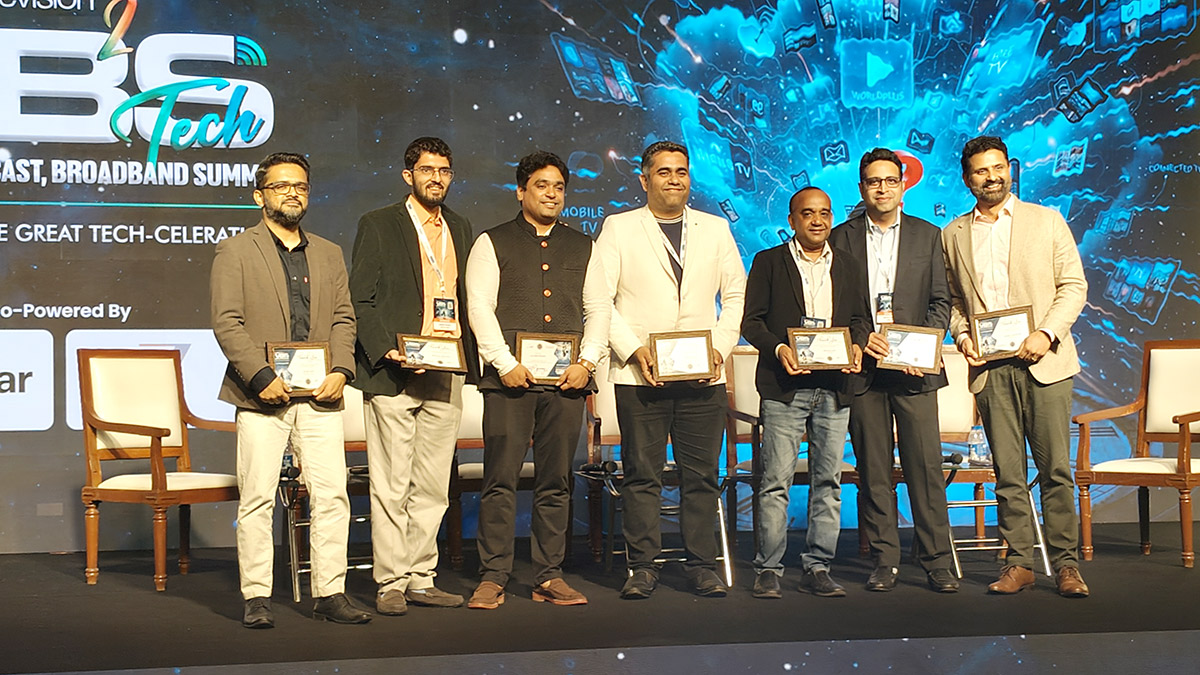
MUMBAI: If advertising once fought for eyeballs, it is now fighting for milliseconds, metrics and mindshare often all at once. At Panel Discussion 5 on Reimagining Advertising in a Converged Media Ecosystem at the 22nd Edition of the Video Broadcast and Broadband Tech Summit 2026, senior leaders from brands, agencies and ad tech firms unpacked how AI, data and connected TV are reshaping the grammar of modern marketing.

Chaired by Rahul Kapoor, VP Partnerships at Trade Desk, the panel featured Sujay Ray of L’Oréal India, Anooj Shetty of WPP Media, Abhinay Bhasin of dentsu India, Sandeep Balani of JioAds, Deepak Karnani of CereOne and Pratap Jain of Chana Jor.

Between performance dashboards and poetic storytelling, the session revealed an industry in transition more measurable than ever, yet more uncertain about what truly matters.

Advertisement

For Sujay Ray, Head of Consumer Experience, Content and Advocacy at L’Oréal India, the conversation begins not with AI, but with imagination.

“The biggest challenge today is the lack of good stories,” Ray said, arguing that brands are increasingly chasing trends rather than crafting distinct narratives. In a world where consumers can access content across countless platforms, differentiation is no longer optional, it is survival.

“Brands are not differentiating their storytelling. Everybody is following what is trending,” he noted, warning that this herd mentality creates a disconnect with audiences.

Advertisement

Ray cautioned against the industry’s growing obsession with performance metrics. “Just because a metric is available, you do not overanalyse it,” he said, adding that marketers have become “slaves to measurability”.

While data is critical, Ray emphasised that brands must invest in deeper frameworks such as Marketing Mix Modelling to identify which mediums actually drive awareness and intent. “If a medium is driving the right intent, even if it is comparatively costlier, it makes more sense than chasing a lower CPM that delivers nothing meaningful,” he argued.

Importantly, he shifted the lens from incremental reach to absolute reach. “The more people know about you, the higher the chances of conversion over time,” he said, underscoring that awareness remains the foundation of brand building whether the final purchase occurs online or offline.

Advertisement

Artificial intelligence, however, was impossible to ignore.

Pratap Jain, Founder and CEO of Chana Jor, shared how his bootstrapped platform is using AI in practical ways generating creatives, designing ad assets and analysing what content keeps audiences engaged.

“We know from the data what people are watching and we create accordingly. AI helps us in doing that,” Jain said.

Advertisement

Yet he drew a firm boundary. “When a human writes a story, it comes with emotions and uniqueness which say a ChatGPT does not have.” For him, AI can support efficiency and scale, but originality remains inherently human.

Abhinay Bhasin, Senior Vice President Product and Technology at dentsu India, positioned AI as a force multiplier rather than a creative threat. It enables rapid simulations, multiple creative iterations and cost effective experimentation.

“AI creates room for experiment,” Bhasin said. Where earlier brands might test one or two routes, they can now generate hundreds of variations, use platform embedded AI to pressure test ideas and refine campaigns in near real time.

Advertisement

He described AI as “the world’s smartest apprentice” always available, capable of processing vast datasets and accelerating execution. But the core of storytelling, he insisted, must remain intact.

Rahul Kapoor noted that campaigns today are more complex than ever, spanning television, OTT, influencer marketing, programmatic digital and retail media simultaneously. The linear funnel has given way to a web of touchpoints.

Anooj Shetty, National Head Growth Account Advanced TV at WPP Media, highlighted how brands now demand incremental reach rather than inflated gross numbers. Deduplication across platforms has become central to planning.

Advertisement

“Every brand is very clear that it should get incremental reach,” he said, pointing out that the focus is on eliminating redundancy while optimising exposure.

He observed that strategy and execution have advanced significantly, “a leap of 60 per cent” but measurement capabilities are lagging at around “30 per cent”. Data from television panels, digital platforms and walled gardens often exist in silos, stitched together through simulations rather than true unification.

Connected TV sits at the centre of this complexity. With approximately 55 million connected TV households in India roughly 25 per cent of total TV homes CTV has reached a scale capable of independently building brands. Yet it occupies a grey zone between traditional broadcast and digital performance media.

Advertisement

“Connected TV lies between digital and traditional,” Shetty noted, creating friction between planners trained in GRPs and those accustomed to impressions and clicks.

Performance, but whose definition?

Deepak Karnani of CereOne pushed the conversation further by questioning what “performance” actually means in a CTV context. While shoppable ads and lower funnel conversions are possible, performance could equally mean attention, awareness, brand lift or footfalls.

Advertisement

“A CTV needs to deliver performance, but what is that performance?” he asked.

Sandeep Balani of JioAds acknowledged that digital’s greatest advantage measurability has also become its burden. Advertisers scrutinise mobile metrics intensely, often more aggressively than CTV, despite both being part of the digital ecosystem.

“One of the curse of digital is that it is very measurable,” Balani observed. Brands demand conversion clarity, sometimes overlooking the role of upper funnel influence.

Advertisement

Bhasin added that the proliferation of walled gardens and changing consumer behaviour have put measurement itself under scrutiny. “As an industry we are obsessed with measurements and numbers. We should look at it from a direction but not get obsessed with it,” he said.

Jain raised a practical concern: while CTV campaigns in the US or Europe can generate significant revenue, Indian CPMs remain comparatively low. Effective monetisation remains a challenge in a cost sensitive market.

Ray responded by reiterating that price should not be the sole driver of investment decisions. The focus must shift from cheapest impressions to meaningful impact.

Advertisement

Shetty agreed that measurement is complex, particularly as the medium continues to grow rapidly. Yet he maintained that the growth trajectory of connected TV signals strong long term potential.

Across the discussion, fragmentation emerged as a defining theme. Consumers are exposed to up to nine hours of content daily across OTT, gaming, television and digital platforms. Navigating this abundance requires coordination across technology, creativity and commerce.

“There is a lot of fragmentation and knowing all of it comes at a cost,” Ray said, calling for harmonisation within the ecosystem.

Advertisement

The panel ultimately converged on a nuanced conclusion. AI and data are indispensable in a converged media environment. Intelligent reach, programmatic precision and unified measurement are critical to staying competitive.

But if advertising becomes only about dashboards and data points, it risks hollowing out the very thing that drives consumer connection.

In a marketplace saturated with metrics, the brands that win may be those that remember that behind every impression is a human being and behind every algorithm, a story waiting to be told.


Advertisement
Click to comment

Leave a Reply

Your email address will not be published. Required fields are marked *

VBS 2026

VBS 2026: Indian media rides AI, hybrid tv and social fandom into a new era

Summit highlights AI, fan-first sports experiences, connectivity and intelligent content flows

Published

on

MUMBAI: The media industry is entering its most turbulent technological shift in decades. Artificial intelligence, hybrid television ecosystems and creator-driven fandom are rapidly redrawing the economics of broadcasting.

At the Video Broadcast and Broadband Tech Summit 2026 in Mumbai, the people who build, regulate, fund and fill our screens gathered to reckon with a simple, unsettling truth: the broadcasting business is being rebuilt from the antenna down. Regulators sat beside streamers. Advertisers traded notes with telecom operators. And everyone had an opinion about AI.

Opening the summit, Indian Television Dot Com founder and editor-in-chief Anil Wanvari, framed the industry’s moment as one of “great tech-celerations”, as artificial intelligence, data and digital distribution transform how content is produced, delivered and monetised. 

Advertisement

He highlighted the rapid expansion of low Earth orbit satellites, which are dramatically reducing latency and extending internet access to previously unconnected regions, bringing millions of new users online. 

AI has slipped into the newsroom, the edit suite, the analytics dashboard, quietly compressing what used to take days into hours. Connected TVs are rewriting viewing habits in real time. Wanvari stressed that technology must be balanced with responsibility. “Trust is the most precious and fragile asset any media organisation possesses,” he said, adding that as connectivity expands, the industry must ensure the stories reaching new audiences are worthy of that moment.

Policy outlook: AI and 6G reshape broadcasting

The regulatory perspective came from Telecom Regulatory Authority of India principal advisor for broadcast and cable services Ashok Kumar Jha. 

Jha outlined how emerging technologies such as AI and 6G connectivity could reshape India’s broadcast and broadband ecosystem, stressing that future policy must balance innovation with inclusive digital access.

As network infrastructure evolves, regulators expect convergence between telecom, satellite and broadcasting systems to accelerate.

Advertisement

Hybrid television takes centre stage

One of the summit’s central themes was the convergence of traditional broadcasting and streaming platforms.

In a panel moderated by KPMG partner – TMT Sonica Bajaj, industry leaders argued that the future will not be a battle between linear television and OTT services.

Zee Entertainment Enterprises chief revenue officer affiliate sales and head public & regulatory affairs Anil Malhotra, said linear television continues to dominate mass reach across India.

He pointed out that the country still has roughly 160 million linear TV households, underlining television’s enduring role as a shared family screen. 

Advertisement

Meanwhile, Airtel head of telco engineering Ajit Pratap Singh, described how telecom operators are building unified platforms that integrate linear channels with streaming libraries, supported by AI-driven discovery tools.

Connectivity remains a crucial enabler. Eutelsat OneWeb senior director Nishitha Kapoor, argued that low-earth-orbit satellite networks could bridge India’s connectivity gaps. With around 314 million households in the country and only about half owning a television, LEO satellites could expand broadband access while also strengthening disaster recovery and network resilience.

Looking ahead to the next technological shift, CloudExtel CEO and co-founder Kunal Bajaj, said OTT growth was powered by the transition from 3G to 4G networks, while 5G will enable immersive formats such as augmented reality, virtual reality and shared viewing experiences.

Advertisement

However, Hughes Communications India CEO and managing director Shivaji Chatterjee, cautioned that broadcast distribution still offers unmatched efficiency for large live events. Delivering identical streams to millions of viewers via OTT consumes far more bandwidth than satellite transmission.

Satellite broadband could also play a role in expanding media access. Eutelsat OneWeb senior director Nishitha Kapoor, highlighted the potential of low-earth-orbit satellite networks to bridge connectivity gaps in underserved regions.

Newsrooms confront the AI dilemma

The summit also examined how artificial intelligence is reshaping journalism during the session The Newsroom of Tomorrow: Tools, Trust and Business Viability in Focus. The panel featured Govindraj Ethiraj, editor of The Core; Nilesh Khare, COO of Sakal Media Group; Prakaran Tiwari, chief executive producer at NDTV Profit; Manoj Padmanabhan, head – business media and entertainment at Amazon Web Services; and Neeraj Mishra, key account manager at Vizrt, moderated by Mayuresh Konnur, bilingual correspondent at Collective Newsroom.

Advertisement

Ethiraj argued that trust is now the real differentiator in a fragmented news ecosystem, noting that audiences increasingly consume information from alternative sources even as AI assists newsroom tasks such as editing and proofreading. 

Khare said AI could reshape newsroom economics and scale, revealing that Sakal is building its own language model trained on six decades of archival data to reduce reliance on external platforms. 

Tiwari stressed that perspective will remain journalism’s competitive edge, observing that AI is adapting to how audiences consume news. Padmanabhan positioned technology as an enabler rather than a replacement for journalists, saying AI acts as an assistant while the industry moves towards a single integrated newsroom. 

Mishra highlighted how automation can help broadcasters manage rising content volumes, while moderator Konnur cautioned that the spread of deepfakes and synthetic media makes credibility and verification more critical than ever.

Advertisement

Automation reshapes sports and live production

Following discussions on AI, infrastructure and hybrid distribution, the summit also examined how automation is reshaping live broadcast production during the session The Journey From Live Events — Sports and News to Viewers: Exploring Tech-Driven Production.

The panel featured Mukund Acharya, CTO at Sony; Bhaskar Majumdar, GM – Saarc at Ross Video; Divyajot Ahluwalia, founder of wTVision and Quidich Innovation Labs; Megha Gambhir, CEO and founder of Stupa Sports Analytics; Subodh Aggarwal, general manager south asia at TVU Networks; Anand Pimprikar, head india and middle east at Tata Communications Media Enabled Services; and Rohan Padha, partner india at Deloitte, with Pimprikar chairing the session.

Ahluwalia said AI is enabling broadcasters to uncover patterns hidden in sports data, while Gambhir emphasised the growing role of data-driven insights and verification in live commentary. Acharya highlighted the scale of modern streaming, revealing SonyLIV has handled around 10 million concurrent viewers during major events. 

Aggarwal noted that much of the automation powering live production remains invisible to audiences but is critical for reliability. Pimprikar said the pandemic accelerated the move to remote and network-based production, while Padha pointed to cloud-driven production models reshaping broadcasting economics and enabling deeper viewer engagement. Majumdar added that automation is now “bread and butter” for modern broadcasting, positioning AI as an assistive tool rather than a threat.

Advertisement

Cable and distribution rethink strategy

Distribution platforms are also adapting to the changing media ecosystem.

Fragmentation in India’s content ecosystem also came under scrutiny during a fireside chat with Manoj Dobhal, ceo and executive director of Dish TV India. Dobhal argued that while India produces vast volumes of content, value creation is constrained by a fragmented ecosystem that disconnects creators, producers, technology providers and global buyers. 

“We know the problem is fragmentation,” Dobhal said, adding that it slows growth and prevents content from unlocking its full commercial value. He noted that creators often struggle to access international distribution and investor networks, despite India’s large diaspora and global appetite for Indian storytelling.

To address the gap, Dish TV plans to launch a three-day content marketplace in March 2026 that will bring together creators, producers, studios, investors and distributors under one roof. “It is not just about a career boost,” Dobhal said. “It is a roadmap,” suggesting that structured industry collaboration could help build long-term partnerships and create clearer global pathways for Indian content. 

Advertisement

Meanwhile Vynsley Fernandes, whole-time director at Hinduja Global Solutions and CEO of NxtDigital, argued that AI, analytics and automation, what he called the “three As” will drive the next phase of media growth.

“These are not buzzwords,” he said. “They are enablers.” Analytics helps interpret consumer behaviour, AI anticipates demand and automation allows services to scale efficiently.

Highlighting NXTDigital’s footprint across roughly 4,500 pin codes, Fernandes said satellite internet, IPTV integration and OTT bundling will expand connectivity, particularly in underserved regions. He also stressed the importance of hyperlocal strategies, noting that demand can vary sharply even within the same neighbourhood. “The future is integration, not isolation,” he added, pointing to bundled offerings that combine television, broadband, VoIP and Wi-Fi.

Advertisement

Advertising enters the AI age

The advertising industry is undergoing a similar transformation.

A panel chaired by Rahul Kapoor, vice president partnerships at The Trade Desk, brought together marketing and ad-tech leaders to discuss the future of data-driven media.

Speaking about the growing role of AI, Pratap Jain, founder and CEO of Chana Jor, explained how his platform uses the technology to generate creatives and analyse audience behaviour. “We know from the data what people are watching and we create accordingly. AI helps us in doing that,” he said, while noting that human storytelling still brings “emotions and uniqueness which say a ChatGPT does not have.”

Opening the discussion, Sujay Ray, head of consumer experience, content and advocacy at L’Oréal India, stressed that storytelling remains the core of effective advertising. “The biggest challenge today is the lack of good stories,” he said, warning that brands are increasingly following trends rather than building distinct narratives. 

Advertisement

From an agency perspective, Abhinay Bhasin, senior vice president – product and technology at dentsu India, described AI as an enabler of experimentation. “AI creates room for experiment,” he said, noting that brands can now test multiple creative routes quickly and optimise campaigns more efficiently.

The conversation also turned to changing media planning strategies. Anooj Shetty, national head – growth account advanced TV at WPP Media, said brands are now focused on deduplicated reach across platforms. “Every brand is very clear that it should get incremental reach,” he noted, highlighting the need for better measurement as campaigns span television, OTT and digital ecosystems.

Connected TV emerged as a key growth area, but with evolving definitions of success. Deepak Karnani of CereOne questioned traditional metrics, asking, “A CTV needs to deliver performance, but what is that performance?”

Advertisement

Meanwhile, Sandeep Balani of JioAds pointed out that digital’s biggest advantage can also create pressure for marketers. “One of the curses of digital is that it is very measurable,” he said, noting that advertisers often demand precise performance metrics even for upper-funnel formats.

Executives agreed that advertisers are moving beyond traditional television metrics toward unified measurement frameworks that combine streaming, digital and broadcast audiences. 

Creators and access reshape sports engagement

Advertisement

Building on discussions around AI-driven and interactive fan experiences, another panel at VBS 2026 explored how creators, communities, and access are reshaping sports fandom beyond the match itself.

The panel was chaired by Shubha Pai, head – brand solutions, Google India, and featured Preranaa Khatri (chief business officer, Only Much Louder), Piyush Sharma (creative head, Punjab Kings), and Amit Doshi (founder & CEO, IVM Podcasts).

Pai highlighted that platforms like Youtube are central to modern fandom, capturing the intersection of creators, community and culture. “Cricket matches may end, but the passion around cricket continues 24 by 7,” she said, noting that 90 per cent of fans use second screens for commentary, memes, highlights, and discussions.

Sharma emphasised the emotional immediacy of fandom, with teams responding to fan questions and sentiments on platforms like Instagram and YouTube. “The wall between creators or teams and fans is disappearing,” he said, citing tools like comment analytics and sentiment analysis.

Advertisement

Khatri underscored the scaling power of digital platforms, enabling global fan communities, and stressed that partnerships must be authentic. Doshi highlighted podcasts as a vehicle for deeper engagement: “Highlights create excitement, but depth comes from long-form consumption,” while also warning that licensing costs limit long-form storytelling.

The panel concluded that access—to players, teams, and creators—will define future superfandom, turning casual viewers into year-round, engaged fans.

The rise of social-first sports fandom

Sports broadcasting is also evolving beyond the television screen.

Advertisement

At a panel titled “The Next-Gen Sports Fan Experience”, leaders from across the sports, streaming and technology ecosystem explored how artificial intelligence, cloud infrastructure and high-speed connectivity are redefining fan engagement.

Moderated by Niraj Ruparel, creative technology lead at WPP and WPP Media India, the discussion featured Shishir Gupta of Sony Sports Networks India, Siddharth Raman of Sportz Interactive, Avinash Mudaliar of OTTplay, and Jay Ganesan of Amagi.

Gupta said the traditional single-screen broadcast model is rapidly giving way to fragmented, multi-device viewing. “Sports still brings people together because it is live, but viewers now want bite-sized content and personalised formats,” he said.

Raman highlighted how real-time data enables more interactive storytelling through initiatives such as the Upstox Cricket Index and Boost Stamina Meter. “The power to orchestrate the content will lie with the viewer,” he said.

Advertisement

Ruparel pointed to immersive brand-led innovations such as Coca-Cola VR Cricket and the use of Google Pixel phones integrated into buggy cameras to capture new match perspectives. He also described an early prototype using Google Gemini that could allow fans to dial in and receive AI-powered match commentary in their preferred language.

Mudaliar stressed the importance of designing platforms for India’s diverse digital audience. “Our focus is the user in smaller towns with a modest device and limited connectivity. That viewer is equally part of the sports economy,” he said, noting that adaptive streaming ensures access even on weak networks.

Ganesan argued that sports production itself must evolve beyond broadcast-first thinking. “Different fans want different views—languages, players and data layers—and each of these experiences carries its own monetisation model,” he said.

Advertisement

Mudaliar added that nearly 90 per cent of Gen Z fans discover sports through social media, highlighting the next challenge for platforms: “converting those communities into long-form viewers.”

An industry in transition

Taken together, the summit’s discussions pointed to a broadcast sector undergoing structural change.

Artificial intelligence is reshaping production. Data is redefining advertising. And social platforms are transforming audience behaviour.

Advertisement

For broadcasters and technology companies alike, the message from VBS 2026 was unmistakable: the future of media will be hybrid, intelligent and relentlessly data-driven.

Continue Reading

Advertisement News18
Advertisement All three Media
Advertisement Whtasapp
Advertisement Year Enders

Copyright © 2026 Indian Television Dot Com PVT LTD

This will close in 20 seconds

×