News Broadcasting
Dr S Jaishankar’s most significant interview to NDTV’s editor-in-chief Sanjay Pugalia


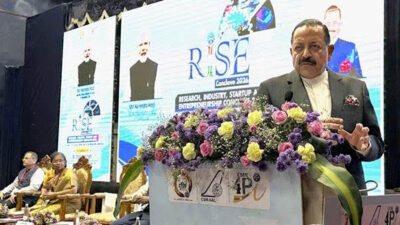
Mumbai: As India gears up for the grand finale of a successful G20 presidency, External Affairs minister S Jaishankar sat down for an engaging and in-depth conversation with NDTV editor-in-chief Sanjay Pugalia at NDTV’s G20 Conclave. In a room full of diplomats, foreign policy watchers and senior NDTV journalists, minister Jaishankar described India’s G20 Presidency as a game-changer. He said the country that commands respect today in the world is India. The minister added that under the leadership of prime minister Narendra Modi, India has taken G20 out of the conference rooms to the people. Dr Jaishankar expressed confidence of an outcome at the Summit.
On the latest China irritant of putting out a map claiming Aksai chin as its territory, the Minister said that this is China’s old habit. Describing the move as absurd, Dr Jaishankar said that India today is very clear about what territories it needs to defend. He reiterated that the area is an integral part of India.
In the same vein, the minister spoke of Pakistan, saying that no one invests in a ‘losing stock’. Dr Jaishankar also called the abrogation of article 370 one of the most significant achievements of the Modi Government and asked naysayers to go to Lal Chowk in Srinagar to see the difference for themselves. He hit out at previous governments for playing politics over Kashmir.
With India emerging as the voice of the Global South, the minister said that India has forwarded its agenda at G20. He said that India is the bridge between the North, South, East & West, today.
Praising PM Modi, the External Affairs minister said that he is a very curious person and has deep knowledge of global politics. He said that Prime Minister Modi’s single-line message to President Putin, that now is not the time for war, conveyed the world’s sentiment.
Dr Jaishankar described the success of Chandrayaan-3 as an example of India’s credibility and capability. He said that everyone at the BRICS Summit lauded the success as a collective achievement.
Responding to a question asked by the Australian High Commissioner to India, Mr. Phillip Green, on whether the world would go back to the times of Mahabharata and be bipolar, he said that multi-polarity is here to stay. No one country can call the shots anymore.