AD Agencies
The smell that told Mumbaikars which station was next
Tata AIA turns Mumbai’s Parle-G memory into a sharp, city-wise outdoor play

MUMBAI: When a biscuit factory became Mumbai’s unofficial station announcement. Long before smartphone maps and automated announcements, commuters on Mumbai’s Western line relied on their noses. As trains rolled into Vile Parle, compartments filled with the warm, sweet smell of baking biscuits from the Parle-G factory. It was a cue to gather bags, wake dozing children and shuffle towards the door.
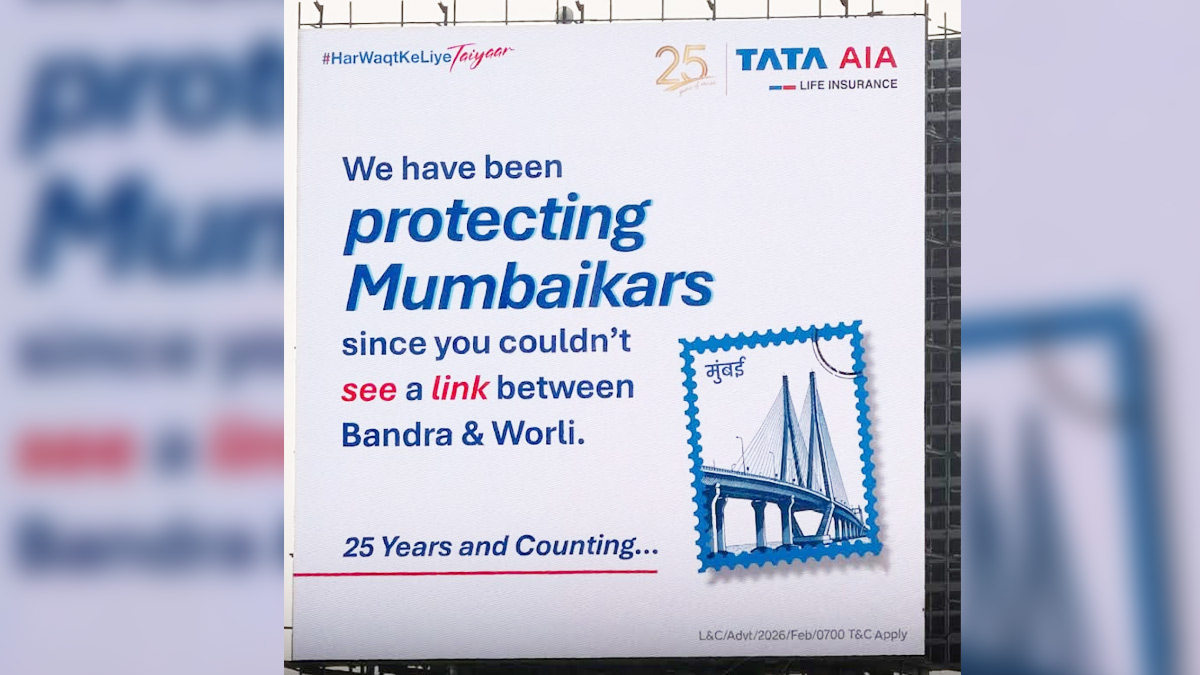
Now that memory has been pressed into service by Tata AIA Life Insurance as part of its 25-year anniversary outdoor campaign — a city-by-city salute to the lived moments that shape urban life.
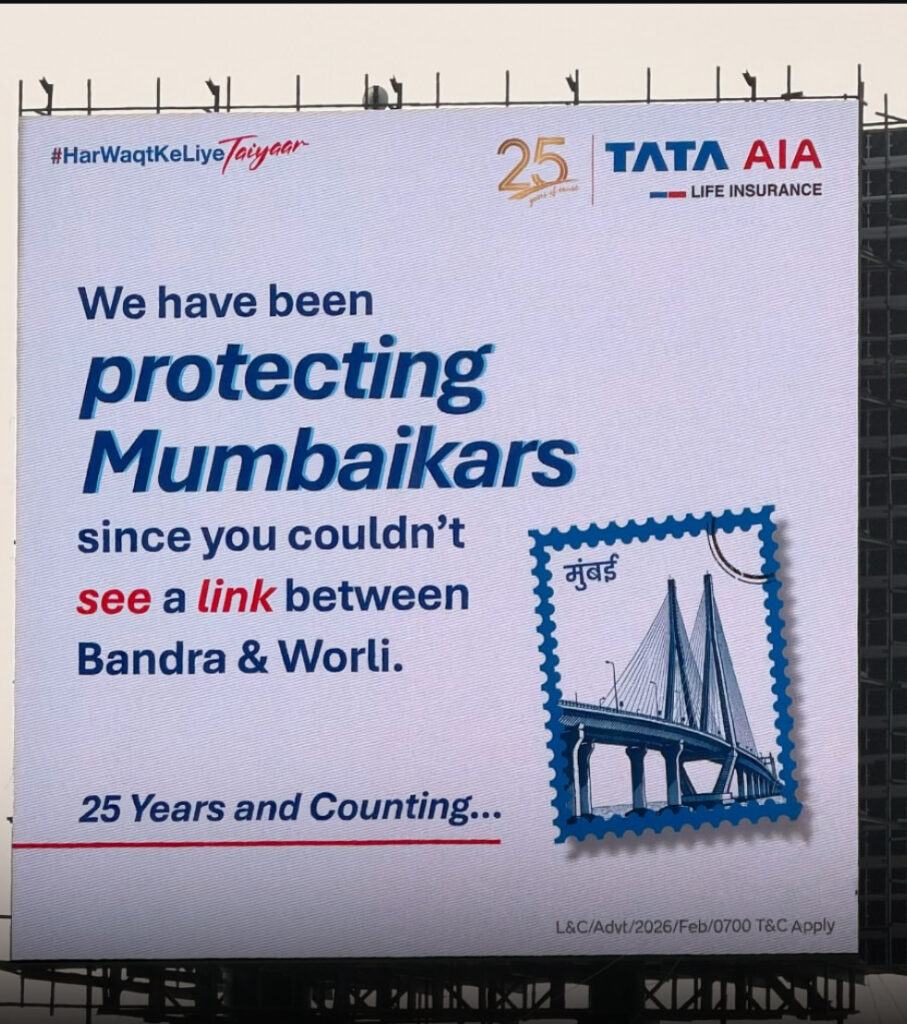
One hoarding, mounted close to the old factory site, reads: “We have been protecting Mumbaikars since Vile Parle smelled of freshly made biscuits.” Spare. Local. Loaded.
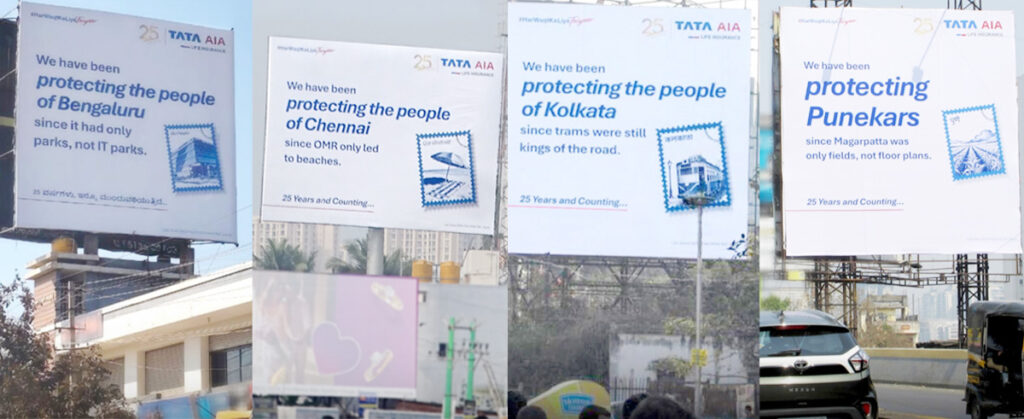
The broader campaign, rolled out across major metros, leans hard into contextual storytelling. In Kolkata, it nods to trams. In Pune, to Magarpatta’s transformation. In Bengaluru, to a time before IT parks. In Chennai, to OMR before it led to tech corridors. Each line anchors the brand’s longevity to a shared civic memory.

The Mumbai execution is the most evocative. For decades, the Parle-G factory was more than a production unit. It was a sensory landmark. Residents nearby set their clocks by the factory horn. Office-goers marked their commute by the waft of glucose and flour. When the plant shut, the city lost more than jobs. It lost a rhythm.
By placing the hoarding beside the former factory, the insurer collapses distance between copy and context. The site does half the storytelling. The rest comes from commuters who remember opening steel tiffins packed with Parle-G, or jolting awake as the train slowed.
It is a neat piece of brand positioning. Rather than trumpet balance sheets or policy counts, Tata AIA borrows emotional equity from the city itself. Twenty-five years becomes less a milestone and more a presence — steady, local, embedded.
Outdoor advertising is often a blunt instrument. This one is anything but. It whispers. It remembers. And in doing so, it sells trust without sounding like it is selling at all.
The scent may have faded. The memory has not.






AD Agencies
Fevicol releases its last ad campaign by the late Piyush Pandey
The adhesive brand’s last campaign by the late advertising legend Piyush Pandey turns an everyday Indian obsession into a quietly powerful metaphor
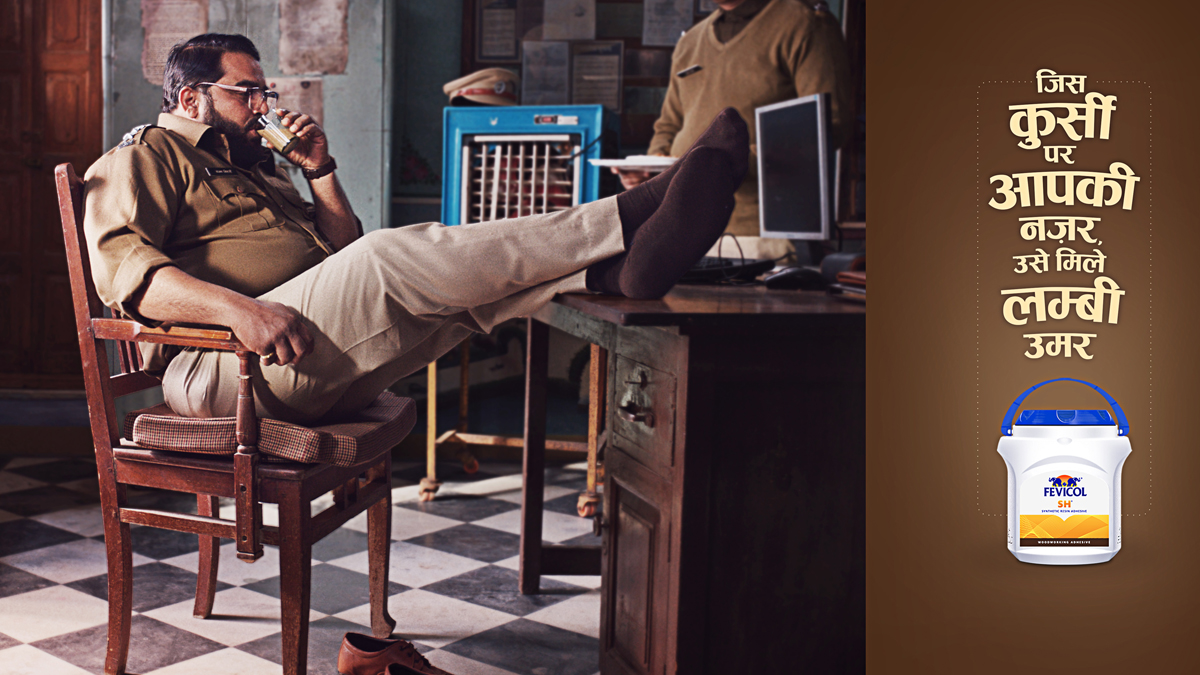
MUMBAI: Fevicol has never needed much of a plot. A sticky bond, a wry observation, a truth that every Indian instantly recognises — that has always been enough. “Kursi Pe Nazar,” the brand’s latest television commercial, is no different. And yet it carries a weight that no previous Fevicol film has had to bear: it is the last one its creator, the advertising legend Piyush Pandey, will ever make.
The film, released on Tuesday by Pidilite Industries, fixes its gaze on the kursi — the chair — and what it means in Indian life. Not just as a piece of furniture, but as a currency of ambition, a vessel of authority, and a source of quiet social drama that plays out in every home, office and institution across the country. Who sits in the chair, who waits for it, and who eyes it hungrily from across the room: the film transforms this sharply observed cultural truth into a narrative that is, in the best Fevicol tradition, funny, warm and instantly familiar.
The campaign was Pandey’s idea. He discussed it in detail with the team before his death, but did not live to see it shot. Prasoon Pandey, director at Corcoise Films who helmed the commercial, said the team needed five months to find its footing before they felt ready to shoot. “This was the toughest film ever for all of us,” he said. “It was Piyush’s idea, magical as always.”
The emotional weight of that responsibility was not lost on the team at Ogilvy India, which created the campaign. Kainaz Karmakar and Harshad Rajadhyaksha, group chief creative officers at Ogilvy India, described the process as “a pilgrimage of sorts, on the path that Piyush created not just for Ogilvy, but for our entire profession.”
Sudhanshu Vats, managing director of Pidilite Industries, said the film was rooted in a distinctly Indian insight. “The ‘kursi’ symbolises aspiration, transition, and ambition,” he said. “Piyush Pandey had an extraordinary ability to elevate such everyday observations into iconic storytelling for Fevicol. This film carries that legacy forward.”
That legacy is considerable. Over several decades, Pandey’s partnership with Fevicol produced some of the most beloved advertising in Indian history, building the brand into something rare: a household name that people actively enjoy watching sell to them.
“Kursi Pe Nazar” does not try to be a tribute. It simply tries to be a great Fevicol film. By most measures, it succeeds — which is, in the end, the most fitting send-off of all.